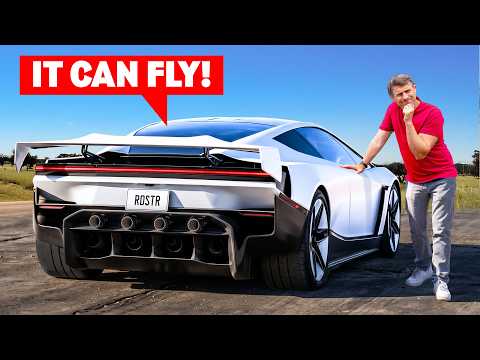
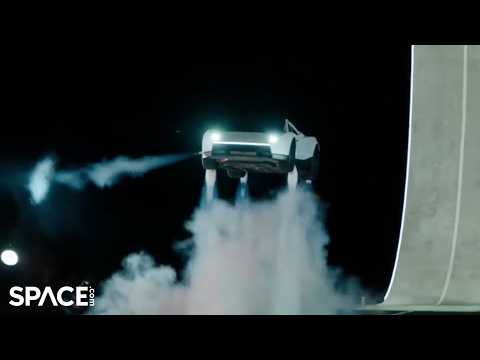
Tesla's latest Roadster demonstration takes the idea of a high-performance electric sports car into extraordinary territory, combining rocket thrusters, active aerodynamic systems, and the promise of controlled flight. Presented at SpaceX's rocket testing facility in McGregor, Texas, the event brings together Elon Musk and Tesla's engineering leadership to showcase a vehicle intended to challenge conventional automotive performance. The ambitious demonstration includes airborne maneuvers, aggressive acceleration, and a futuristic design that draws inspiration from aerospace technology. It is an entertaining spectacle, although the distinction between demonstrated capabilities and ambitious production promises remains important throughout.
The presentation begins by revisiting the original Tesla Roadster's role in establishing electric vehicles as desirable, practical automobiles. The speakers connect that early achievement to Tesla's subsequent development of the Model S, Model 3, and Model Y, positioning the new Roadster as another attempt to redefine expectations. References to the Roadster launched into space aboard a SpaceX rocket reinforce the relationship between the two companies. This historical framing gives the event a sense of continuity, although the discussion is more celebratory than analytical and offers little examination of the considerable challenges involved in turning experimental technology into a consumer vehicle.
The flying demonstrations provide the event's most remarkable moments. Musk describes a vehicle equipped with attitude-control thrusters and rear-mounted propulsion capable of performing aerial maneuvers, including rolls and extended flights. The presenters emphasize that the demonstration is conducted autonomously for safety, while the eventual production Roadster is intended to remain manually driven. The vehicle's movements are presented as evidence of an unusually ambitious engineering collaboration. However, the event offers limited independent verification of the demonstrated flight capabilities, their repeatability, or their suitability for operation outside a controlled testing environment. Musk's acknowledgment that the vehicle is not necessarily optimized for safety is particularly significant given the extraordinary forces and potential risks involved.
The technical discussion becomes more substantial when the presenters explain the Roadster's suction-based downforce system. According to the engineering team, powerful fans beneath the vehicle can generate enough downward force to support extreme cornering and potentially hold the car upside down. The system is described as operating differently at low and high speeds, with adjustable airflow, movable aerodynamic components, and a variable-pitch rear wing designed to balance traction and drag. These explanations help connect the spectacular demonstrations to recognizable engineering principles. Nevertheless, claims about exceeding two lateral Gs, breaking track records, and surpassing conventional tire limitations are presented without controlled comparisons or independently documented testing results.
The vehicle's propulsion specifications add another layer of technical intrigue. The presenters describe two composite-overwrapped pressure vessels holding approximately 600 liters and 250 kilograms of compressed air, feeding ten nozzles that support the car's unusual maneuvers. They also claim that the rear thrusters produce more than 80 kilonewtons of thrust, with visible Mach diamonds indicating supersonic exhaust flow. The explanation that the vehicle can replenish its compressed-air supply without specialized propellant is particularly interesting from a practical standpoint. However, important questions about energy consumption, operating duration, pressure-system safety, maintenance requirements, and the limitations of repeated propulsion-assisted maneuvers remain unanswered.
Acceleration testing delivers another headline moment when the team reports a 0–60 mph time of 0.81 seconds. The presenters initially encounter some confusion while waiting for the measurement, which gives the segment an unexpectedly spontaneous quality. Musk suggests that a lighter production vehicle could improve on the demonstrated result, while the team also discusses potential speeds exceeding 230 mph and even ambitions approaching half the speed of sound. These extraordinary figures generate excitement, but the acceleration result is not accompanied by a detailed testing methodology, independently verified timing, or enough information about the vehicle's configuration to establish a meaningful comparison with production sports cars. The increasingly ambitious speed predictions also blur the boundary between achievable engineering targets and promotional enthusiasm.
The Roadster's exterior and interior reveal provides a welcome opportunity to examine the vehicle beyond its headline performance claims. Its clean two-seat design incorporates aerospace-inspired styling, chassis-integrated seats, and steer-by-wire controls for steering, braking, and acceleration. The transformation between low-drag and high-downforce configurations demonstrates how the designers intend to combine aerodynamic efficiency with exceptional handling. The presentation also confirms a proposed production target of 2028 and suggests that the car could be privately owned, although legal restrictions are acknowledged. Unfortunately, questions about pricing, passenger protection, regulatory approval, real-world usability, and the feasibility of delivering such a complex vehicle receive little meaningful attention. The event concludes with another promised demonstration, maintaining excitement without fully resolving the practical uncertainties surrounding the project.
Pros
- The combination of rocket propulsion, controlled flight, and extreme acceleration creates a genuinely unusual automotive presentation with considerable entertainment value.
- The collaboration between Tesla and SpaceX provides an intriguing example of aerospace engineering concepts being applied to a high-performance road vehicle.
- Explanations of the suction-based downforce system, adaptive aerodynamics, and compressed-air propulsion give the spectacle useful technical substance.
- The reported 0.81-second acceleration demonstration provides a specific performance target rather than relying entirely on vague promises.
- The exterior and interior reveal offers meaningful insight into the Roadster's design philosophy, lightweight construction, and unconventional controls.
- The presenters' enthusiasm, humor, and occasional spontaneous exchanges create an engaging atmosphere that distinguishes the event from a conventional product announcement.
Cons
- Extraordinary acceleration, cornering, propulsion, and flight claims lack independent verification, detailed testing methodologies, or sufficient comparative evidence.
- Important safety concerns receive limited attention despite the acknowledgment that the vehicle is not necessarily optimized for occupant protection.
- Practical questions about compressed-air replenishment, energy requirements, system durability, maintenance, and operational limitations remain largely unexplored.
- Ambitious speed predictions and claims about breaking every track record sometimes overshadow realistic engineering discussion.
- Regulatory approval, pricing, everyday usability, and the feasibility of the proposed 2028 production timeline receive insufficient scrutiny.
- The heavily promotional atmosphere leaves little room for challenging questions about whether the demonstrated technology can translate into a commercially viable road car.
Tesla delivers an extraordinary automotive spectacle that combines inventive engineering concepts, dramatic demonstrations, and a striking vision of what a future performance car might accomplish. The technical explanations and unconventional design make the presentation genuinely fascinating, but extraordinary performance claims, unresolved safety concerns, and unanswered production questions prevent it from becoming a fully convincing demonstration of a practical consumer vehicle. As a showcase of technological ambition and experimental automotive design, it is highly entertaining, though its most remarkable promises require considerably stronger evidence before they can be accepted as established achievements.