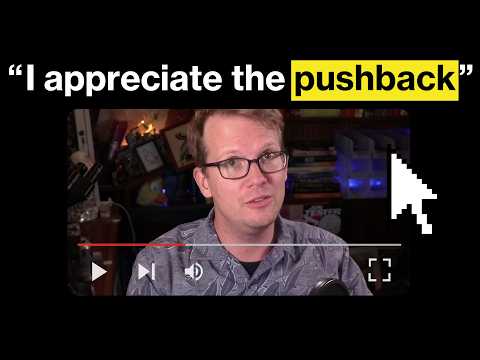
The most compelling part of this examination is its focus on how trust can be damaged when a creator’s public values collide with their private workflow. Rather than only investigating whether a short viral clip proves wrongdoing, the video explores the larger conflict between accusations of AI misuse and Hank Green’s own admission that his research process had changed in ways he was uncomfortable with.
The presentation does a good job separating the original accusation from the broader issue that followed. The video argues that the widely shared 13-second clip did not prove Hank Green was reading AI-generated text, and it provides context suggesting the phrase came from a genuine discussion with his guest. However, it also highlights that Green later acknowledged using AI as a research aid and relying too heavily on generated notes, creating a more complicated discussion about authenticity and creative process.
A major strength is the attention given to why the controversy resonated so strongly. The video explains that Green’s reputation was built around careful research, human expertise, and educational credibility, making any perceived shortcut feel especially significant to some viewers. That framing helps explain why reactions ranged from accusations of betrayal to arguments that AI-assisted research was being exaggerated into something more serious than it was.
The investigation is strongest when it examines the difference between AI replacing a creator’s work and AI influencing the process behind that work. It notes that Green did not claim that entire videos were generated by a chatbot, while also emphasizing his own concern that using AI had affected how he approached topics. This distinction creates a more thoughtful discussion than simply treating the situation as either complete deception or meaningless criticism.
The video also effectively explores the uncertainty surrounding changing standards for AI use. It points out that many organizations now draw lines between acceptable uses, such as research assistance, and unacceptable uses, such as AI-written or fact-checked content. The discussion raises relevant questions about where audiences should place their trust, although some conclusions about the long-term impact of AI on creators remain more speculative than proven.
Where the presentation becomes less balanced is in its repeated focus on the dramatic framing of a “trial” and a major downfall. While the controversy and Green’s response are worth examining, the video sometimes leans into the language of exposure even while acknowledging that the central accusation was never demonstrated. This creates tension between its more careful analysis and its more sensational presentation style.
The video succeeds as a commentary on online outrage cycles and the difficulty of evaluating AI-related controversies with limited information. It shows how a small clip can become a major narrative before context is considered, but it also demonstrates how a creator’s own statements can shift the discussion toward deeper questions about transparency, expectations, and changing creative habits.
Pros
- Clearly distinguishes the viral clip accusation from the separate issue of AI-assisted research.
- Provides useful context about why trust and creative processes were central to the controversy.
- Explores the complicated debate over acceptable and unacceptable uses of AI in educational content.
- Shows how online reactions can become divided when evidence, expectations, and personal trust overlap.
Cons
- The dramatic “exposure” framing occasionally overshadows the more nuanced evidence presented.
- Some speculation about what the controversy means for the future of creators and AI goes beyond what is established.
- Gives limited attention to perspectives from people who view AI-assisted research as a normal productivity tool.
This is an engaging examination of a controversy that became larger than the original accusation. Its strongest moments come from showing how questions about AI use, transparency, and audience trust are more complicated than a simple guilty-or-innocent narrative. While the presentation sometimes exaggerates the stakes, it raises worthwhile questions about how creators define authenticity in an era of rapidly changing tools.