Geopolitical conflicts are rarely simple, and this analysis of the escalating confrontation between the United States and Iran makes no attempt to oversimplify one of the world's most volatile regions. Instead, the video carefully examines how a fragile ceasefire allegedly unraveled into renewed military escalation, focusing on the strategic importance of the Strait of Hormuz, the global energy market, regional proxy conflicts, and the increasingly dangerous cycle of retaliation between Washington and Tehran.
From the opening minutes, the presentation establishes a serious tone by framing the conflict around the deaths of American service members and the subsequent retaliation that threatens to pull the region back into a broader war. Rather than relying on emotional rhetoric, the narrator consistently attempts to explain the strategic motivations behind military decisions, making the discussion accessible even for viewers who may not closely follow Middle Eastern politics.
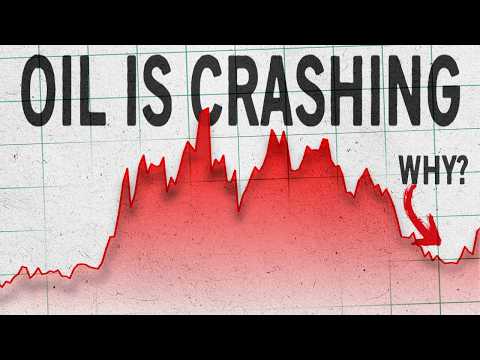
One of the documentary's strongest qualities is its emphasis on geography. Rather than treating the Strait of Hormuz as simply another location on a map, the video clearly explains why this narrow waterway carries enormous global significance. By illustrating that roughly one-quarter of the world's oil supply passes through this chokepoint, the documentary effectively demonstrates why even limited disruptions can have worldwide economic consequences. The discussion of shipping routes, sanctions, naval blockades, and crude oil pricing helps viewers understand that modern conflicts are often fought as much through economic leverage as military force.
The analysis also does an admirable job explaining why both Washington and Tehran might believe they are acting rationally despite appearing locked in an increasingly dangerous escalation cycle. According to the video's narrative, Iran seeks to maximize its strategic leverage by controlling maritime access and protecting its energy infrastructure, while the United States views freedom of navigation as essential to both regional security and global economic stability. Whether viewers ultimately agree with those characterizations or not, the documentary succeeds in presenting the conflict as more complex than a simple contest between good and evil.
Another strength lies in the discussion of military strategy. Rather than focusing exclusively on missile strikes or casualty figures, the video examines logistics, air defense systems, proxy forces, ammunition stockpiles, and supply chains. These operational details provide valuable context that is often absent from mainstream news coverage and help explain why relatively small tactical decisions can produce major strategic consequences.
The documentary is equally effective when discussing the broader regional implications. The inclusion of Jordan, Kuwait, Qatar, Bahrain, and the Houthi movement illustrates how conflicts in the Middle East rarely remain confined to two nations. The explanation of desalination infrastructure, for example, highlights an often-overlooked vulnerability in Gulf states that depends heavily on artificial freshwater production. By connecting military actions to civilian infrastructure, energy security, and water resources, the documentary broadens the conversation beyond battlefield developments alone.
Visually and structurally, the presentation maintains an engaging pace despite covering a highly technical subject. The narration remains calm and analytical throughout, avoiding the sensationalism that frequently characterizes discussions of international conflict on social media. Complex economic and military concepts are broken into logical sections, allowing viewers to follow the narrative without becoming overwhelmed by technical terminology.
That said, the documentary's greatest weakness is its reliance on a largely singular narrative framework. Although it occasionally references statements from multiple governments and outside organizations, much of the analysis depends on official claims that are inherently difficult to verify independently during an active conflict. Assertions regarding military strikes, casualty figures, infrastructure damage, and diplomatic negotiations should therefore be viewed with appropriate caution, particularly given the information warfare that accompanies nearly every modern conflict.
Similarly, several strategic conclusions presented by the narrator involve informed speculation rather than established fact. Discussions regarding political motivations, military intentions, and future escalation are generally reasonable interpretations, but viewers should recognize the distinction between confirmed reporting and analytical forecasting.
Another limitation is the video's limited exploration of alternative diplomatic perspectives. While it briefly references mediation efforts and proposed negotiations, the primary focus remains on military escalation. A deeper examination of possible off-ramps, international mediation, or long-term diplomatic solutions could have provided a more balanced picture of the conflict.
Pros
- Excellent explanation of the strategic importance of the Strait of Hormuz.
- Strong analysis of energy markets and global economic implications.
- Clear discussion of military logistics, regional alliances, and escalation dynamics.
- Professional narration that avoids unnecessary sensationalism.
- Makes complex geopolitical issues understandable for general audiences.
- Connects military events to broader economic and humanitarian consequences.
Cons
- Relies heavily on official claims that are difficult to independently verify during wartime.
- Some strategic conclusions are necessarily speculative.
- Limited discussion of diplomatic alternatives and de-escalation efforts.
- Dense subject matter may challenge viewers unfamiliar with Middle Eastern geopolitics.
This documentary succeeds by treating the conflict between the United States and Iran as a multifaceted geopolitical crisis rather than a series of isolated military incidents. Its strongest contribution is helping viewers understand how energy security, maritime trade, regional alliances, military logistics, and domestic political pressures all intersect to shape decisions that can have global consequences. While audiences should approach wartime reporting with a healthy degree of skepticism—particularly when evaluating competing government narratives—the video's analytical approach provides valuable context that goes well beyond daily headlines. It encourages viewers to think about the broader strategic picture instead of focusing solely on individual attacks or political statements. For anyone interested in international relations, military strategy, or global energy markets, this is an informative and well-structured presentation that offers meaningful insight into one of the world's most consequential geopolitical flashpoints.