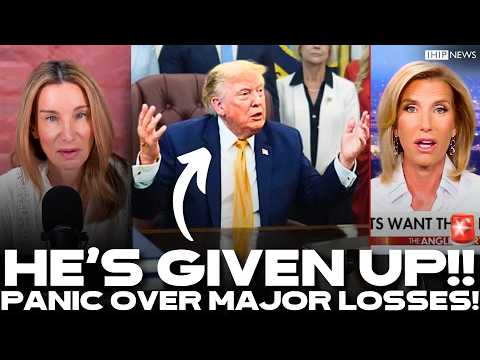
Donald Trump's appearance in Clarksville, Tennessee, provides Ben with a lengthy collection of controversial remarks, unusual digressions, and confrontational political rhetoric. Rather than examining the speech as a coherent policy address, Ben assembles individual moments that he considers evidence of Trump's increasingly erratic public behavior. The result is an energetic but aggressively partisan commentary that raises legitimate questions about presidential communication while frequently substituting personal outrage for substantive analysis.
Some of the most memorable exchanges involve Trump's suggestions about renaming major geographical landmarks. His remarks about a possible Trump Ocean, renaming the Strait of Hormuz, and calling Lake Ontario Lake America give Ben plenty of material for ridicule. The clips effectively illustrate Trump's tendency to mix grandiose proposals with casual political boasting, although the commentary makes little effort to establish whether these suggestions represent serious intentions, deliberate jokes, or improvised crowd entertainment. That distinction matters when evaluating the significance of presidential statements.
The discussion becomes more consequential when Trump addresses Iran and the ongoing military conflict. His imitation of Iranian religious expressions, suggestions that Iran might escalate hostilities before the election, and assertion that American military action prevented Iran from obtaining nuclear weapons all deserve scrutiny. Ben appropriately draws attention to the seriousness of such language, particularly when discussing potential escalation and military casualties. However, his claim that the administration is concealing the true death toll rests on references to unspecified reporting, while his belief that casualties exceed the reported figures receives no supporting evidence. These allegations require considerably stronger documentation than the commentary provides.
Trump's comments about immigration and Abdul El-Sayed offer another revealing section. Ben highlights Trump's insistence on calling El-Sayed Muhammad despite acknowledging that it is not his name, followed by Trump's characterization of him as a radical jihadist. The footage provides a concrete basis for criticizing the president's dismissive treatment of a political figure and his use of religiously charged accusations. Kid Rock's subsequent declaration that America would never become a nation under Mohammed adds another example of religion being used as a political dividing line. Ben's objections are understandable, but his own repeated insults and sweeping denunciations weaken the credibility of an otherwise defensible criticism.
The lighter portions of the rally receive similarly hostile treatment. Trump discusses hecklers, empty seats, Jimmy Kimmel, his popularity, and a woman in the audience whom he calls beautiful. Ben presents these moments as further evidence of inappropriate or bizarre presidential conduct, occasionally finding genuinely revealing contradictions, particularly when Trump complains about disruptive audience members while acknowledging an active heckler. Yet the commentary repeatedly describes the audience as tiny without supplying attendance figures or sufficient context to establish the actual turnout. Its interpretation of Trump's exchange with the woman also depends heavily on Ben's personal reaction rather than a clearly demonstrated problem.
The presentation maintains momentum through a rapid sequence of rally excerpts, allowing viewers to hear many of Trump's remarks directly instead of relying entirely on Ben's descriptions. This approach is particularly useful when examining Trump's language about immigration, religion, and military operations. Unfortunately, Ben frequently announces what viewers are about to hear and then repeats his interpretation afterward, creating unnecessary redundancy. His acknowledgment that viewers have criticized this habit is an amusing moment of self-awareness, but it does not resolve the pacing problem. The escalating descriptions of Trump as a lunatic, psychopath, and other personal insults also become repetitive, making the commentary feel more like sustained venting than careful political examination.
The closing section briefly broadens the discussion to reported developments involving oil tankers, attacks near Riyadh, a shooting in Pennsylvania, hurricane-related power outages, and Russia's war against Ukraine. These references suggest a potentially valuable argument about the contrast between serious national and international challenges and the president's rally priorities. Unfortunately, the subjects arrive in a rushed sequence without enough supporting context to establish their connections or significance. Ben then directs his anger toward rally attendees, dismissing them as cult followers and losers. That ending reinforces the program's confrontational identity but sacrifices an opportunity to conclude with a stronger, evidence-based assessment of presidential leadership.
Pros
- Extensive excerpts from Trump's Tennessee remarks allow viewers to evaluate many controversial statements directly.
- The discussion identifies substantive concerns involving Iran, military casualties, immigration rhetoric, and religiously charged political attacks.
- Trump's comments about renaming geographical landmarks, crowd sizes, and hecklers provide distinctive examples of his unconventional speaking style.
- The confrontation over Abdul El-Sayed's name offers a particularly clear example of rhetoric that deserves critical examination.
- Ben's energetic delivery and rapid movement between clips keep the commentary engaging despite its repetitive tendencies.
Cons
- Repeated personal insults directed at Trump and his supporters frequently overshadow legitimate political criticism.
- Serious allegations about concealed military casualties lack identified sources, supporting documentation, and adequate separation between reporting and speculation.
- Claims about exceptionally small crowds and Trump's public popularity receive insufficient numerical evidence or context.
- The commentary rarely distinguishes deliberate humor, rhetorical exaggeration, and genuinely consequential policy statements.
- Repeatedly previewing clips before playing them creates avoidable redundancy and interrupts the presentation's momentum.
- The rushed discussion of unrelated national and international developments prevents meaningful examination of potentially important issues.
Ben delivers an animated and frequently provocative critique of Trump's Tennessee appearance, supported by numerous clips that give viewers a useful look at the president's rhetoric. The strongest material concerns religious hostility, immigration language, and military accountability, but unsupported allegations, repetitive insults, and selective interpretations undermine the analysis. Entertaining for viewers seeking forceful anti-Trump commentary, the presentation is considerably less successful as balanced, evidence-driven political journalism.