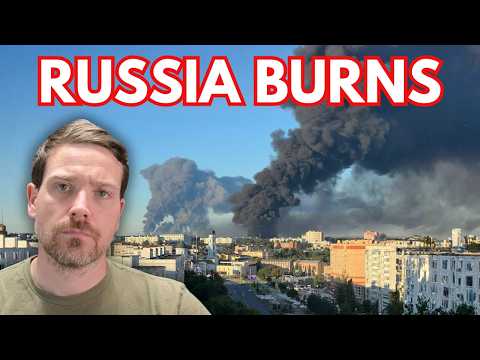
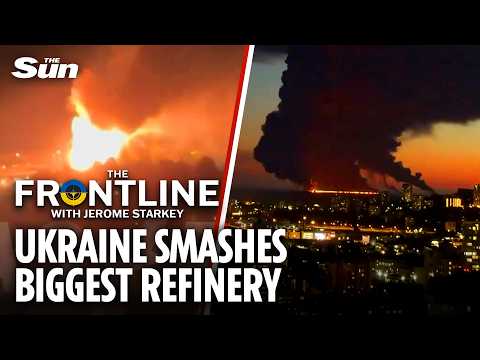
Ukraine's renewed drone strikes against Russian oil infrastructure mark another escalation in the economic dimension of the war, with the Novokuybyshevsk refinery in Russia's Samara region becoming the latest target. The attack reportedly ignited approximately 11 separate fires across the Rosneft-operated facility, raising questions about Russia's ability to defend strategically important industrial sites. Rather than treating the incident as an isolated military success, the presentation examines how refinery disruptions could affect Russian fuel supplies, military logistics, and the revenues supporting Moscow's war effort. This broader perspective gives the report a clear strategic focus, although several claims about the attack's effectiveness require stronger verification.
The explanation of the refinery's importance establishes why Ukraine considers such facilities valuable targets. According to the report, Novokuybyshevsk processes approximately nine million tons of crude oil annually, producing diesel, gasoline, aviation kerosene, and other petroleum products. These outputs support civilian transportation and industrial activity while also contributing to military operations. Connecting refinery capacity to aircraft, vehicles, and logistical networks helps explain the potential consequences of disrupting fuel production. However, the presentation moves quickly from the reported fires to assertions about significant damage without establishing which processing units were affected or how much production was actually interrupted.
The discussion becomes more interesting when it examines the approximately two-week pause in Ukrainian refinery attacks. The narrator argues that Moscow benefited from this interruption by repairing damaged facilities and restoring production while continuing its own strikes against Ukrainian energy infrastructure. With winter approaching, the contrast between Russia's alleged freedom to attack Ukrainian electricity and heating systems and Ukraine's temporary restraint creates the report's central strategic argument. Nevertheless, the characterization of this arrangement as a broken energy ceasefire is not supported by a detailed explanation of any formal agreement, its conditions, or the diplomatic circumstances surrounding the pause. This omission makes it difficult to determine whether the developments represent a violated commitment or the end of a unilateral restraint.
Economic statistics provide some of the presentation's most useful context. The report states that Russia's installed refining capacity stands at approximately 6.5 million barrels per day, while crude processing previously dropped to around 3.8 million barrels daily during Ukraine's sustained campaign. It further claims that processing recovered by approximately 25%, reaching roughly five million barrels daily after attacks subsided. These figures illustrate the potential connection between repeated strikes, refinery downtime, and Russia's ability to restore operations when pressure decreases. Unfortunately, the statistics are presented without identifying their sources, explaining the distinction between installed capacity and actual throughput, or establishing how much of the reported decline resulted directly from Ukrainian attacks. The numbers strengthen the narrative but are not independently substantiated within the presentation.
The geographic expansion of Ukraine's strike capabilities introduces another important consideration. President Zelensky's reported assertion that no Russian refinery lies beyond Ukrainian reach, supported by a reference to an attack on Omsk approximately 2,500 kilometers from Ukraine, suggests that distance alone may no longer provide reliable protection for Russian energy infrastructure. The presentation uses this development to argue that Russia's broader refining network faces sustained vulnerability. While the argument is understandable, the conclusion that the entire network is exposed would benefit from greater consideration of differences in drone range, payload limitations, defensive coverage, and the practical difficulties of maintaining attacks across such enormous distances.
Beyond refinery operations, the report explores whether Ukraine could intensify economic pressure by targeting shadow-fleet tankers, export terminals, and maritime infrastructure. This distinction between disrupting domestic refining and restricting petroleum export revenues adds strategic depth, particularly because crude oil sales remain an important source of Russian government income. The narrator also acknowledges a potential diplomatic complication, arguing that the Trump administration's concerns about international fuel prices could place Washington at odds with an expanded Ukrainian campaign. This is a valuable addition because it recognizes that Ukraine's military and economic objectives may not align perfectly with American priorities. However, the discussion remains largely speculative, offering limited examination of the legal, environmental, commercial, and international consequences of attacks on maritime energy infrastructure.
The presentation concludes by portraying renewed refinery strikes as a necessary response to Russia's continued attacks on Ukrainian energy facilities, emphasizing the costs of restraint without reciprocal concessions. Its direct narration, focused structure, and consistent connection between individual strikes and larger economic objectives make the analysis accessible and engaging. Yet the language repeatedly favors Ukraine's strategic interpretation, describing the drone campaign as devastating and suggesting Russian defenses offered virtually no resistance despite acknowledging that the full extent of the damage remains under assessment. The closing membership promotion is brief, but the report's larger weakness is its limited separation of confirmed developments, Ukrainian claims, economic estimates, and predictions about future escalation. A more measured approach would strengthen an otherwise informative examination of energy infrastructure as a weapon of economic warfare.
Pros
- Clearly explains the strategic importance of the Novokuybyshevsk refinery and connects petroleum production to Russia's civilian economy and military logistics.
- Provides useful refining capacity and processing figures that help illustrate the potential economic effects of sustained Ukrainian drone attacks.
- Examines the reported pause in refinery strikes and explains why continued Russian attacks against Ukrainian energy infrastructure raise questions about the value of unilateral restraint.
- Connects Ukraine's expanding long-range strike capabilities with the growing vulnerability of Russian industrial facilities far from the battlefield.
- Distinguishes between attacks on domestic refining capacity and potential strikes against petroleum export infrastructure, adding depth to the discussion of economic pressure.
- Acknowledges possible tensions between Ukrainian military objectives and American concerns about international energy prices.
- Maintains a focused, accessible presentation that connects the latest reported attack to broader strategic and diplomatic considerations.
Cons
- Claims about extensive refinery damage, approximately 11 separate fires, and the apparent failure of Russian air defenses are not supported by sufficient independent verification or detailed damage assessments.
- Major economic figures concerning refinery capacity, production declines, and subsequent recovery lack identified sources and adequate methodological explanation.
- The discussion of the energy ceasefire does not establish whether a formal reciprocal agreement existed or clarify the conditions governing Ukraine's reported pause.
- Assertions about the vulnerability of Russia's entire refining network overlook operational constraints that could limit Ukraine's ability to conduct sustained long-range strikes.
- Predictions involving attacks on shadow-fleet tankers and export infrastructure receive limited consideration of their broader legal, environmental, and diplomatic consequences.
- Strongly pro-Ukrainian framing occasionally presents strategic interpretations and anticipated outcomes with greater certainty than the supporting evidence warrants.
Ukraine's renewed campaign against Russian oil infrastructure provides the foundation for an engaging examination of how energy production, military logistics, and economic pressure intersect during wartime. The presentation effectively explains why refinery attacks matter beyond their immediate physical damage and raises worthwhile questions about diplomatic restraint and future escalation. However, insufficient sourcing, an unclear account of the alleged ceasefire, and occasionally overstated conclusions weaken its credibility as a fully balanced strategic assessment. Despite these limitations, it offers useful context for understanding Ukraine's efforts to challenge the economic infrastructure supporting Russia's war.