A Pentagon relationship with prominent conservative influencers provides the strongest opening because it raises a concrete question about transparency rather than merely partisan messaging. The discussion identifies several figures reportedly serving as special government employees or highly qualified experts while also publicly defending Pete Hegseth or administration policies, and it carefully notes that the Pentagon would not say whether they were receiving taxpayer-funded salaries. That distinction matters: the presentation has legitimate grounds to question undisclosed government connections, but it does not establish that every favorable post was purchased propaganda or produced at official direction.
The segment is less disciplined once legitimate transparency concerns become fuel for broader accusations about a coordinated “troll army.” Reactions from Adam Kinzinger, Chris Murphy, Amy McGrath, and Democratic Party personnel illustrate why critics consider these arrangements troubling, while one identified influencer reportedly denied government compensation for his posts. Yet the commentary increasingly treats suspicion as confirmation, particularly when it asks how many conservative commentators might be compromised government propagandists. That rhetorical escalation is entertaining and consistent with the show’s combative personality, but it goes beyond the evidence actually described.
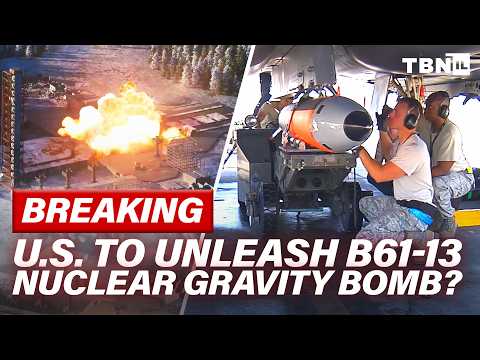
Iran provides a much higher-stakes test of that discipline. The account of renewed American strikes, Iranian retaliation, interceptions by Jordan and the UAE, Trump’s threats, and concerns about prolonged military commitments creates a coherent picture of an unstable conflict. Crucially, the host draws a necessary boundary around Tucker Carlson’s nuclear-war argument, explicitly describing Carlson’s interpretation as an extrapolation and acknowledging that no verified report presented here establishes that Trump is currently preparing to use tactical nuclear weapons against Iran. That qualification prevents an alarming claim from being presented as settled fact, even as the surrounding commentary remains openly skeptical of Trump’s assurances.
The reported military concerns add substantially more substance than the speculative nuclear discussion. Descriptions of commanders issuing “non-concur” responses, forces remaining deployed for extended periods, munitions pressures, and warnings about readiness elsewhere turn the Iran story into a broader question about sustainability rather than simply another round of political outrage. Still, statements predicting greater irrationality from a politically cornered Trump are interpretation rather than evidence, and the presentation would be stronger if it maintained the same careful separation between documented developments and psychological speculation that it briefly applies to Carlson’s claims.
The rapid-fire final block demonstrates both the format’s usefulness and its limitations. Milo Yiannopoulos’s expedited deportation, the attack on an NBC crew in the West Bank, Grand Canyon flooding, foodborne illness surveillance, opposition to AI data centers, and an elaborate romance-fraud case are all given enough context to explain why they matter. The food-safety discussion is particularly effective because it resists reducing the problem entirely to Trump and Robert F. Kennedy Jr., instead arguing that recent policy decisions compound longstanding weaknesses involving imported food and supply-chain traceability. Likewise, the dating scam becomes more interesting when attention shifts from mocking victims toward the possibility that manipulated online information can make fraudulent identities appear credible.
Across these stories, however, the show repeatedly moves from reporting into highly charged editorial language without much transition. Insults, profanity, sarcastic asides, assumptions about political motives, and statements about what entire ideological groups would supposedly do can make the program energetic, but they also blur the line between explaining the reported facts and prosecuting a case against favored targets. Promotional material for the live tour and a lengthy sponsored nutrition segment further interrupt an already dense news package. The result is lively and often informative, but its strongest journalism comes when uncertainty is explicitly acknowledged rather than when outrage fills the gaps.
Pros
- Raises a meaningful transparency issue around political influencers simultaneously holding Pentagon roles while publicly supporting administration policies.
- Explicitly distinguishes Tucker Carlson’s nuclear-weapons interpretation from verified evidence that Trump is preparing to use nuclear weapons against Iran.
- Adds substantive military-readiness concerns to the Iran discussion rather than treating escalation solely as political spectacle.
- The food-safety segment usefully separates recent policy decisions from longer-standing structural weaknesses in tracing outbreaks.
- Reframes the alleged 49ers romance scam around manipulated search information and verification problems rather than simply ridiculing victims.
- Rapid pacing allows several complicated stories to receive useful contextual explanation.
Cons
- Suspicion surrounding Pentagon-connected influencers sometimes becomes broader insinuation without evidence establishing coordinated paid propaganda.
- Partisan insults, profanity, and speculative judgments frequently blur reporting with advocacy.
- Predictions about Trump becoming increasingly irrational are interpretive claims presented more confidently than the supporting evidence warrants.
- Political reactions are plentiful, but the Pentagon controversy would benefit from more direct explanation of the legal and ethical rules governing these government appointments.
- The large number of unrelated stories makes several serious subjects feel compressed before the program abruptly moves elsewhere.
- Tour promotion and the extended sponsorship section interrupt the momentum of an already crowded news package.
Transparency questions surrounding government-connected influencers and the sustainability of an expanding military commitment give this installment considerably more substance than its confrontational tone initially suggests. Its best moments carefully distinguish documented reporting from speculation, but that standard is applied inconsistently as partisan commentary and broad insinuations take over. The result is informative and engaging, though more evidentiary restraint would make its strongest arguments significantly harder to dismiss.