The strongest portion of this discussion comes when Jack Keane separates the current economic pressure campaign against Iran from the possibility of renewed military action. He argues that the expiration of the 60-day diplomatic window is largely symbolic because, in his assessment, Iran has already demonstrated that agreements will not necessarily produce compliance. That provides viewers with a clear framework for understanding his position: economic pressure remains the immediate approach, but he believes Iran may deliberately escalate regional violence and force President Trump to consider military options. The distinction is useful, although much of the argument depends on Keane's interpretation of Iranian intentions rather than independently established evidence presented during the segment.
That limitation becomes especially important when Keane predicts that Iran may increase violence partly to influence the U.S. midterm elections. He explains his reasoning—that Iranian leaders closely watch American political will and would prefer diminished Republican control—but the segment does not provide evidence demonstrating that electoral interference through regional escalation is actually Iran's strategy. Keane appropriately identifies this as his assessment, using phrases such as "I think" and "likely," yet the hosts do little to challenge the premise or ask what alternative explanations might account for Iranian behavior. As geopolitical analysis, this is therefore more valuable as one experienced commentator's interpretation than as a demonstrated account of Tehran's plans.
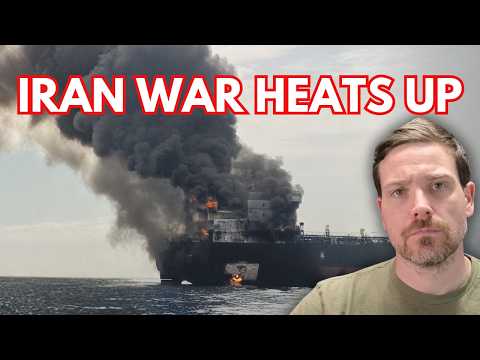
The surrounding reporting gives that analysis a stronger foundation by supplying concrete developments for Keane to address. The program discusses the expiration of the memorandum of understanding, sharply reduced shipping through the Strait of Hormuz, reported attacks on vessels, and a Reuters report attributing to an Iranian official a shift toward a "fully offensive" posture. These details create a coherent picture of heightened tensions. At the same time, several consequential assertions—including descriptions of Iran's intentions and President Trump's statements about future territorial control—move rapidly through the opening, leaving little room to establish their broader context before the conversation turns to prediction.
Keane is more measured when discussing President Trump's instruction to substantially reduce planned joint military exercises with South Korea. Rather than presenting the decision as a fundamental rupture, he places it within the longstanding U.S.-South Korean security relationship and emphasizes South Korea's military capabilities, support for American bases, and the continuing American troop presence. His suggestion that Washington may be frustrated by insufficient South Korean support for the Iran conflict is again interpretive, but he also argues that the broader alliance is likely to survive the immediate disagreement. That combination of criticism and continuity makes this portion less alarmist than the Iran discussion.
The final subject, morale aboard the USS Abraham Lincoln, produces the segment's most forceful language. Keane rejects reports or commentary suggesting serious morale problems and specifically contrasts claims of multiple suicides with his account of a sailor falling overboard and being rescued. He says he spoke with Admiral Cooper and characterizes media coverage as a significant misrepresentation, while praising sailors and their families for enduring a lengthy deployment. His direct contact is relevant context, but the segment does not identify the specific reports being criticized or examine their sourcing, making it difficult for viewers to independently evaluate the dispute from what is presented here.
Presentation-wise, the interview benefits from covering three distinct military and foreign-policy issues without becoming completely fragmented. The hosts ask direct questions, and Keane generally answers them rather than drifting into unrelated commentary. However, the brisk television-news format also works against deeper scrutiny. Major claims about Iranian strategy, American electoral politics, alliance expectations, military morale, and disputed media reporting arrive in quick succession, with little time devoted to counterarguments, uncertainty, or supporting evidence. The result is energetic and accessible analysis, but it functions more effectively as a snapshot of Keane's strategic outlook than as a comprehensive examination of the conflicts and military decisions being discussed.
Pros
- Clearly distinguishes the current economic pressure campaign from possible future military escalation against Iran.
- Keane generally signals when he is offering his own assessment, particularly regarding Iran's possible intentions and future behavior.
- Provides useful strategic context for why reduced U.S.-South Korean exercises do not necessarily mean the broader security relationship is collapsing.
- Moves efficiently across Iran, South Korea, and carrier morale while keeping the questions focused on military and foreign-policy implications.
- The discussion of the USS Abraham Lincoln identifies a specific factual dispute rather than relying solely on generalized complaints about media coverage.
Cons
- The theory that Iran may escalate violence partly to influence the U.S. midterm elections is consequential but receives little supporting evidence or skeptical questioning.
- Several claims about Iranian intentions are presented through reporting and expert interpretation without enough detail for viewers to assess their underlying evidence.
- Keane's criticism of coverage surrounding USS Abraham Lincoln morale does not identify the reports or sources he believes were inaccurate, limiting independent evaluation.
- The fast-moving format leaves little room for competing interpretations of Iranian strategy or the consequences of reducing exercises with South Korea.
- Strong predictions about how Iran and President Trump are likely to respond to future escalation sometimes receive more confidence than the evidence presented within the segment can establish.
This is a concise and often useful strategic discussion, particularly when Keane explains the difference between immediate economic pressure and longer-term military possibilities. Its main weakness is that several of its most consequential conclusions depend on predictions about Iranian motives and future behavior that are asserted more strongly than they are demonstrated, while the interview provides limited challenge or competing analysis.