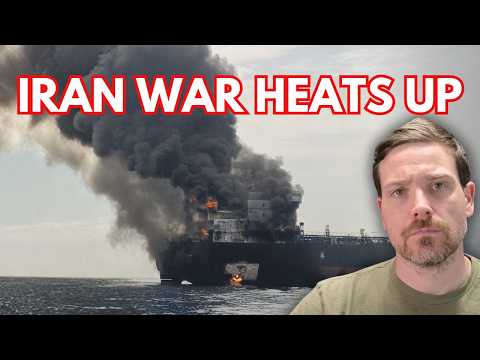
Deadly missile strikes on Saudi Arabia's busiest airport provide a grim opening to Amy Goodman's rapid examination of international conflict and political developments. Reports of Houthi attacks on Riyadh's King Khaled International Airport, followed by retaliatory Saudi strikes in Yemen, establish an immediate sense of escalating regional instability. Rather than focusing exclusively on military operations, Democracy Now emphasizes the civilian consequences, including casualties, disrupted flights, and school closures. The opening effectively establishes the broadcast's central concern: the human costs of political and military decisions.
The coverage of the U.S. war on Iran raises serious questions about military accountability. Goodman reports revised Pentagon casualty figures showing 21 American service members killed and 865 wounded, alongside congressional demands for answers about civilian deaths from U.S. airstrikes. The September strike on an Iranian wedding, reportedly killing five people and injuring approximately 70, offers a particularly disturbing example. Including language from a letter signed by 74 congressional Democrats strengthens the reporting by identifying specific political scrutiny rather than relying entirely on the broadcaster's interpretation. However, the segment provides little response from military officials or additional information about the circumstances surrounding the attack, limiting viewers' ability to evaluate competing accounts.
Gaza and Ukraine receive similarly urgent attention, with the reporting emphasizing continued civilian suffering despite diplomatic claims of progress. The Gaza segment cites Palestinian officials' allegations of thousands of ceasefire violations and includes an emotional account from a resident describing the impossibility of finding safe shelter. These figures are attributed to Palestinian officials, an important distinction given the political sensitivity of the subject. In Ukraine, the contrast between President Trump's announcement of an energy ceasefire and President Volodymyr Zelensky's apparent surprise creates a revealing moment of diplomatic confusion. Zelensky's expressed willingness to organize elections following a 60-day ceasefire adds substantive context, although the presentation would benefit from greater examination of the actual negotiating positions and the Kremlin's response.
The report shifts effectively from international warfare to political resistance in India, where demonstrations against Prime Minister Narendra Modi's government have resulted in mass detentions, according to the broadcast. The inclusion of student activist Neha Bora's remarks about hope spreading through opposition movements gives this section a perspective beyond official statements. Nevertheless, viewers receive limited explanation of the protests' immediate causes, the demonstrators' specific demands, or the government's justification for its response. The promise of more extensive coverage from New Delhi suggests the headline segment is intended primarily as an introduction rather than a comprehensive examination.
Domestic American developments occupy a substantial portion of the broadcast, connecting disputes over press access, government advertising, immigration enforcement, and presidential rhetoric. The Justice Department's reported antitrust inquiry involving television networks raises questions about press independence, while a federal court order blocking publicly funded promotional advertisements for President Trump introduces a separate controversy over government resources. Reports of immigration enforcement encounters in New York and Houston are especially troubling, involving allegations of serious injuries and generating public protests. These subjects are presented with concrete legal developments and descriptions of specific incidents, although the rapid succession of stories leaves limited room to explore the government's explanations, the available evidence, or unresolved factual disputes.
The concluding headlines maintain the broadcast's focus on institutional power and accountability. Tennessee's reported botched execution of Christa Pike introduces difficult questions about capital punishment, particularly through contrasting political responses to the possibility of further executions. Sanctions against the International Criminal Court and the appointment of a new White House press secretary extend the discussion into international justice and political messaging. Throughout these sections, Democracy Now adopts an unmistakably critical editorial perspective toward the Trump administration and other governments it scrutinizes. That perspective provides consistency, but strongly evaluative descriptions occasionally precede sufficient supporting context, making the reporting less balanced than it could be. Some unfamiliar names and references are also introduced too quickly for audiences without substantial background knowledge.
Pros
- Provides an extensive overview of major international conflicts, political protests, legal disputes, and government accountability issues.
- Consistently emphasizes the civilian consequences of military operations, including deaths, injuries, displacement, and interruptions to everyday life.
- Incorporates relevant casualty figures, congressional correspondence, court rulings, and attributed official statements to support important developments.
- Uses firsthand perspectives from affected residents, political leaders, and protesters to humanize otherwise abstract political events.
- Highlights contradictions between public diplomatic announcements and the responses of officials directly involved in negotiations.
- Amy Goodman's direct delivery and efficient organization make a substantial number of complex headlines accessible within a relatively brief broadcast.
Cons
- Rapid transitions between major stories restrict historical background, political context, and meaningful analysis of individual developments.
- The consistently critical editorial framing sometimes limits consideration of competing explanations and government responses.
- Several significant allegations, casualty figures, and descriptions of military incidents are presented without sufficient discussion of independent verification or evidentiary limitations.
- Important developments in India, Gaza, and U.S. immigration enforcement receive too little context for viewers unfamiliar with the underlying disputes.
- The volume of distressing incidents can make individual stories feel compressed, leaving limited opportunity to examine their longer-term implications.
Democracy Now delivers an urgent and information-dense roundup that succeeds in connecting international violence, domestic political disputes, and institutional accountability through their consequences for ordinary people. Amy Goodman's confident presentation, specific reporting, and inclusion of affected voices make the broadcast informative, but its compressed format and pronounced editorial perspective leave important questions insufficiently explored. It works well as a politically engaged overview of major developments, though viewers seeking comprehensive context and competing perspectives will need more detailed reporting.