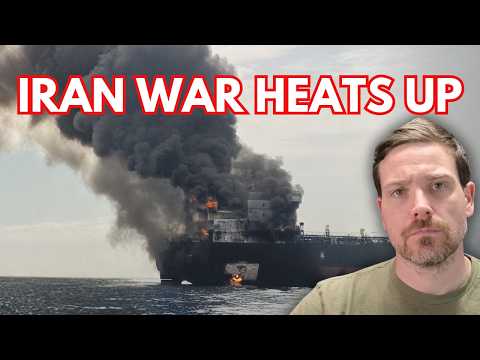
Control of the Bab el-Mandeb Strait does not require physically sealing the waterway if the threat of missiles, drones, or small boats is enough to make commercial shipping prohibitively risky. That is the central strategic argument here, and it gives the discussion a useful foundation: Houthi leverage comes partly from making insurers and shipping companies calculate that sailing through the Red Sea is not worth the danger. The focus on Mayun Island, Mocha, and the two shipping channels through the strait makes the geography understandable while connecting territorial gains to their potential economic consequences.
The analysis becomes more persuasive when it separates the ability to attack an opponent from the ability to control territory. Saudi airpower can strike Houthi positions, the presenter argues, but aircraft cannot permanently defend ports, roads, islands, and supply lines. That distinction provides a coherent explanation for why superior equipment does not automatically translate into a decisive outcome. Recent reporting supports the broader picture of Houthi advances around Mocha and Perim Island and of weaknesses among Saudi-backed Yemeni forces, although some of the video's judgments about Saudi military purpose and effectiveness are the presenter's interpretations rather than established facts. Reuters +1
The discussion of American involvement is similarly strongest when it avoids equating military capability with an easy political solution. The presenter distinguishes reports that Saudi Arabia requested U.S. military assistance from the less substantiated claim that it specifically requested American ground troops. That caution is valuable. Reporting does support the account that President Donald Trump declined direct U.S. military action while Washington offered intelligence and targeting assistance, reinforcing the video's larger point that better targeting alone cannot repair coordination problems among forces fighting on the ground. Reuters +1
Turkey, Pakistan, and Egypt broaden the analysis beyond a simple U.S.-Saudi-Houthi confrontation. The discussion repeatedly returns to the practical difference between possessing a large military and maintaining the expeditionary capabilities needed to seize and hold difficult territory. Egypt's economic exposure to disrupted Suez traffic also gives the section a concrete strategic dimension. At times, however, the presentation becomes too categorical: predictions about how Turkey would respond to Iran and assertions about what particular countries will probably do are delivered with more confidence than the supporting material shown here warrants.
The Taiwan comparison is an ambitious extension of the argument. Rather than claiming that American reluctance in Yemen automatically predicts abandonment of Taiwan, the presenter argues that the two situations illustrate the importance of capable local ground forces and competing U.S. strategic priorities. The distinction matters, and the 2026 National Defense Strategy does explicitly emphasize greater regional responsibility among Middle Eastern partners while prioritizing deterrence against China in the Indo-Pacific. Defense Media Activity Still, moving from Yemen to a hypothetical Taiwan conflict introduces enough different military, geographic, and political variables that this section works better as strategic commentary than as evidence of how such a conflict would unfold.
Presentation is energetic and accessible, particularly when complicated military concepts are translated into straightforward distinctions between striking targets and actually holding terrain. The humor keeps a dense geopolitical subject moving, but lines about soldiers chewing qat, militaries protecting palaces, and what various countries would do in a confrontation sometimes substitute punchy characterization for careful qualification. The lengthy merchandise comedy at the end is also a sharp tonal break from a discussion involving warfare, displacement, and major economic consequences. Overall, the analysis has a clear thesis and several well-developed strategic insights, but it would be stronger with tighter sourcing and a firmer boundary between documented developments and confident speculation.
Pros
- Clearly explains why threatening commercial shipping can have strategic effects without requiring a literal naval blockade.
- Strong distinction between airpower's ability to destroy targets and ground forces' ability to seize and hold territory.
- Geographic discussion of Mocha, Mayun Island, and the Bab el-Mandeb makes the military stakes easier to understand.
- Carefully distinguishes reported U.S. assistance from the less-supported claim that Saudi Arabia requested American ground troops.
- Examines the capabilities and constraints of several regional powers rather than reducing the conflict to two opposing sides.
Cons
- Several predictions about Turkey, Iran, Egypt, and other actors are stated more confidently than the evidence presented supports.
- Broad characterizations of national militaries occasionally oversimplify complicated political and institutional factors.
- The Taiwan comparison is thought-provoking but necessarily speculative and only partially transferable from Yemen.
- Frequent jokes and the extended merchandise segment can clash with the seriousness of the conflict being analyzed.
The analysis succeeds most when it explains why destroying Houthi weapons is fundamentally different from producing durable control over Yemen's strategically important coastline. Its combination of geography, military logistics, and regional politics makes the problem unusually easy to follow, though some confident geopolitical predictions deserve more qualification than they receive.