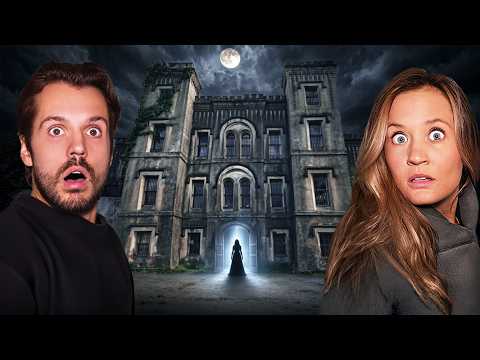
A dry well, a hidden porcelain doll, repeated stories of wet footprints, and a family account centered on a mysterious girl named Eleanor give this investigation an unusually cohesive haunting narrative. The location itself contributes heavily to the atmosphere: an empty residential house, a long tiled hallway, abandoned belongings, an alleged exorcism kit, and bedrooms where former occupants reportedly heard breathing and knocking. Rather than relying on a single spooky room, the presentation establishes several recurring motifs—water, three knocks, the hallway, the well, and the doll—that provide the night with a recognizable thread.
The lengthy family history is the most substantial part of the investigation, particularly because the account occasionally acknowledges its own evidentiary limitations. Most importantly, the supposed disappearance of Eleanor cannot be verified through newspaper reports, death records, missing-person notices, or property documents, and even her identity is uncertain. That distinction matters: the story offers intriguing connections between the alleged wet girl, the well, the doll, and the mother's unexplained familiarity with the name Eleanor, but none establishes that a child actually disappeared or died on the property. Unfortunately, the investigators later speak about the well and the girl with considerably more confidence than that uncertainty warrants.
The investigation itself throws nearly every familiar paranormal technique at the house. Polaroids, an EVP recorder, a spirit-box-style device, the Estes method, overnight cameras, and attempts to recreate reported experiences provide plenty of variety. There is also a welcome moment of skepticism when a possible voice or squeak is considered potentially attributable to a mouse, while an old mirror's unusual appearance is initially treated as ordinary deterioration. The brand-new EVP recorder is likewise introduced specifically to reduce concerns that an older malfunctioning device might have produced previous results. These touches show some awareness that mundane explanations deserve consideration, even though that standard is not maintained consistently.
Much of the supposed communication is considerably weaker. Fragmentary words such as “lower,” “too deep,” “blockade,” “dark,” and “pain” are repeatedly interpreted through the existing well narrative, while random or contradictory responses receive much less attention. Because the investigators already know the property's story before conducting these sessions, apparent matches are especially vulnerable to selective interpretation. The Estes session is entertaining and occasionally eerie, particularly when responses seem to align with questions the participant cannot hear, but nothing presented demonstrates that these fragments originate from a paranormal source rather than the devices and the investigators' interpretation of ambiguous audio.
The Polaroid sequence illustrates both the strengths and weaknesses of the approach. Most photographs appear uneventful, and the hosts openly acknowledge reflections and other ordinary features rather than manufacturing anomalies everywhere. The later image showing what they describe as an abnormal hand on a shoulder is genuinely effective as a visual mystery within the presentation, but the discussion quickly escalates from an unusual-looking hand to talk of claws and elongated fingers without establishing whether positioning, motion, exposure, perspective, or the instant film itself could explain the appearance. Calling it some of their most compelling evidence therefore goes considerably beyond what the image alone can establish.
Sleeping in the bedroom associated with reported breathing and footsteps gives the final stretch a stronger observational premise than simply asking devices questions. Unidentified thuds, a crash that cannot subsequently be located, possible breathing, knocking, and louder sounds on a later recording create an appropriately tense overnight sequence. Yet the inability to identify a source is not evidence that the source is supernatural. The house is unfamiliar, a fan is running during part of the night, the occupants are tired, and several noises are heard without any corresponding visual event. The investigation succeeds at documenting that they heard unexplained sounds; it does not establish what caused them.
Presentation is energetic and personable, with the hosts' joking chemistry preventing an extremely long investigation from becoming relentlessly solemn. At its best, that humor makes wandering through an empty house feel spontaneous rather than staged. At other points, jokes about the alleged dead child, repeated calls for likes and comments, giveaways, food discussions, merchandise promotion, and extended tangents interrupt sequences that would benefit from tighter pacing. The repeated insistence that the haunting is exceptionally “dark” or “twisted” also prejudges a mystery that the investigation never actually resolves. What remains is an effective piece of paranormal entertainment with a memorable location and several creepy moments, but its atmosphere is substantially stronger than its evidence.
Pros
- The well, doll, hallway, water imagery, knocking, and family stories create a coherent and memorable central mystery.
- The family account explicitly acknowledges that the alleged Eleanor disappearance could not be independently verified.
- Polaroids, EVP recording, overnight observation, and other methods give the investigation useful procedural variety.
- Several possible mundane explanations are acknowledged rather than every unusual sight or sound automatically being declared paranormal.
- The overnight bedroom sequence effectively attempts to recreate the circumstances in which the family reportedly experienced activity.
- Natural chemistry and humor between the hosts keep a very long investigation lively.
Cons
- Ambiguous spirit-box fragments are frequently interpreted through the known haunting story without enough consideration of coincidence or selective interpretation.
- The unexplained Polaroid hand is treated as stronger evidence than the limited examination shown can justify.
- Unidentified knocks, crashes, breathing, and other noises create atmosphere but do not establish a paranormal cause.
- Later discussion sometimes treats Eleanor and the well narrative more confidently than the explicitly unverified historical account supports.
- Repeated promotions, engagement requests, food tangents, and jokes interrupt the investigation's pacing.
- Frequent descriptions of the location as exceptionally dark or demonic overstate what the evidence presented actually demonstrates.
A strong setting, unusually detailed family story, and genuinely creepy overnight sounds make this an entertaining residential investigation, while the explicit uncertainty surrounding Eleanor is an important piece of restraint. The mystery becomes less convincing when ambiguous audio, an unexplained photograph, and unidentified household noises are repeatedly pushed toward supernatural interpretations without eliminating more ordinary possibilities.