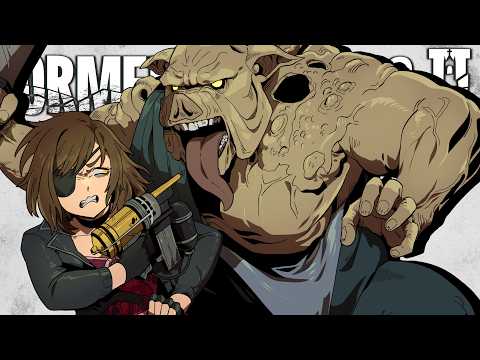
A banana peel, a suspicious passenger carrying explosives, and an unsettling creature hiding beneath an airplane are just some of the dangers awaiting players in One More Flight. This unusual horror game transforms an ordinary passenger flight into a repeating nightmare where seemingly insignificant decisions can determine who survives. The playthrough combines trial-and-error puzzle solving, disturbing death sequences, and the creator's enthusiastic commentary into an entertaining exploration of a demo that clearly has more secrets than its modest appearance initially suggests.
Before the gameplay begins, the creator introduces a personal segment called Buddy Time, discussing the emotional burden of constantly supporting other people while neglecting one's own wellbeing. The message about maintaining healthy boundaries is thoughtful and delivered with genuine warmth, although it feels disconnected from the horror experience that follows. Fortunately, viewers interested exclusively in the game are directed to a timestamp where the playthrough begins. Once the action starts, the creator's admission that flying genuinely frightens him adds an amusing personal dimension to an already uncomfortable setting.
The game's central mechanic becomes apparent after the protagonist repeatedly dies and awakens in the same airplane seat. Each failed attempt reveals new information about the passengers, environmental hazards, and supernatural threats. The creator gradually discovers that preventing a flight attendant from slipping on a banana peel, sedating a dangerous passenger, and protecting a woman who needs specific medication are all pieces of a larger puzzle. His running commentary makes these discoveries entertaining, particularly when seemingly sensible actions produce disastrous consequences. The combination of dark humor and increasingly complicated survival requirements gives the otherwise confined setting surprising variety.
One of the playthrough's strongest qualities is its willingness to explore mistakes rather than immediately pursue the most efficient solution. The creator deliberately remains in a bathroom to investigate a threatening presence, experiments with poisoning a banana, and repeatedly attempts to understand the strange creature lurking below the passenger cabin. His confusion over the correct medication, the changing combination-lock codes, and the purpose of various inventory items creates a believable sense of discovery. Occasionally, however, the repeated collection of familiar objects and attempts to navigate the same sequences become tedious. Several deaths occur because of uncertain controls or poorly understood interactions rather than particularly interesting revelations.
The investigation becomes considerably more engaging when the creator reaches the lower section of the aircraft and discovers evidence of a disturbing ritual. A grotesque creature, a locked suitcase, and a mysterious parchment gradually reveal the supernatural mechanisms behind the apparent bird attacks and repeating disaster. The escalating discoveries provide the playthrough with a satisfying progression from ordinary passenger mishaps to a much darker mystery. Particularly effective is the realization that simply disabling one threat does not necessarily eliminate the others. The creator's eventual discovery that he must destroy the parchment and permanently stop the creature demonstrates how the game's interconnected systems reward experimentation and careful observation.
The alternative endings add another worthwhile dimension. Escaping alone with a parachute produces a selfish conclusion that abandons the remaining passengers, while successfully resolving the major dangers leads to an unexpected scene in a child's bedroom. A further experiment reveals a quiet ending triggered by refusing to get up at the beginning. The creator also tests what happens when the supernatural parchment is destroyed without eliminating the creature, demonstrating that an apparently successful strategy can still end in catastrophe. These discoveries make the playthrough feel relatively comprehensive for a demo, although the final interpretation of the bedroom sequence remains uncertain, and some aspects of the underlying story are left unexplained. His enthusiasm for the eventual full release is understandable, but the finished game's quality cannot be established from this demonstration alone.
The presentation succeeds largely because the creator balances genuine curiosity with playful reactions to the game's absurdities. His irritation toward the rude passenger, excitement after solving difficult puzzles, and amusement at unexpected deaths give the experience a distinct personality. The game itself appears promising, with memorable hazards, interconnected puzzles, and multiple outcomes, but its sometimes unclear interactions and repetitive resets occasionally interrupt the momentum. Despite those limitations, the creator's persistence produces a rewarding examination of the demo's mechanics and endings while making the experience accessible to viewers who enjoy watching horror games unfold without playing them personally.
Pros
- The repeating-flight premise provides an inventive setting for survival puzzles, disturbing deaths, and supernatural horror.
- The creator's enthusiastic reactions and humorous commentary make repeated failures entertaining rather than consistently frustrating.
- Interconnected hazards involving the passengers, medication, explosives, and environmental objects encourage careful experimentation.
- The gradual discovery of the creature, mysterious parchment, and supernatural cause of the disasters gives the gameplay a satisfying sense of progression.
- Exploring multiple endings, including the selfish escape, successful survival, and quiet conclusion, demonstrates the game's replay value.
- The creator's additional experiment with leaving the creature alive reveals an important consequence that might otherwise have been overlooked.
- Directing viewers past the optional opening discussion makes the presentation more accessible to those interested primarily in gameplay.
Cons
- The extended Buddy Time introduction, while sincere, delays the horror experience and has little connection to the game itself.
- Repeatedly collecting the same objects and navigating familiar events occasionally slows the pacing.
- Some puzzle interactions are insufficiently clear, particularly those involving medication, inventory objects, and the creature.
- Several experimental attempts produce similar failures without adding much new information.
- The successful ending introduces an intriguing bedroom scene without providing enough context to clarify its implications.
- The creator's overwhelmingly positive assessment of the demo gives relatively little attention to its rougher mechanics and opportunities for improvement.
One More Flight delivers an entertaining mixture of grotesque horror, dark comedy, and interconnected survival puzzles, with a personable creator whose curiosity makes even unsuccessful attempts enjoyable. The exploration of multiple endings and the gradual unraveling of the aircraft's supernatural mystery provide substantial entertainment, although repetitive sequences and occasionally confusing interactions prevent the experience from feeling completely polished. As an examination of an unfinished horror game, this is an engaging and enthusiastic playthrough that makes a convincing case for the concept's potential.