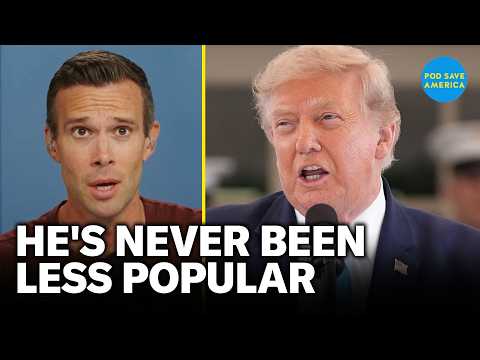
Donald Trump’s reported Venezuela oil agreement becomes the central example in a much broader argument that his administration is trying to distract Americans from economic and geopolitical failures. The host focuses on the announced development of 17 Venezuelan oil fields, claims involving 65 billion barrels and more than $100 billion in investment, and the conspicuous absence of named private companies supposedly providing that money. Those are sensible questions to ask of an agreement being promoted in such enormous terms, and the repeated demand for documents, investors and practical details gives the critique a substantive core beneath the outrage.
The discussion is particularly effective when it separates the scale of the announcement from what consumers could realistically experience in the near term. Even accepting the announced figures for the sake of argument, the host points out that developing oil infrastructure would take years rather than immediately lowering prices at American pumps. He also raises the suitability of Venezuelan crude for U.S. refining and cites Venezuelan economist Francesco Rodríguez’s calculation questioning the tax revenue implied by the announced figures. These points directly interrogate the substance of the deal rather than merely mocking Trump’s presentation of it, although the program provides no underlying documents that would allow viewers to independently assess the agreement.
That evidentiary limitation becomes much more serious as the commentary expands into sweeping geopolitical declarations. Assertions that the United States “lost the war in Iran,” that Iran controls the Strait of Hormuz, that the American security umbrella has collapsed internationally, and that the Venezuela agreement is outright fake are repeatedly presented as settled conclusions. References to reporting from Axios, The Wall Street Journal and The Guardian add some source awareness, but the host often summarizes or dismisses those reports through his own interpretation rather than carefully establishing what each source actually demonstrates. The result is a presentation that asks viewers to be skeptical of the administration’s unsupported claims while sometimes making equally categorical claims without fully showing the evidence behind them.
Economic frustration provides another important thread. Clips of voters unhappy about prices, a television segment giving a household tariff-cost figure for Michigan, discussion of rising energy costs, and concerns about military spending are assembled to support the argument that political messaging is colliding with everyday financial pressure. The individual voter interviews are useful illustrations of dissatisfaction, but they cannot by themselves establish broader public opinion. Likewise, the opening claim that Trump’s approval is at the lowest level in presidential history is consequential enough to require clear polling data and historical comparison, neither of which is supplied here.
Presentation increasingly overwhelms analysis as the piece continues. Footage of Trump walking down stairs, his movements after arriving in Washington, Natalie Harp looking at him, and his handling of a telephone is treated as meaningful evidence of dysfunction, but much of this amounts to ridicule built around brief visual moments. The same problem appears in speculation about where fundraising money goes and references to a Qatari account allegedly containing billions of dollars. Those are potentially serious allegations, yet the discussion does not provide enough documentation to justify the certainty and insinuation surrounding them.
The closing stretch abandons most remaining restraint. Trump’s reported disputes involving Canada, the United Kingdom and the Falkland Islands could have supported a focused examination of foreign-policy consequences, but they are quickly folded into a barrage of personal insults. Calling Trump a fascist, loser, sicko and other names may communicate the host’s anger unmistakably, but it adds no evidentiary weight and makes the analysis sound more like partisan venting than an effort to persuade skeptical viewers. The promotional ending for the host’s book further weakens the transition out of an already overheated conclusion. There are legitimate questions here about an enormous oil announcement and its practical meaning, but a more disciplined presentation would have made those questions considerably harder to dismiss.
Pros
- Raises concrete questions about the unnamed private investors, enormous investment figures and implementation timeline behind the reported Venezuela oil agreement.
- Makes the useful distinction between announcing access to oil reserves and producing enough additional oil to affect consumers in the near term.
- Introduces a specific Venezuelan economist’s calculation challenging the financial terms attributed to the agreement.
- Connects administration messaging to tangible concerns about energy prices, tariffs and military resources rather than relying entirely on personality-driven criticism.
Cons
- Major claims about Iran, the Strait of Hormuz, presidential approval and the Venezuela agreement are stated as established facts without enough evidence being presented to support that certainty.
- Brief clips of Trump walking, using a telephone and interacting with Natalie Harp receive disproportionate attention and encourage ridicule rather than substantive analysis.
- Serious allegations involving fundraising and billions of dollars in a Qatari account are raised without sufficient documentation or careful qualification.
- The relentless insults and openly hostile framing undermine otherwise legitimate scrutiny of the oil agreement and economic situation.
- Numerous geopolitical and economic topics are introduced in rapid succession, leaving several consequential claims underdeveloped.
Specific questions about who is financing the Venezuela agreement, how quickly its oil could reach market and whether its headline numbers withstand scrutiny give the commentary a worthwhile investigative direction. Unfortunately, categorical assertions, thinly supported allegations and an increasingly personal tirade substantially weaken that work, producing a piece more effective at expressing political outrage than establishing its broadest conclusions.