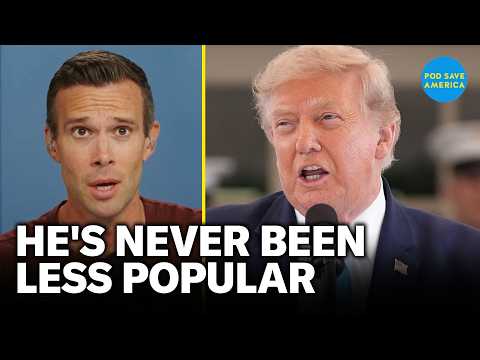
President Donald Trump's reported decision to publicize Republican Senator Tom Cotton's phone number over a daylight saving time dispute provides an unusually chaotic opening to a broadcast already focused on the approaching midterm elections. Whoopi Goldberg, Joy Behar, Sara Haines, Ana Navarro, Sunny Hostin, and Alyssa Farah Griffin examine Trump's campaign rhetoric, economic priorities, and increasingly confrontational relationship with members of his own party. The discussion combines pointed political criticism with humor, particularly when the panel questions why daylight saving time has become a presidential concern while Americans continue struggling with everyday expenses. Although the conversation is lively and occasionally insightful, its overwhelmingly critical perspective leaves limited room for competing interpretations of the administration's decisions.
The opening political discussion gains substance when Farah Griffin connects Trump's behavior to broader concerns about his second-term priorities. She points to disappointing employment figures, declining approval ratings, and what she considers an administration distracted by unnecessary projects and political grievances. Navarro adds concerns about Latino voters and immigration enforcement, arguing that Trump's approach has damaged support among communities that previously helped his electoral coalition. These observations establish a recognizable argument about political accountability, but several statistics and predictions receive little supporting explanation. Assertions about economic performance and an impending Republican electoral defeat would be stronger with more detailed evidence and acknowledgment of the uncertainty surrounding election forecasts.
A considerably more serious conversation follows with the reported botched lethal injection of Tennessee death row inmate Christa Pike. Goldberg deliberately centers the discussion on murder victim Colleen Slemmer and her mother, May Martinez, whose decades-long wait for justice adds an important human dimension to the controversy. Hostin explains her opposition to capital punishment through concerns about wrongful convictions, while Navarro defends its application to particularly horrific crimes and emphasizes the suffering of victims' families. Haines questions whether lifelong imprisonment might represent a more appropriate punishment. Unlike the opening political segment, this exchange features genuine disagreement and allows competing moral arguments to develop without requiring everyone to reach the same conclusion.
The death penalty discussion also raises important questions about execution procedures, medical participation, deterrence, and the financial costs of capital punishment. Hostin references wrongful conviction statistics and the potential for irreversible judicial errors, while Navarro argues that certain crimes demand the ultimate punishment even as she acknowledges problems with the system. Their disagreement exposes the tension between retribution, public safety, and the possibility of executing innocent people. However, the segment moves quickly between emotional testimony and statistical claims without examining the underlying research or legal standards in sufficient detail. Its strongest contribution is illustrating why capital punishment remains so divisive, rather than establishing which position is best supported by evidence.
Republican Senator Tom Tillis provides the broadcast's most revealing political interview as he discusses his book, How to Lose Friends and Antagonize Presidents, and his deteriorating relationship with Trump. Tillis describes the president as an exceptionally talented political campaigner whose administration has squandered opportunities through poor judgment and questionable advisers. His argument that electoral victories should not be mistaken for unrestricted governing mandates introduces a broader criticism of both political parties. The hosts challenge his tendency to blame presidential advisers rather than Trump himself, creating a more substantive exchange than the earlier panel discussion. Tillis's prediction that Republicans will suffer in November remains his political assessment rather than an established outcome, but his willingness to criticize his own party gives the conversation additional credibility.
The interview becomes especially compelling when the hosts confront Tillis about his confirmation votes. His acknowledgment that supporting Pete Hegseth was a major regret invites difficult questions about why he approved officials whose qualifications he subsequently criticized. Navarro presses him over what she sees as a pattern of condemning administration figures while continuing to support controversial appointments, including Todd Blanche. Tillis offers explanations involving Senate procedures, incomplete evidence, and the practical compromises of governing, but his answers do not always resolve the apparent contradictions. The occasionally confrontational questioning is effective because it demands accountability from an actual decision-maker rather than simply criticizing political figures who are absent.
The broadcast concludes with a lengthy View Your Deal presentation featuring discounted skincare, cosmetics, moisturizing products, and wrinkle treatments, followed by a brief discussion of the Boys & Girls Clubs of America's National Youth of the Year event. The shopping segment provides product demonstrations and promotional information, but its enthusiastic claims about hydration, skin improvement, and wrinkle reduction are largely presented without independent testing or meaningful discussion of limitations. Its rapid sales-oriented delivery also creates a jarring transition from the preceding conversations about political accountability and capital punishment. The closing recognition of youth achievement supplies a warmer, more uplifting finish, although the short discussion leaves little opportunity to explore the organization's work in depth.
Pros
- Features a substantive death penalty debate that acknowledges wrongful convictions, victims' families, punishment, and competing moral perspectives.
- Gives Colleen Slemmer and her mother's experience meaningful attention rather than focusing exclusively on the condemned inmate.
- Challenges Senator Tom Tillis directly about his confirmation votes, political inconsistencies, and willingness to hold Trump accountable.
- Allows Tillis to explain his criticism of both parties and his concerns about presidential overreach.
- Connects the approaching midterm elections to economic frustrations, immigration policy, and questions about Republican political strategy.
- Maintains an energetic conversational style that makes complicated political and legal subjects accessible to a general audience.
Cons
- The opening political discussion offers limited ideological diversity, with several hosts reinforcing similar criticisms of Trump.
- Economic statistics, polling figures, and electoral predictions receive insufficient context or independent examination.
- The death penalty discussion references important claims about deterrence, wrongful convictions, and execution costs without thoroughly exploring their evidentiary foundations.
- Some humor, interruptions, and emotionally charged language undermine the seriousness of otherwise worthwhile discussions.
- The Tillis interview occasionally becomes confrontational enough to limit fuller explanations of his decisions.
- The extended skincare promotion relies heavily on marketing claims and disrupts the broadcast's editorial momentum.
A politically charged but often substantive broadcast combines sharp criticism of the Trump administration with a thoughtful examination of capital punishment and a particularly revealing interview with Senator Tom Tillis. The strongest moments emerge when the hosts engage opposing viewpoints and demand explanations for consequential political decisions, while the weaker portions rely on familiar partisan commentary, insufficiently examined statistics, and enthusiastic commercial promotion. Despite its uneven balance and abrupt transitions, the program delivers several meaningful conversations that reward viewers interested in political accountability and contemporary public affairs.