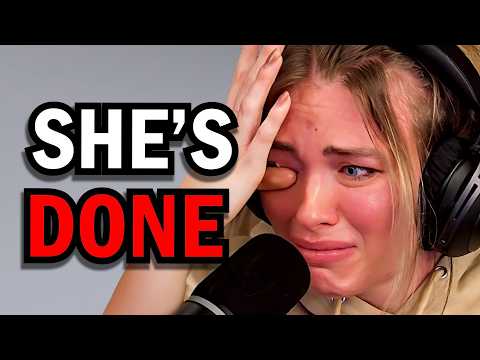
Lindsay Clancy’s admitted killing of her three children is quickly expanded here from a question of criminal responsibility into an argument about a much larger conflict between men and women. The discussion begins with a useful summary of the prosecution and defense positions: Clancy’s attorneys argue that severe postpartum psychosis left her not criminally responsible, while prosecutors contend that her actions and behavior demonstrate lucidity and premeditation. That distinction establishes the genuine legal and psychiatric dispute before the conversation turns toward the cultural reaction surrounding the case.
A viral compilation of women expressing sympathy for Clancy provides the panel with its central target. Some of the responses shown are genuinely striking, including a woman saying she does not think Clancy committed the killings despite Clancy having admitted to them, while others blame her husband or describe exhaustion and childcare demands as mitigating considerations. The segment effectively demonstrates that at least some people are reaching strong conclusions from limited information—one interviewee explicitly cites TikTok—but the leap from these examples to claims about “hundreds of thousands” or “millions” of supportive women is not substantiated within the discussion.
The most provocative argument comes through a referenced Nick Freitas clip, summarized as a warning that increasingly tribal behavior among women could produce an equally tribal backlash from men. From there comes the extraordinary prediction that people might eventually look back on this controversy as a moment connected to women losing voting rights. The speakers clarify that this is presented as a warning rather than an outcome they advocate, but the scenario is still enormously speculative. No evidence is offered that anger over the Clancy case is producing an organized movement toward removing women’s political rights, much less that such an outcome is plausibly approaching.
There is a more substantial concern underneath that overheated prediction. Several speakers worry that treating tragedies primarily through a men-versus-women framework encourages reciprocal resentment, with women blaming husbands and men concluding that social institutions systematically disregard them. The panel repeatedly says that men and women should instead be helping one another through difficult family circumstances. That argument could have supported a thoughtful examination of online tribalism, but it is weakened when the conversation itself repeatedly generalizes about “women,” “men,” and what entire groups supposedly believe.
The treatment of postpartum illness also needs greater precision. One speaker correctly separates ordinary exhaustion and overwhelm from an automatic excuse for killing children, but the defense described at the beginning is not merely claiming that Clancy was a tired mother: it alleges severe postpartum psychosis and lack of criminal responsibility. Whether that defense succeeds depends on the evidence and applicable legal standard, neither of which is examined deeply here. Collapsing psychiatric incapacity, sympathy for a defendant, and attempts to excuse murder into essentially the same category makes the debate rhetorically forceful but analytically less reliable.
Similar problems emerge when the panel broadens the conversation to abortion, workplace harassment, divorce and child custody. Claims that men risk lawsuits or losing jobs for ordinary compliments and that mothers receive sole custody roughly 80% of the time are introduced with little supporting context. Even when a number is apparently checked during the discussion, a raw custody percentage cannot by itself establish discrimination without explaining how cases are resolved, whether custody was contested, or what the statistic actually measures. These detours increase the emotional scope of the argument without establishing that the issues share the causal connection being suggested.
Pros
- Clearly establishes the fundamental conflict between the defense’s postpartum-psychosis argument and the prosecution’s claim of deliberate, lucid action.
- The street-interview footage provides concrete examples of poorly informed or highly sympathetic reactions rather than leaving the discussion entirely abstract.
- Raises a worthwhile concern about social-media tribalism turning an individual criminal case into a broader conflict between men and women.
- Explicitly distinguishes the prediction of a male backlash from advocating that women should lose their rights.
Cons
- The prediction that the controversy could eventually be associated with women losing voting rights is extraordinarily speculative and unsupported by evidence presented here.
- A small collection of viral reactions is treated as evidence of an enormous cultural phenomenon without demonstrating how representative those reactions actually are.
- Severe postpartum psychosis is sometimes blurred together with ordinary exhaustion and parenting stress, weakening the treatment of the defense’s actual argument.
- Broad claims about custody, workplace interactions, abortion and gender relations receive little supporting evidence or necessary context.
- The panel criticizes gender tribalism while frequently relying on sweeping generalizations about men and women that risk reinforcing the same dynamic.
The discussion identifies a legitimate and troubling question about how social media can transform a horrific criminal case into a symbolic battle between the sexes. Its strongest observations concern uninformed online certainty and escalating gender resentment, but sweeping generalizations and an extreme prediction about women’s political rights push the conversation well beyond what the evidence presented can support.