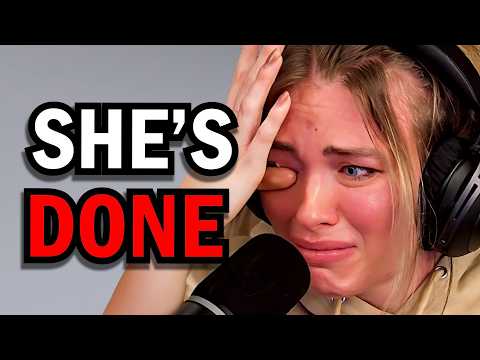
Five-year-old Saylor Hayes being found dead near the water after an extensive search provides the most immediately troubling case in a collection dominated by allegations involving children, parents and violent crime. The account lays out several concrete reasons investigators apparently became suspicious of Saylor’s parents, particularly the claim that her tracking transmitter remained in Virginia while the family was in South Carolina and allegations that she was left unsupervised despite being nonverbal, prone to wandering and attracted to water. The discussion becomes less disciplined when those circumstances lead to speculation that her parents may have intentionally wanted her to enter the water, an inference that goes substantially beyond the charges described.
That tension between useful case reporting and premature judgment runs throughout the presentation. The host supplies dates, charges, court developments, reported statements and competing positions, but frequently overlays them with insults and emphatic declarations about suspects. The D4vd section is particularly aggressive, treating alleged asset transfers and his qualification for a public defender as evidence of financial maneuvering despite also acknowledging that the public defender’s office conducted a financial review. Questions about his finances are reasonable based on the circumstances presented, but conclusions about why he qualifies for appointed counsel remain speculative without the underlying financial information.
Barry Morphew’s alleged bond violations are handled somewhat more concretely because the segment describes the reported hit-and-run, GPS information and subsequent arrest for failing to comply with release conditions. Even here, however, the host repeatedly emphasizes her personal dislike of Morphew and connects details from his murder case to other notorious cases through loose comparisons. Those rhetorical flourishes may suit an opinion-driven true-crime show, but they add little evidentiary value and can blur the important distinction between conduct alleged in the current bond dispute and guilt in Suzanne Morphew’s death.
The allegations against KJ Biermann receive a more balanced treatment. The host explains the teenage girl’s accusation, the absence of reported male DNA from the examination, KJ’s denial, his mother’s public defense and the subsequent seven-count indictment. She appropriately warns that unverified rumors about the accuser should not be treated as proof that she is lying and rejects the idea that good grades or athletic prospects establish innocence. Still, suggesting that the grand jury indictment necessarily indicates evidence beyond the accuser’s account is an inference that is not established by the information presented, and speculation about why KJ wants confidential proceedings similarly outruns the known facts.
The death of two-year-old Barrett and the prosecution of Cory Walsh raise the episode’s most complicated questions about criminal responsibility and mental illness. The presentation carefully notes that prosecutors characterize the killing as planned while Walsh’s attorney says she was experiencing psychosis, and it correctly identifies her reported interest in the Lindsay Clancy case as potentially important evidence requiring further examination. Calling Walsh a “copycat,” however, remains a media characterization rather than an established conclusion. The host is at her best when acknowledging uncertainty over disputed details such as the type of ligature and correcting early misinformation about who discovered Barrett.
The extended Lindsay Clancy discussion is considerably more interpretive. The host distinguishes an insanity verdict from a straightforward acquittal and explains her reasoning about why a defense attorney might entertain a plea agreement, but much of the analysis amounts to reading strategic meaning into public statements and hypothetical negotiations. She labels these conclusions as her opinion at points, which helps, yet the lengthy argument about what defense counsel supposedly knows becomes more confident than the available material warrants. Combined with lengthy promotional interruptions, repeated invitations for future deep dives and substantial personal commentary, this makes an already dense collection of cases feel more sprawling than necessary.
Pros
- The Saylor Hayes section provides a detailed chronology of the disappearance, search, tracking-device issue, discovery of her body, arrests and reported prior child-neglect cases.
- Competing prosecution and defense positions are presented in the Cory Walsh and KJ Biermann cases rather than simply treating allegations as established guilt.
- The host explicitly identifies several claims as rumors, personal opinions or unverified information and occasionally corrects misinformation circulating around the cases.
- The distinction between an insanity-based verdict and a straightforward not-guilty verdict adds useful context to the Lindsay Clancy discussion.
Cons
- Speculation sometimes advances well beyond the reported evidence, particularly regarding Saylor Hayes’s parents’ possible intentions, D4vd’s finances and the meaning of defense strategy in the Clancy case.
- Repeated insults and declarations of personal hostility toward accused individuals undermine the care needed when discussing unresolved criminal proceedings.
- Some legal conclusions are presented too confidently, including what a grand jury indictment supposedly reveals about the evidence and what willingness to consider a plea deal implies about a defense attorney’s beliefs.
- Long promotional segments, tangents and repeated pitches for future deep dives make the collection less focused than its serious subject matter deserves.
The breadth of case information and willingness to acknowledge uncertainty give these updates genuine value, especially when competing claims and procedural developments are clearly separated. Too often, however, careful reporting gives way to speculation, personal certainty and inflammatory commentary, leaving viewers to distinguish documented developments from the host’s interpretation themselves.