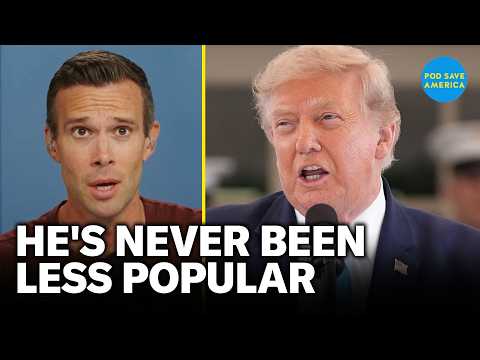
Rising gas, copper, and everyday living costs provide the central argument for a broader political warning: Republicans may be approaching the midterms with an affordability problem that their messaging cannot easily overcome. The presentation effectively opens with Fox Business coverage acknowledging price increases and asking Republican officials how voters will respond, creating an interesting contrast between Trump's positive economic rhetoric and concerns being aired on a network portrayed here as normally friendly territory. That contrast is more substantive than the sensational framing around Fox itself because it focuses attention on an issue voters encounter directly.
The strongest material comes from the Republican interviews. James Comer acknowledges that Republicans running for office are unlikely to be pleased about painful developments occurring immediately before an election, while another exchange shows a Republican declining attendance at the party's convention because he needs to remain in his district. These clips give the commentary something concrete to analyze rather than relying entirely on speculation about private Republican anxiety. The argument that vulnerable politicians are prioritizing campaigning over national party events is plausible within the material presented, although the broader significance assigned to individual examples is still interpretive.
Affordability polling supplies the episode with its most important quantitative foundation. Figures are presented showing substantial disapproval of Trump's handling of the cost of living, declining overall job approval, worsening Republican consumer sentiment, and poor numbers in several politically important states. These statistics collectively support the contention that economic perceptions could become a serious electoral liability. However, the presentation provides little methodological context for many of the numbers, sometimes moves between different approval figures without explaining their sources or differences, and at one point refers to the “2028 midterm,” an apparent inconsistency that undermines precision.
The discussion becomes less disciplined when it shifts from economic indicators to Trump's personality and priorities. Contributors argue that he is too focused on online controversies, symbolic fights, retaliation, and other distractions rather than grocery bills and household expenses. That may be their sincere political diagnosis, and several clips are used to illustrate why they believe it, but descriptions of Trump's motivations and the influence of his advisers are largely interpretations rather than independently demonstrated facts. Mocking comparisons involving an elderly relative discovering a new app also add entertainment but do little to strengthen the underlying case.
A potentially valuable argument about Republican candidates distancing themselves from Trump is similarly underdeveloped. Mike Johnson's language, Ralph Alvarado reportedly removing Trump-related material from his website, candidates skipping a convention, and changes to the congressional schedule are presented as signs of a party trying to escape an unpopular president. Those details are worth examining, but the episode tends to move directly from examples to a sweeping conclusion about Republican strategy without exploring alternative explanations or establishing how widespread the behavior actually is.
The commentary is at its best when it returns to its simplest proposition: voters worried about affordability are unlikely to be distracted indefinitely by branding, culture-war disputes, or symbolic political gestures. Repetition reinforces that point but eventually becomes excessive, with the opening affordability discussion effectively returning near the end and several polling themes appearing multiple times. The promotional interruption for the Midas subscription also arrives abruptly. A tighter edit centered on the economic data, Republican responses, and electoral implications would have produced a more focused and persuasive analysis.
Pros
- Fox Business clips acknowledging rising prices provide useful tension with Trump's favorable characterization of the economy.
- Republican interviews give the argument direct material to analyze rather than relying solely on outside commentary.
- Multiple affordability, approval, consumer-sentiment, and state-level figures create a substantive basis for discussing electoral vulnerability.
- The connection between household costs and political consequences gives the episode a clear, understandable central argument.
- Distinguishing symbolic political fights from voters' material concerns produces some of the commentary's sharpest analysis.
Cons
- Polling figures are frequently presented without enough methodological or sourcing context to evaluate them fully.
- Claims about Trump's motives, advisers, and Republican strategic thinking sometimes move beyond what the displayed evidence establishes.
- Individual candidates and scheduling decisions are treated as evidence of a broader Republican retreat without demonstrating how representative they are.
- Personal ridicule and dismissive descriptions weaken portions of an otherwise evidence-oriented political argument.
- Repetition of affordability statistics and themes makes the latter portion less focused, while the apparent “2028 midterm” reference introduces an avoidable factual inconsistency.
Economic anxiety gives the commentary a meaningful and politically relevant foundation, and the Republican and Fox Business clips make its central warning more persuasive than a purely partisan monologue would have been. Its case becomes weaker when selected examples are stretched into broad conclusions about motives and party strategy, but the core analysis of affordability as a serious electoral vulnerability remains clearly presented and substantially supported by the material shown.