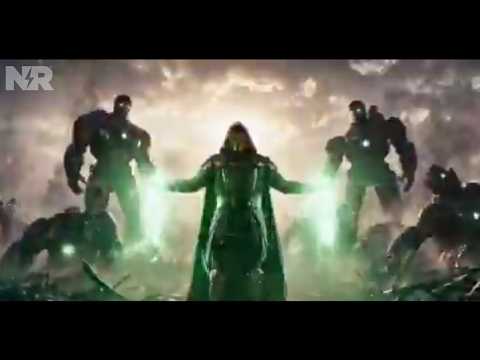
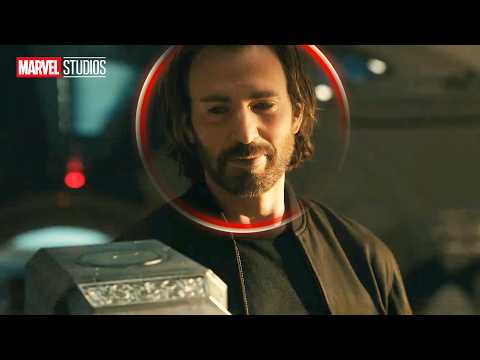
The most engaging quality of this prediction is the attempt to turn scattered pieces of footage, post-credit scenes, reported leaks and existing MCU story threads into one continuous narrative. Rather than simply cataloguing trailer shots, Colton Ogburn proposes an opening built around incursions, follows Steve Rogers through the consequences of his decision to remain in the past, brings the Fantastic Four and Doctor Doom into the crisis, and eventually converges several generations of Marvel characters. It is an entertaining exercise in narrative reconstruction, and the recurring effort to explain why particular characters would meet or travel between universes gives the speculation more structure than a conventional trailer breakdown.
That structure, however, can also create a misleading impression of certainty. The video begins by suggesting that the first two acts can now be laid out relatively safely because new footage has apparently validated earlier leaks, yet much of the resulting story remains invention layered upon inference. The proposed destruction of another universe by the X-Men, Steve informing Thor about his retirement, Loki relocating Steve's family, Doom's relationship with Sue, Sam Wilson's argument with Bucky, Love sensing the incursion and Namor deliberately sabotaging the heroes are all treated as pieces of a coherent storyline without equivalent levels of supporting material. Ogburn does periodically identify rumors and openly acknowledges when he enters more speculative territory, but those qualifications become less effective as increasingly detailed imagined scenes, dialogue and motivations accumulate.
Steve Rogers provides the theory's strongest narrative spine. Using Bucky's apparent awareness of Steve's intentions in Endgame as a starting point, the video imagines the stone-return mission becoming newly important and Steve's decision to stay with Peggy producing multiversal consequences. The proposed meeting between Steve and Loki is particularly clever thematically, connecting Steve's commitment to freedom with Loki's struggle to preserve free will while protecting the multiverse. Even where the specifics are unsupported, the theory tries to make established character decisions matter rather than using Steve's return solely as nostalgic spectacle.
Doctor Doom's proposed role is similarly elaborate but considerably shakier. The video imagines Doom initially recruiting Reed Richards, using Steve as an ambassador, coordinating devices across three universes and ultimately sabotaging the entire operation before pursuing a Battleworld-like future. That gives the hypothetical film a workable deception plot and provides reasons for the Avengers, Fantastic Four and X-Men to interact. Yet Ogburn himself eventually identifies the central problem: it is unclear why Doom would need such an elaborate scheme if he intended to destroy the devices anyway. His suggested explanations—that Doom needs particular heroes elsewhere or that the machines secretly accelerate incursions—are plausible story pitches, but they demonstrate how much connective tissue the theory has had to manufacture.
The large ensemble is handled with impressive attention to possible character relationships. Sam and Bucky's disagreement could give the competing Avengers teams a personal dimension, Thor's reunion with Steve could capitalize on their shared history, and Reed working alongside Beast creates a natural scientific partnership. The proposed deployment of other characters also attempts to give seemingly disconnected trailer imagery a purpose, including Sue holding back water, Namor's involvement and the heroes gathering around the Fantastic Four. At its best, the video shows how a sprawling crossover might organize its cast into smaller groups with distinct objectives before reuniting them for the larger conflict.
The weakest interruption is the lengthy testosterone-replacement sponsorship segment. It arrives immediately after the host jokes about feeling older while reflecting on Marvel's history, turning that personal observation into a medical advertisement. Ogburn explicitly says he is not a medical professional, and the segment says treatment would involve testing and consultation with a licensed physician, but claims concerning age-related testosterone decline, symptoms, clinic rankings and personal benefits are promotional assertions rather than evidence established by the video's Marvel analysis. Beyond that distinction, the abrupt transition from superhero nostalgia to discussion of fatigue, libido and hormone treatment substantially disrupts the momentum of an already complicated theory.
As entertainment, the episode succeeds because Ogburn remains energetic and is willing to expose the uncertainty in his own construction. Near the end, he openly asks why Doom would behave as predicted and admits that his answers have moved into third-act guessing. That self-awareness helps, but it arrives after an enormous amount of scene-by-scene specificity that can make conjecture sound more sourced than it is. The result is best approached not as a reliable reconstruction of the movie's first two acts, but as an imaginative attempt to discover one possible story capable of connecting the available clues.
Pros
- Builds scattered footage, post-credit material and reported leaks into an unusually coherent speculative narrative.
- Uses Steve Rogers' Endgame decision as an effective thematic and structural foundation for the multiverse plot.
- Finds plausible character pairings and conflicts that could organize an exceptionally large crossover cast.
- Clearly acknowledges some points where the argument leaves visible evidence behind and becomes prediction.
- Identifies a genuine weakness in its own proposed Doom scheme rather than pretending every piece fits perfectly.
Cons
- The confident framing overstates how much of the proposed first two acts is actually supported by the material discussed.
- Detailed invented dialogue, motivations and entire sequences frequently blur the boundary between evidence, reported rumor and creative speculation.
- Doom's elaborate deception lacks a demonstrated motive, forcing additional hypothetical explanations to make the theory function.
- The extended testosterone-treatment advertisement sharply interrupts the analysis and includes health-related promotional claims outside the video's evidentiary focus.
- The sheer density of hypothetical connective material makes it increasingly difficult to distinguish genuinely revealing clues from ideas that simply make for an appealing Marvel story.
This is a lively and impressively interconnected piece of Marvel speculation that works better as a proposed version of Doomsday than as evidence that its plot has genuinely been solved. Its strongest ideas give Steve, Loki, Thor and Doom meaningful roles in the multiversal crisis, but too many unsupported scenes and motivations are required to transform the available clues into a complete narrative. The theory is fun precisely because it is ambitious, provided its considerable invention is kept firmly in view.