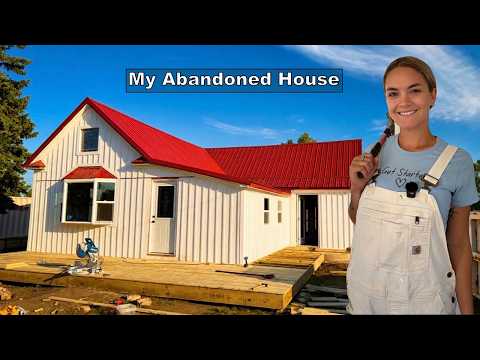
A narrow temporary walkway had become more than an inconvenience once refrigerators, ovens and other heavy items needed to cross it, giving the deck project an immediate practical purpose beyond improving the cabin’s appearance. The build is framed around getting a safer, permanent platform in place before winter, while also creating better access for upcoming siding work. That clear motivation helps the construction footage feel connected to the larger off-grid cabin project rather than like an isolated home-improvement job.
Much of the value comes from attention to details that could easily disappear in a faster build montage. Cut ends of treated lumber receive additional preservative, uneven joists are planed to improve the finished surface, and extra blocking is installed to support the picture-frame border and its mitered corners. The explanation that treated boards can vary substantially in thickness is particularly useful because it shows why apparently minor imperfections in the framing matter once the decking goes down.
Weather protection receives similar attention. The builders explain the ledger flashing, butyl-based joist tape and wider flashing used where water could collect, along with their reasoning for protecting penetrations through the lumber. They also avoid drilling through the metal flashing around the perimeter, instead describing countersunk screws and matching plugs alongside the grooved hidden-fastener system used elsewhere. These sections make the project more informative without turning it into an exhaustive construction tutorial.
The picture-frame composite decking provides the strongest visual payoff. Establishing the perimeter requires careful blocking, measurements and 45-degree cuts before the larger field can progress, so the finished border feels earned rather than merely revealed at the end. Rain, darkness and time spent handling an unrelated delivery also introduce believable interruptions, although the delivery itself is teased for another installment rather than contributing anything meaningful here.
Material selection gets a useful but fairly brief discussion. Cedar and composite were apparently similar enough in price to make either plausible, but the locally available cedar was described as badly cracked and warped, while composite promised the low-maintenance finish the owners wanted. The hope that the result will become a roughly 50-year deck is presented as an expectation rather than demonstrated longevity, and the discussion would have been stronger with more detail about the specific product or what supports that lifespan assumption.
The finished platform succeeds most convincingly when the owners explain how it changes daily life at the cabin. It provides stable footing for ladders or scaffolding during siding work, easier movement of firewood and supplies, more room around the door, and an outdoor location for pressure canning that keeps heat and steam out of the cabin. Permanent stairs and possible future additions remain unfinished, but that is acknowledged directly, making the ending feel like completion of a useful phase rather than an attempt to portray the entire outdoor area as finished.
Pros
- Practical construction details such as cut-end treatment, joist planing, corner blocking and flashing make the build informative as well as visually satisfying.
- The picture-frame decking provides a clear craftsmanship challenge and a strong finished appearance.
- Material choices and hidden-fastener methods are explained in terms of the owners’ specific needs rather than simply shown.
- The conclusion demonstrates several concrete ways the deck improves safety, cabin maintenance and everyday off-grid work.
- Weather and scheduling interruptions give the project a believable start-to-finish progression without manufacturing unnecessary drama.
Cons
- The claimed hope for roughly 50 years of service from the composite decking is not supported with enough product-specific information to evaluate it.
- Some construction steps pass quickly enough that viewers hoping to reproduce the project would need additional guidance.
- The unrelated delivery tease briefly interrupts an otherwise tightly focused deck build.
- Temporary stairs mean the project is functional but not yet entirely complete.
Careful framing, moisture protection and a well-executed picture-frame finish turn a necessary cabin upgrade into an engaging construction project with genuine practical value. The presentation is strongest when it explains why small building decisions matter, while a little more technical detail on the decking itself would make the long-term durability discussion more convincing.