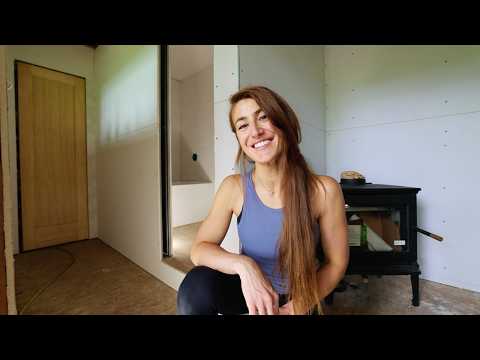
With winter approaching and unpredictable rain interrupting construction, Greg and Katie are pushing to finish the metal siding on their off-grid cabin. What initially appears to be a straightforward exterior installation becomes a series of adjustments involving electrical fixtures, precise measurements, awkward working positions, and pieces that refuse to fit quite as expected. The project provides an engaging look at the practical realities of building a home, where progress often depends on solving small problems rather than completing dramatic transformations.
One of the more interesting challenges involves removing exterior light fixtures so the metal siding can be installed underneath them. Greg explains how the position of the fixtures relative to the metal ribs affects the cutting process, with one opening conveniently falling between two ribs while another requires additional modifications. These details give the construction footage genuine instructional value, particularly for viewers interested in how siding installations accommodate existing electrical components. However, the electrical work receives limited explanation, leaving important questions about weatherproofing and proper fixture installation unanswered.
The couple's willingness to correct mistakes rather than simply work around them adds authenticity to the project. When a piece of metal proves slightly too short, they decide to remove the screws and shift the installation approximately a quarter of an inch so the discrepancy can be concealed by the J-channel. Other challenges involve trimming around a faucet, fitting pieces near existing trim, and working along difficult sections of the wall. These moments demonstrate how much measuring, cutting, and reconsideration goes into achieving a finished appearance, although the rapid exchanges sometimes make the exact solutions difficult to follow.
The physical demands of construction become especially apparent when Greg struggles to position a ladder near an awkward section of the building. His comments about leaning outward to reach the work area, combined with an incident involving a knee brace pulling away from the wall, introduce legitimate safety concerns. While these moments communicate the difficulty of working around the cabin's exterior, the presentation does not meaningfully address safer access arrangements or the precautions necessary when working at height. The footage is therefore more effective as an informal construction diary than as a comprehensive guide for viewers attempting similar work.
A substantial diversion introduces PD, a young red wattle pig that the couple plans to incorporate into their breeding operation. They explain that raising their own piglets could reduce their dependence on purchasing animals from other farmers while potentially providing livestock for interested friends and neighbors. The discussion also covers their decision to keep PD separated from the larger pigs for safety and to manage breeding more deliberately. This segment offers useful insight into the broader goals of their off-grid lifestyle, particularly their emphasis on food security, although it temporarily shifts attention away from the cabin project.
The personal reflections surrounding the build provide another worthwhile dimension. Greg recalls that five years and five months have passed since they began constructing their previous home, describing the demands of balancing a full-time job, house construction, and producing online content. His excitement about approaching the end of another major building project feels genuine, especially when he explains that they intend to pursue different activities rather than construct another house the following year. These reflections help establish why finishing the cabin matters beyond simply completing another construction task.
The presentation benefits from the natural working relationship between Greg and Katie, whose conversations convey both cooperation and occasional frustration. Their enthusiasm is infectious when pieces finally fit, and the repeated measuring, tool changes, and adjustments make the progress feel earned. Nevertheless, the loosely structured footage includes extended stretches of fragmented conversation that can be difficult to interpret without a clearer explanation of the work being performed. Despite repeated optimism about finishing major sections of the exterior, the installment ends during the installation process rather than delivering a definitive completed result. The impending winter provides a useful sense of urgency, but the lack of a substantial final progress assessment leaves the construction narrative somewhat unresolved.
Pros
- Provides an authentic look at exterior cabin construction, including the measuring, cutting, fastening, and adjustments required for metal siding installation.
- Demonstrates practical problem-solving around electrical fixtures, metal ribs, J-channel, existing trim, and other obstacles.
- Captures the cooperative working relationship between Greg and Katie, making the construction process personable and engaging.
- Explains the couple's livestock breeding plans and how raising their own piglets fits into their broader food-security goals.
- Adds meaningful personal context through reflections on more than five years of homebuilding and the anticipation of moving beyond major construction projects.
- Maintains a believable sense of progress by showing mistakes, difficult working conditions, and necessary corrections rather than presenting an artificially effortless build.
Cons
- Electrical fixture removal and reinstallation receive insufficient technical explanation, particularly regarding weatherproofing and safe installation practices.
- Awkward ladder positioning and the incident involving a loose knee brace raise safety concerns that are not adequately addressed.
- Extended sequences of fragmented construction dialogue make some measurements, modifications, and installation decisions difficult to understand.
- The piglet introduction, while interesting, interrupts the central siding project and weakens the episode's overall focus.
- The absence of a clearly presented finished section or comprehensive progress summary makes the ending less satisfying than the buildup suggests.
Greg and Katie deliver an enjoyable, down-to-earth account of the challenges involved in finishing an off-grid cabin while balancing the demands of their growing homestead. Their teamwork, practical adjustments, and genuine enthusiasm make the construction footage rewarding, even when the technical explanations and pacing could be stronger. Although the installment stops short of a satisfying completed reveal, it succeeds as an authentic record of incremental progress toward an important building milestone.