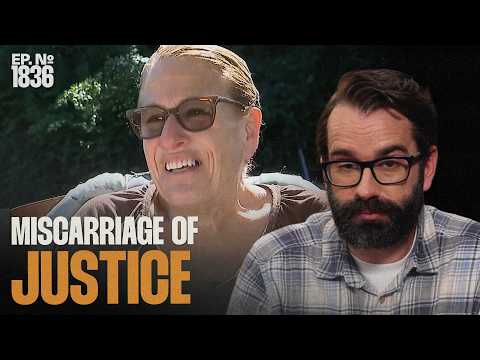
A prestige Harry Potter series has an obvious advantage over the films: substantially more time to restore characters, subplots and details that were compressed or removed. That possibility gives the discussion a worthwhile foundation, particularly when it praises the inclusion of Peeves, considers how additional runtime might benefit the early books and recognizes several casting choices as promising. John Lithgow's Dumbledore, Janet McTeer's McGonagall and the young cast receive generally optimistic assessments, while the sets and overall craftsmanship are treated as encouraging signs that HBO is investing heavily in the production.
The strongest critical question concerns how that additional runtime will actually be used. Scenes showing Ron receiving his Hogwarts letter or conversations outside Harry's perspective are presented as evidence that the series will expand beyond the books' dominant viewpoint. The concern that newly invented material could eventually displace source material becomes more persuasive when the discussion reaches the increasingly dense later novels. However, treating a few original scenes as the beginning of an inevitable slide toward fundamental thematic changes remains speculative; without seeing their execution, padding, useful characterization and harmful alteration are all still possible outcomes.
There is also a thoughtful examination of tone. The darker visual palette is acknowledged as consistent with portions of the film series, yet the distinction between deliberate darkness and imagery that is simply difficult to see is fair. Likewise, questioning whether creators associated with Succession, Game of Thrones, The Last of Us and other adult dramas will preserve Harry Potter's sense of wonder raises a legitimate adaptation issue. The presentation is at its best when it frames these concerns as uncertainties rather than conclusions and admits that filmmakers with seemingly different sensibilities can still prove well suited to the material.
Unfortunately, the discussion becomes far less convincing when Paapa Essiedu's casting as Snape dominates the argument. The central claim is not merely that Snape's physical description has changed, but that making him Black will automatically transform Harry's suspicion, James Potter's bullying, Lily's friendship and Dumbledore's manipulation into racial narratives. Those interpretations are conceivable ways some viewers might read the scenes, but the video repeatedly treats them as near-inevitable consequences rather than possibilities shaped by writing, performance, staging and the broader casting of the series. Phrases about racial profiling, white guilt and Lily's relationships push hypothetical audience reactions much further than the available material can establish.
That fixation also undermines the video's own argument for fidelity. It accurately notes that Snape is repeatedly described as pale and that HBO has promoted the adaptation as authentic to the books, making questions about altered characterization entirely reasonable. Yet the analysis moves from textual description into assumptions about why Essiedu was cast, what he supposedly thinks about being selected and how future roles will necessarily be race-swapped to compensate. None of those conclusions is demonstrated. The argument would be substantially stronger if it stayed focused on whether appearance is essential to Snape's characterization instead of attributing motives to producers and predicting social meanings before the relevant scenes exist.
The presentation itself is energetic, knowledgeable and clearly rooted in long familiarity with the series, but its frequent insults and culture-war detours make it less disciplined than the adaptation analysis deserves. Extended attacks on Wil Wheaton, jokes about actors' appearances, commentary about Rowling's critics and repeated references to unrelated productions provide a recognizable combative style, yet they repeatedly interrupt the more useful discussion of structure, fidelity, pacing and tone. By the end, a potentially nuanced examination of how adaptation choices can alter character relationships has become largely an argument that one casting decision will contaminate the series. There are worthwhile observations here, but they are buried beneath certainty about consequences that remain untested.
Pros
- Clearly explains why a long-form series could restore substantial book material omitted or compressed by the films.
- Offers specific observations about casting, visual tone, Peeves' inclusion and the risks of adding material outside Harry's perspective.
- The concern that invented scenes could eventually compete with essential source material becomes especially relevant when discussing the longer later books.
- Demonstrates detailed familiarity with Snape's written description and with differences between the novels and films.
Cons
- Treats speculative racial interpretations of future Snape scenes as likely outcomes without evidence from the finished series.
- Makes unsupported assumptions about casting motives, Essiedu's private feelings and future race-swapping decisions.
- Culture-war digressions and personal attacks repeatedly overwhelm the stronger adaptation criticism.
- The sustained focus on one casting choice leaves comparatively little room for evaluating other potential changes with the same depth or skepticism.
There is a worthwhile adaptation critique underneath the provocation, especially in the questions about added scenes, shifting perspective and preserving enough space for the later books. But the argument loses credibility when hypothetical reactions to Snape's casting are presented almost as predetermined facts, turning a potentially nuanced discussion of fidelity into an increasingly speculative culture-war monologue.