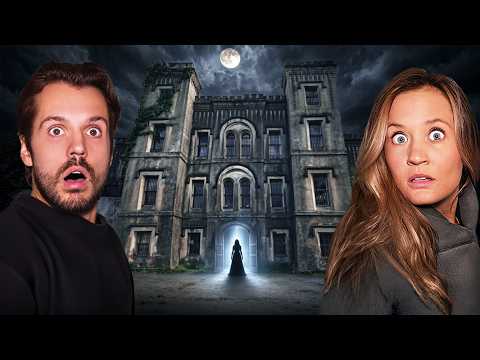
Knocks answering a yes-or-no question in the dark remain the defining moment for Sam and Colby as they revisit the experiences that pushed them toward paranormal investigation. Their reaction to that old footage is still visibly enthusiastic, but the retrospective format adds something their younger selves largely lacked: a willingness to admit that unexplained does not automatically mean paranormal. That tension between lingering belief and newfound skepticism gives the retrospective more substance than a simple collection of old scares.
The ranking system—technique, evidence, and bravery—provides a loose structure for evaluating how their approach changed. They are particularly unsparing about their early methods, describing investigations built around sitting in darkness, lighting candles, saying Bloody Mary, using a Ouija board with friends, or simply wandering around allegedly haunted locations. Their willingness to award themselves zeros and ones for technique is both funny and revealing. Rather than pretending they were always disciplined investigators, they acknowledge that many early outings were essentially exploration videos in which frightening events happened.
That self-criticism extends usefully to several supposed pieces of paranormal evidence. They acknowledge that friends could have moved the Ouija planchette, rocks in the tunnel could have been displaced by people or animals, a fallen backpack was probably gravity, a hotel pillow could have been left by housekeeping, and the presidential-suite camera movement was caused by someone hitting the table and an unstable tripod. Strange hotel phone calls are also treated as potentially human interference, including the possibility that someone knew where they were staying and was deliberately frightening them. None of these explanations establishes what actually happened, but considering ordinary alternatives makes the discussion considerably more credible than treating every anomaly as supernatural proof.
Their standards become less rigorous around the incidents they still regard as exceptional. The responsive knocking at the Queen Mary, simultaneous candle movement at the Biltmore, unexplained noises, flickering electricity, and hotel-room phone calls receive comparatively high evidence scores because Sam and Colby say they still cannot explain them. Yet absence of an explanation is not evidence that a ghost or demon caused an event, and the footage as presented cannot eliminate mundane possibilities such as building noises, airflow, electrical faults, other people, or environmental conditions. Calling some moments among their best paranormal evidence is fair as a description of their own judgment, but the material does not independently establish a supernatural cause.
The Biltmore sequence best illustrates both the strengths and limitations of their case. Extended, apparently uncut footage helps viewers follow the group's reactions, and the hosts specifically explain that they preserved continuity because they expected accusations of manipulation. The candles moving together is understandably striking to people already frightened by surrounding events, but their brief consideration of air conditioning does not amount to a controlled test of airflow or other physical causes. The sequence works much better as documentation of a genuinely unsettling experience than as proof of paranormal activity.
Presentation is energetic and unusually self-aware. Sam and Colby joke about their younger appearances, primitive cameras, clothing, tendency to sprint away whenever something happened, and near-total absence of investigative methodology. Those interruptions occasionally dilute suspense, but they also prevent the retrospective from becoming self-important. More importantly, comparing their former instinct to flee with their later determination to remain near unexplained activity creates a coherent story about how audience criticism influenced their approach.
Ultimately, the most valuable evidence here is not evidence of ghosts but evidence of evolution. The older footage captures inexperienced creators encountering noises and coincidences they found frightening, while their present-day commentary separates some genuinely puzzling moments from incidents they now readily explain away. Their continuing paranormal conclusions remain much stronger than the footage can establish, yet their readiness to challenge several of their own famous scares makes this an entertaining and more thoughtful retrospective than unquestioning ghost-story nostalgia would have been.
Pros
- The hosts openly identify mundane explanations for several incidents they once found paranormal, including the falling backpack and camera movement.
- The technique, evidence, and bravery categories give the collection a useful framework for showing how their investigative approach changed.
- Apparently continuous footage during key Biltmore moments helps preserve the context surrounding the group's reactions.
- Self-deprecating commentary keeps the retrospective entertaining without completely overwhelming its more reflective elements.
Cons
- Several unexplained events receive very high evidence scores despite limited attempts to test ordinary environmental explanations.
- The discussion sometimes moves too quickly from “we cannot explain this” toward paranormal interpretations without sufficient supporting evidence.
- Frequent jokes and nostalgic interruptions occasionally weaken the atmosphere of otherwise effective archival sequences.
A decade of hindsight makes these early investigations more interesting because Sam and Colby are willing to debunk some of their own scares while admitting how rudimentary their methods once were. The remaining mysteries are intriguing as unexplained experiences rather than persuasive proof of the paranormal, but the combination of nostalgia, self-criticism, and genuine uncertainty makes the retrospective engaging.