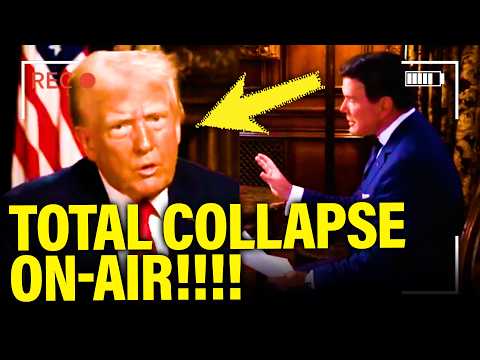
Jessica Tarlov’s clash with her Fox News co-hosts gives the commentary its clearest organizing idea: a list of legislative or investment accomplishments matters politically only if voters believe their own finances have improved. The segment repeatedly returns to gas prices, inflation, manufacturing jobs, and the cost of living rather than treating a convention-stage victory lap as proof of economic success. That focus gives the argument substance, particularly when Tarlov challenges the notion that voters will evaluate the administration primarily through accomplishments presented “on a piece of paper.”
The extended Fox exchange is valuable because viewers hear competing arguments rather than merely receiving the host’s summary of them. Greg Gutfeld points toward tax cuts and other administration accomplishments, while Tarlov argues that immediate household expenses are more politically salient. Later, administration defenders make a more developed economic case involving tariffs, investment, skilled manufacturing work, real wages, and projects in Pennsylvania. Including those responses makes clear that Republicans are not simply claiming everything is fine; they are arguing that their policies are generating investment and higher-quality jobs even while acknowledging that inflation remains higher than desired.
The commentary is much less careful when it turns those disagreements into settled conclusions. Assertions that Republicans “can’t point to any accomplishments that have benefited the American people” go considerably further than the material shown establishes, especially when the same presentation includes Republican speakers pointing to wages, investment, manufacturing projects, and employment opportunities. Those claims can certainly be challenged on scale, causation, timing, or whether households broadly feel the benefits, but dismissing them outright substitutes a partisan conclusion for examining the evidence.
Economic statistics give the segment more substance, including claims about presidential approval, dissatisfaction with cost-of-living management, gas and diesel prices, unemployment, inflation expectations, labor-force participation, and corporate profits. Yet many of these numbers are delivered rapidly without enough methodological context or sourcing for viewers to judge them independently. The host also attributes elevated fuel prices and inflation heavily to Trump’s handling of the Iran conflict, while the Republican response frames that conflict as a necessary choice to prevent a nuclear-armed Iran. The competing causal and policy arguments are worth presenting, but the segment mostly endorses one side rather than carefully testing both.
The proposed $5,000 payment becomes another revealing point of contention. Trump describes it as a “reward” for Americans who endured the Biden years and denies that it is intended to drive turnout, while the commentary characterizes it as a “bribe” and emphasizes its proximity to the midterm campaign. That juxtaposition legitimately raises questions about political messaging and timing, but calling the proposal bribery as though its legal or factual character has been established is unnecessarily categorical. The underlying issue—whether a large promised payment functions politically as an electoral inducement—would be stronger if explored without collapsing that distinction.
Presentation is energetic and easy to follow, but its rhetorical excess frequently works against its analytical ambitions. Sarcasm, insults, references to “Trump enablers,” and confident statements about Republican motives make the segment feel designed primarily for an already sympathetic audience. The repeated Fox material also consumes time without adding much after Tarlov’s central argument has been established, while the closing book promotion abruptly shifts from political analysis into advertising. There is a useful economic debate underneath the partisan framing, especially about the gap between macroeconomic claims and household experience, but the commentary would be considerably more persuasive if it subjected its preferred conclusions to the same skepticism it demands from Trump and his allies.
Pros
- Extended Fox News exchanges let viewers hear the competing economic arguments directly rather than relying entirely on the host’s characterization.
- Tarlov’s distinction between announced accomplishments and voters’ everyday experience provides a clear, substantive framework for discussing the midterms.
- The segment engages with specific issues including inflation, fuel costs, tariffs, manufacturing investment, wages, and skilled employment.
- Republican explanations for tariffs, investment, Iran, and manufacturing policy are included at enough length to reveal the substance of their counterargument.
Cons
- Several sweeping conclusions about Trump’s economic record and Republican accomplishments are stated more definitively than the material presented can establish.
- Calling the proposed $5,000 payment a “bribe” blurs the distinction between a political characterization and an established factual or legal conclusion.
- Numerous polling and economic figures receive too little sourcing or methodological context for viewers to assess them confidently.
- Partisan insults, sarcasm, and assumptions about motives repeatedly weaken what could otherwise be a more rigorous examination of competing economic claims.
- Repetition of the Fox exchange and the closing book promotion reduce the segment’s efficiency.
The most useful material comes from putting claims of investment and economic accomplishment against the immediate cost pressures emphasized by Tarlov, creating a genuine dispute over what voters are experiencing. Strong primary-source clips and specific economic claims give that discussion substance, but categorical conclusions, thinly contextualized statistics, and aggressive partisan framing prevent it from becoming a consistently rigorous analysis.