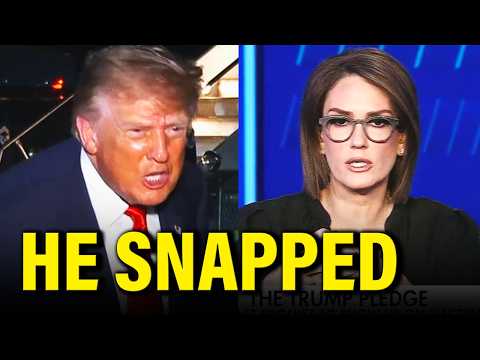
Treasury Secretary Scott Bessent's repeated attempts to blame Joe Biden for rising prices become the central focus of a pointed political commentary examining the Trump administration's handling of the economy. The discussion opens with NBC's Kristen Welker challenging Bessent over inflation, which she describes as rising from 3% to 3.7% since Trump took office. Her question about when the administration will accept responsibility for current economic conditions establishes the video's central argument: nearly two years into Trump's presidency, blaming his predecessor is becoming an increasingly difficult political defense.
The NBC interview provides some of the strongest material because Welker presses Bessent on specific economic figures rather than accepting broad assurances about future improvements. Bessent attributes higher prices partly to energy disruptions associated with the Iran conflict while pointing to real wage increases, private-sector employment, and household wealth as evidence of economic progress. The commentator highlights the contradiction between taking credit for favorable economic developments and assigning responsibility for unfavorable ones elsewhere. However, the discussion gives relatively little attention to the substance of Bessent's counterarguments, particularly the distinction between immediate energy shocks and longer-term inflationary pressures.
A second confrontation involving Vice President JD Vance at a CBS town hall reinforces the accountability theme. A Detroit small business owner who supported Trump in previous elections describes his frustration with significantly higher gasoline prices, prompting Vance to discuss disruptions in global energy markets and policies inherited from Biden. The moderator's observation that the administration must eventually take ownership of economic conditions provides another effective moment of direct questioning. The exchange also illustrates how economic dissatisfaction can emerge among voters who previously supported the president, although one participant's experience cannot establish a broader electoral trend.
The town hall becomes considerably more serious when Joey Amor, whose wife, Master Sergeant Nicole Amor, was killed in an Iranian attack, questions Vance about alleged leadership failures surrounding her death. His emotional remarks introduce concerns about military accountability that extend beyond gasoline prices and campaign messaging. Vance responds with sympathy, acknowledges the possibility of failures, and offers to continue the conversation privately. The inclusion adds significant human weight, but the commentary moves past the exchange without examining the specific allegations or explaining what independent evidence might support them.
Polling and coverage from Fox News provide the video's most substantial attempt to demonstrate that economic dissatisfaction extends beyond individual confrontations. The featured reporting describes negative assessments of economic conditions, growing concern about living costs, and particularly low approval of Trump's handling of inflation. These figures help connect the administration's public explanations with the political difficulties it faces ahead of the midterm elections. Nevertheless, the commentary provides limited methodological context for the polling and does not explore how respondents distinguish presidential economic responsibility from international developments, monetary policy, or longer-term market conditions.
The presentation is energetic, direct, and built around recognizable interviews rather than commentary alone. Its argument benefits from letting Welker, the CBS moderator, and concerned citizens challenge administration officials in their own words. Yet the host's sarcastic delivery, sweeping characterizations, and comparison of Republican campaign messaging to an abusive relationship make the coverage unmistakably partisan. The brief inclusion of Bessent's exchange about Ukraine also feels disconnected from the economic argument, while the closing book promotion interrupts an otherwise focused conclusion. Ultimately, the material raises legitimate questions about accountability but approaches them primarily through political criticism rather than comprehensive economic analysis.
Pros
- Kristen Welker's questioning of Scott Bessent establishes a clear accountability issue using specific inflation figures and challenges to the administration's explanations.
- The CBS town hall includes a relevant example of economic frustration from a previous Trump voter, giving the discussion a perspective beyond political commentators.
- Joey Amor's confrontation with JD Vance introduces a serious question about military leadership and accountability, adding emotional depth to the coverage.
- Fox News polling and reporting provide additional context for the administration's political difficulties, particularly dissatisfaction with inflation and living costs.
- The use of extended interview exchanges allows viewers to hear administration officials explain their positions and evaluate how they respond to difficult questions.
Cons
- The commentator often dismisses administration explanations without sufficiently examining legitimate questions about energy supply disruptions, international conflicts, and the causes of inflation.
- Polling figures are presented without enough methodological detail or historical comparison to fully establish the significance of reported changes.
- Emotionally charged language and sarcastic comparisons sometimes substitute political ridicule for deeper examination of the economic issues.
- The allegations surrounding military leadership failures receive little substantive investigation despite their seriousness and the emotional weight of the town hall exchange.
- The brief Ukraine discussion and concluding book promotion weaken the focus of an otherwise coherent argument about economic accountability.
The commentary assembles revealing interviews and polling figures to question the Trump administration's continued reliance on Biden-era explanations for present economic difficulties. Its strongest moments come from direct questioning by journalists and citizens, while its limitations emerge from selective analysis, partisan language, and insufficient consideration of competing economic explanations. As political commentary, it communicates its argument effectively, but viewers seeking a comprehensive and balanced assessment of economic responsibility will need additional context.