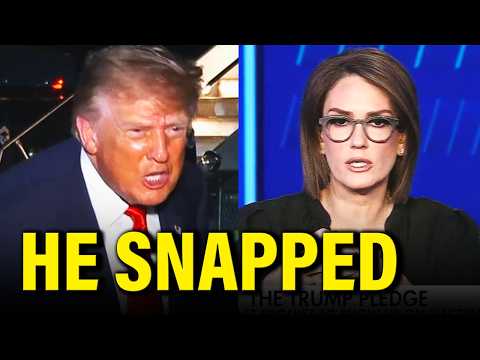
Trump’s remarks about James Talarico’s veganism become the central symbol of an unusually scattered campaign appearance, with the former president repeatedly arguing that the Texas politician will eventually return to his earlier positions. The commentary understandably highlights the oddity of making meat consumption a political test, especially when Trump imagines Talarico eating barbecue and then vomiting behind a tent. It is effective material for demonstrating how far the speech wanders from conventional policy arguments, although the host’s constant declarations of “lunacy” sometimes substitute ridicule for deeper analysis.
Economic messaging produces a more substantive contradiction. Trump complains that Democrats and the media use “affordability” against him, while also insisting that prices are lower and promising that energy and other costs will fall rapidly. The commentary is right to place those remarks beside one another because doing so exposes the tension without requiring much interpretation. However, it does not provide independent economic evidence about actual prices, gasoline costs, or broader affordability, so its strongest case is about inconsistency within Trump’s own remarks rather than whether his economic claims are factually correct.
The discussion of China and Iran presents similar opportunities that are only partly developed. Trump invokes Xi Jinping’s visit as evidence of international respect and predicts that the conflict involving Iran will end quickly, but the host mostly treats these statements as further examples of an incoherent performance. These are consequential foreign-policy claims that would benefit from more careful scrutiny. Without additional evidence, viewers can evaluate what Trump says and how he says it, but not determine from this presentation whether the underlying geopolitical assertions are accurate.
One of the sharper moments comes when Trump moves among Michigan, Georgia and Texas while discussing political opponents. The host interprets this as evidence that Trump mistakenly believed he was in Michigan and describes his mind as “complete mush,” but the excerpt itself does not conclusively establish that diagnosis or even prove geographic confusion. Trump explicitly returns to Texas during the passage, making it equally possible that he is simply comparing politicians from several states in a rambling way. Calling the sequence muddled is well supported; claiming certainty about why it happened goes beyond what the presented material demonstrates.
The Dennis Rodman and presidential-health sections reinforce the impression of a speech constantly detouring into personal stories. Trump shifts from Kim Jong Un and Rodman to Ronny Jackson’s assessment of his fitness, jokes about junk food and being physically examined, and then abruptly moves elsewhere. The commentary effectively lets these extended clips demonstrate the speech’s loose structure. At the same time, describing Jackson primarily with an ideological label adds little to evaluating the health anecdote, and the segment does not investigate the substance or context of the fitness claim.
There are flashes of policy content that deserve more attention than they receive. Trump discusses potential financial benefits from data centers, suggests companies should compensate or otherwise help affected communities, complains about computerized equipment, and references nitrogen-oxide regulations affecting trucks. The host includes these passages but largely uses them as additional exhibits in a broader case that the appearance was disastrous. That framing misses an opportunity to separate eccentric delivery from potentially consequential proposals and to ask whether the claims about community benefits, regulations, or equipment are supported.
Presentation is therefore both the commentary’s strength and its limitation. The generous use of extended clips allows Trump’s repetitions, digressions, jokes and abrupt transitions to remain visible rather than relying entirely on paraphrase. Yet assertions about a “tiny low energy crowd” are not substantiated by the material presented here, and the concluding declaration that “words don’t describe” the supposed lunacy makes the partisan stance unmistakable. The result works better as energetic political commentary documenting an erratic speaking style than as a rigorous examination of the speech’s factual and policy content.
Pros
- Extended excerpts give viewers substantial opportunity to hear Trump’s remarks in context rather than relying solely on the host’s characterization.
- Juxtaposing Trump’s dismissal of affordability concerns with his promises of falling prices identifies a meaningful tension in his economic message.
- The selection effectively illustrates the speech’s repeated digressions among electoral politics, foreign leaders, personal health, data centers, equipment and veganism.
- The host keeps the commentary focused on specific statements rather than discussing Trump only in broad generalities.
Cons
- The claim that Trump apparently thought he was in Michigan is presented with more certainty than the quoted passage supports.
- Assertions about a “tiny low energy crowd” are not substantiated by the material presented.
- Economic, foreign-policy, regulatory and data-center claims receive little factual examination despite offering more substantive subjects for analysis.
- Repeated descriptions of Trump as deranged, a lunatic or mentally impaired push the segment toward ridicule instead of carefully demonstrating each criticism.
- Potentially meaningful policy remarks are treated primarily as ingredients in a compilation of strange moments rather than evaluated on their merits.
Trump’s own digressions provide ample material for a critical examination of an unusually loose campaign speech, and the extensive clips make the presentation more persuasive when it focuses on contradictions and rhetorical wandering. The analysis becomes less convincing when it infers mental confusion without sufficient evidence, leaves factual claims largely unchecked, and relies on derisive labels where more precise criticism would be stronger.