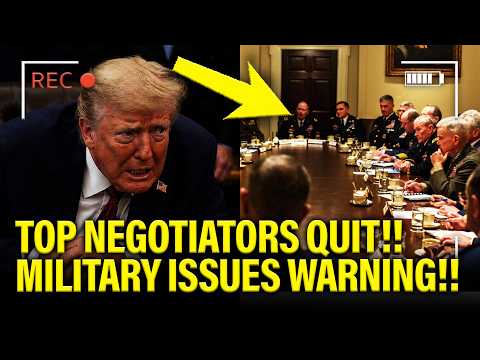
A Supreme Court decision lifting a lower-court injunction becomes the foundation for an expansive argument about mail voting, citizenship verification, and the approaching midterms. The presentation does make one important legal distinction: it acknowledges that the Court did not decide the ultimate merits of the executive order, but instead removed an injunction that had prevented it from taking effect. That qualification is significant, yet much of the surrounding commentary treats the development as though the broader constitutional and factual disputes have effectively been settled.
The clearest portion explains what the executive order is said to require. According to the account presented, states would provide voter-registration information for comparison with federal citizenship and death records, while the Postal Service could withhold mail-ballot delivery where states fail to comply. These mechanisms are described in straightforward language, giving viewers an understandable picture of how the claimed federal enforcement system would operate. However, the discussion does not provide enough underlying legal detail to independently evaluate the scope of the order, the Postal Service rule, the lower-court dispute, or the precise reasoning behind the Supreme Court's 6-3 action.
That evidentiary weakness becomes much more consequential when the commentary moves from describing policy to alleging widespread misconduct. California, Minnesota, Illinois, Michigan and other Democratic-led states are portrayed as maintaining rolls filled with dead people, noncitizens, relocated voters and fabricated registrations, with California singled out in especially dramatic terms. Those are serious factual allegations, but the presentation supplies little evidence establishing their scale or demonstrating that improperly maintained registrations translate into fraudulent votes. The repeated suggestion that Democratic resistance itself proves the existence of corruption turns political disagreement into evidence for the accusation rather than establishing it independently.
Mail voting receives similarly one-sided treatment. The discussion raises legitimate administrative questions involving voter-roll maintenance, identity verification, addresses and ballot custody, and it invokes the Carter Commission to support concerns about absentee voting. Yet the argument quickly advances from identifying potential vulnerabilities to describing irregularities as fraud without demonstrating that progression. The assertion that California automatically mailing ballots to registered voters effectively means ballots go indiscriminately to citizens, noncitizens, living people and dead people is particularly sweeping and would require much stronger substantiation than is offered here.
The New Jersey example is the closest the presentation comes to supplying a concrete numerical case, citing 6,600 alleged noncitizens on voter rolls while saying DHS believes the number is substantially higher. Even here, important questions remain unanswered about how those records were identified, whether registration status was conclusively established, and whether any of the individuals actually cast illegal ballots. The distinction between an inaccurate registration record and an illegally cast vote matters enormously when making claims about election fraud, but the commentary repeatedly collapses those categories.
The final political argument becomes more speculative still. The stalled SAVE Act is paired with the possibility of President Trump declaring a national emergency to "federalize the midterms," which the host explicitly advocates as a way of bypassing Congress and the courts. A claimed 1983 Supreme Court precedent is offered as support for the idea that such an emergency could only be overturned through a two-thirds congressional vote, but the legal reasoning and limits of that assertion are not developed. Given the extraordinary constitutional implications of federal intervention in election administration, this section needed careful legal analysis rather than confident predictions about what presidential emergency authority could accomplish.
Presentation style compounds these weaknesses. The host is energetic, direct and effective at turning complicated procedural issues into accessible political commentary, but partisan labels such as "activist judge," assertions that Democrats are panicking, and repeated declarations of obvious corruption make the piece more advocacy than dispassionate analysis. The trading promotion is especially disruptive: claims about politicians' insider trading, an SEC "loophole," extraordinary investment returns and potentially life-changing results appear in the middle of an election-integrity discussion without enough evidence to substantiate those financial assertions. Viewers sympathetic to the argument may find the delivery compelling, but anyone trying to determine precisely what the ruling established and what remains allegation, inference or political prediction will need considerably more documentation.
Pros
- Clearly explains the basic enforcement mechanism the executive order is said to establish involving state voter records, federal databases and mail-ballot delivery.
- Correctly emphasizes that lifting the injunction is not the same thing as the Supreme Court deciding the ultimate merits of the executive order.
- Raises substantive election-administration questions about citizenship verification, voter-roll maintenance and mail-ballot procedures in accessible language.
Cons
- Serious allegations about noncitizens, dead voters, fraudulent registrations and Democratic-controlled states are asserted far more confidently than the evidence presented supports.
- Registration irregularities, potential vulnerabilities and actual voting fraud are repeatedly treated as though they are interchangeable.
- The constitutional argument for using a national emergency to bypass Congress and the courts receives nowhere near the legal scrutiny such an extraordinary proposal requires.
- Highly partisan language and repeated assumptions about Democrats' motives reduce the distinction between factual reporting and political advocacy.
- The investment promotion introduces sweeping insider-trading allegations and extraordinary return claims without sufficient substantiation while significantly interrupting the election discussion.
There is a potentially important election-law story at the center of the discussion, and the distinction between lifting an injunction and deciding a case on its merits provides a useful starting point. The analysis becomes much less reliable when it turns disputed voter-roll issues into evidence of widespread fraud and presents extraordinary federal election powers with insufficient legal support. Energetic and accessible political commentary cannot compensate for the documentation needed to sustain claims this consequential.