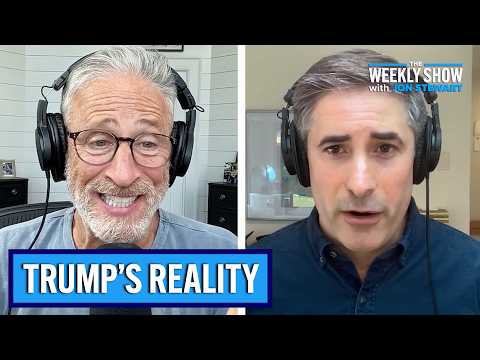
A presidential appearance centered on a White House lawn renovation becomes the foundation for a much broader argument about leadership, priorities, and public trust. The segment examines remarks about newly installed grass and the acknowledgment of a company that provided it, using the moment as an example of what the commentators describe as a larger concern about how political power is being used.
The discussion is driven primarily by interpretation and criticism from the commentators rather than a neutral examination of the event itself. They argue that the grass comments represent a distraction from economic concerns and connect the situation to broader allegations of corruption and self-interest. While those claims reflect the commentators’ perspective, the segment does not independently establish each allegation within the discussion.
The strongest part of the presentation is how it connects a small, unusual political moment to a larger conversation about voter priorities. The commentators attempt to move beyond the immediate controversy by discussing issues such as prices, trade decisions, and public frustration, arguing that political messaging is most effective when tied to everyday experiences rather than abstract debates.
The segment also spends significant time analyzing political strategy, particularly how opponents of the administration should communicate their criticism to voters. The conversation about explaining policy consequences and using specific examples provides a clearer structure than simply focusing on the lawn remarks alone.
However, the commentary often relies on strong language and comparisons that emphasize outrage more than detailed evidence. Viewers who already share the commentators’ concerns may find the framing persuasive, while those looking for a more balanced political analysis may find the segment limited by its consistently critical viewpoint.
The conversation around campaign timing and messaging adds another layer by examining why certain moments become politically significant. The commentators suggest that public perception can shift when symbolic actions appear disconnected from broader economic concerns, though the segment largely presents this argument through opinion and analysis rather than measurable evidence.
Overall, the segment succeeds as a piece of political commentary designed to interpret the meaning behind a public moment and connect it to wider debates about accountability and governance. Its effectiveness depends heavily on whether viewers are interested in a strongly argued perspective rather than a neutral breakdown of competing viewpoints.
Pros
- Connects a specific political moment to larger discussions about public perception and voter concerns.
- Provides a clear explanation of how political messaging can be tied to everyday economic issues.
- Maintains an energetic discussion format with multiple commentators building on each other’s points.
Cons
- Relies heavily on one political viewpoint without presenting substantial counterarguments.
- Some accusations and conclusions are discussed as interpretations rather than fully demonstrated facts.
- The focus on symbolism sometimes overshadows deeper examination of the underlying policy issues.
This is a focused political commentary segment that uses an unusual public moment to explore broader questions about leadership, priorities, and accountability. The discussion is engaging for viewers interested in political analysis, but its persuasive impact is limited by its one-sided framing and reliance on commentary over detailed evidence.