A grave robber accidentally hanged by the corpse he intended to steal establishes the episode’s formula immediately: each story begins with someone accepting an obvious degree of risk, only for an unexpected detail to make the situation fatal. The Cincinnati account is particularly well suited to the storyteller’s suspense-heavy approach, with the body hanging over the cemetery wall initially presented from a police officer’s perspective before the circumstances of the deaths are revealed. The gradual reconstruction gives the story an effective macabre twist without requiring an elaborate mystery.
The second account pushes that formula into more questionable territory. Carl is described as a German soldier trapped with five others in a Polish bunker after retreating forces supposedly destroyed its entrance at the end of World War II, leaving him underground until a work crew broke through in 1951. The story claims that years of darkness ended with Carl suffering a fatal heart attack immediately after emerging into sunlight, but no sourcing or supporting evidence is provided for either the extraordinary survival account or the proposed connection between the sudden light exposure and his death. As presented, it works as an eerie piece of storytelling, but its historical and medical claims should not be mistaken for independently established facts.
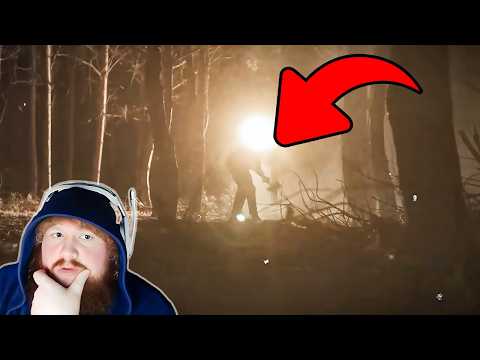
The disappearance of Ed Perry is more grounded in an ordinary domestic setting and consequently generates a different kind of tension. His wife Amy returns home to find his belongings and car still there, while the family's unusually agitated dogs repeatedly try to draw attention outside. The narrative effectively builds frustration through the family's searches, the initial police response, and the discovery that Ed had apparently completed some tree trimming shortly before disappearing. Its strongest detail is also its simplest: everyone searches the property while overlooking the narrow space behind the shed.
That story’s conclusion is grim rather than sensational. Ed is said to have accidentally cut his wrist with a chainsaw and fallen into the obscured gap, where he bled to death while remaining remarkably close to his family and the people searching for him. The dogs’ behavior provides the emotional hook, although the assertion that they had witnessed the accident and were deliberately trying to lead someone to Ed is an interpretation presented by the narrator rather than something the account itself can conclusively demonstrate. Even so, the physical explanation for why Ed was difficult to spot gives the reveal a coherent payoff.
The golf-course story provides the clearest match for the episode’s central idea because Jacques Fonderson is portrayed as fully aware that the course existed within a wildlife habitat. After drinking with a friend, he enters the course after closing and wades into a water hazard at night to collect lost golf balls. His familiarity with the property becomes central to the tragedy: rather than being unaware of its wildlife, he is described as having grown so comfortable there that the danger no longer seemed exceptional.
The eventual crocodile attack is therefore less dependent on a surprise twist than on the accumulating bad decisions preceding it. Searching a dark water hazard in an area described as accessible to dangerous wildlife already supplies plenty of tension, and the account becomes especially effective once Jacques stays behind for one additional golf ball. The narrator sometimes stretches these moments with repeated descriptions of what characters are thinking or feeling, and the lengthy DraftKings advertisement sharply interrupts the momentum between stories. Still, the conversational delivery, delayed reveals, and carefully chosen situational details make the collection consistently easy to follow despite the very different settings and time periods.
Pros
- The cemetery story uses perspective and delayed information effectively to turn a bizarre accident into a memorable opening.
- Ed Perry’s disappearance builds suspense from ordinary details, particularly the overlooked space behind the shed and the dogs’ persistent behavior.
- Jacques Fonderson’s familiarity with the golf course gives the crocodile story a clear theme about becoming desensitized to known dangers.
- The narration keeps four unrelated stories coherent through a consistent structure of acknowledged risk followed by an unforeseen escalation.
Cons
- Extraordinary historical and medical claims in the bunker story are presented without supporting evidence or sourcing.
- The dogs’ intentions in the Ed Perry account are described more definitively than their behavior alone can establish.
- Repeated explanations of characters’ thoughts and danger awareness sometimes slow stories whose circumstances are already clear.
- The extended gambling advertisement creates a substantial interruption after the opening story.
Strong suspense construction and several genuinely striking reversals make this an engaging collection of fatal miscalculations, with the cemetery and golf-course accounts providing especially effective payoffs. The storytelling occasionally treats uncertain interpretations and extraordinary claims too confidently, but the episode remains compelling when it focuses on the concrete decisions and circumstances that turned familiar risks into disasters.