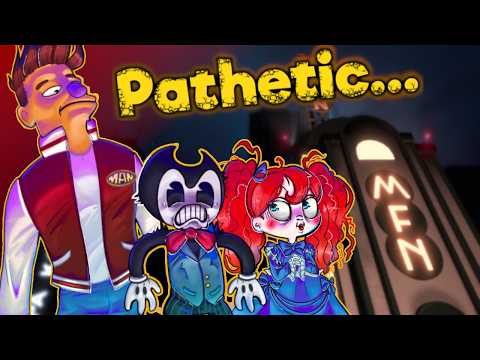
A cheerful children's cartoon, an abandoned family attraction, and a mysterious girl named Tally provide the foundation for a mascot horror experience that becomes increasingly disturbing as its secrets emerge. Returning to Giggleland after previously playing its demo, the creator explores the full game with a mixture of curiosity, suspicion, and genuine fear. What initially resembles a familiar adventure through malfunctioning attractions gradually develops into a story involving missing children, psychological manipulation, family trauma, and a sinister figure known as Uncle Terry. The combination of unsettling environmental details and increasingly personal revelations gives the playthrough considerably more substance than a conventional collection of jump scares.
The opening establishes Giggleland's deceptive atmosphere through an educational cartoon featuring Andy, who receives an assignment to make new friends. Its seemingly innocent lessons about responsibility and friendship take on disturbing implications as the presentation introduces strange flowers, unsettling character behavior, and an abrupt transition into Tally's predicament. Once inside the attraction, the player encounters Elliott, a talking guide who assigns tasks while offering questionable reassurance. The creator immediately distrusts this arrangement, comparing its mechanics to other mascot horror games and questioning why an apparently helpless visitor must constantly repair machinery and solve problems. These skeptical observations establish an entertaining contrast between the game's cheerful instructions and its increasingly threatening surroundings.
Exploration through Farmer Terry's vegetable patch and surrounding attractions introduces the game's central mystery through environmental storytelling. Newspaper articles describe children disappearing after visiting the park, while scattered personal writings reveal the complicated relationship between Terry, Simon, and Debbie. Early accounts of friendship, artistic collaboration, and childhood anxieties gradually become descriptions of punishment, screaming, coercion, and horrific discoveries. The creator's evolving theories about children being transformed into animals, the identities of the talking characters, and the true purpose of the attraction make these discoveries engaging. However, the considerable amount of written material also creates pacing problems, particularly when lengthy passages interrupt exploration without immediately clarifying how the different characters and timelines connect.
Giggleland's puzzle design provides a substantial portion of the experience, ranging from matching symbols and restoring generators to collecting batteries, manipulating platforms, opening safes, and activating switches in specific sequences. Some challenges reward observation and logical thinking, while others lead to extended searches for easily overlooked objects or confusing instructions. The creator repeatedly questions his own decisions, occasionally dismisses viewer suggestions, and becomes visibly frustrated when apparent solutions fail. These moments produce spontaneous comedy, but they also reveal the limitations of an adventure that frequently relies on repetitive item collection and environmental navigation. The complicated battery and switch puzzles around Rory's Rally are particularly illustrative, generating tension through uncertainty while sometimes slowing the experience more than the horror requires.
The game's most inventive scares emerge when it appears to interfere with the boundaries between the fictional environment and the creator's computer. A threatening figure unexpectedly appears across the screen, while later sequences seemingly affect additional monitors and display messages outside the expected gameplay area. The creator's astonishment at these moments is among the playthrough's most convincing reactions, particularly because he initially struggles to understand what has happened. His repeated insistence that certain visual details were not visible during normal play also adds an intriguing dimension for viewers watching the recording. Although the exact technical behavior cannot be independently established from his reactions, these sequences clearly distinguish Giggleland from more conventional mascot horror experiences and produce some of the playthrough's strongest moments.
The eventual revelations surrounding Simon, Debbie, their twin daughters, and Terry's manipulation transform the adventure into a more emotionally troubling story. The creator gradually connects childhood writings, disturbing cartoons, and conflicting character statements to a family fractured by coercion and violence. His uncertainty about whether Elliott and Ella are trustworthy becomes especially important during the branching character choice, where he deliberately follows Ella despite suspecting that she may be deceptive. Later discoveries involving a sacrificed child, a failed escape, and the relationship between Tally and Elliott force him to reconsider earlier assumptions. The resulting narrative is ambitious, although the fragmented presentation makes several crucial relationships difficult to follow without extensive interpretation.
The final stretch combines increasingly frantic pursuit sequences with revelations about the attraction's true nature. The creator struggles through dangerous environments, encounters disturbing imagery, and attempts to escape while the game continues using its unusual screen-related scares. His reactions become increasingly intense, creating a convincing sense of escalating panic, though repeated deaths and directional confusion occasionally weaken the momentum. After reaching the ending, he enthusiastically reconstructs the story, discusses possible interpretations, and acknowledges the existence of additional endings without exploring them. His final discovery of an easily missed message about Uncle Terry adds another disturbing implication, allowing the playthrough to conclude with renewed appreciation for the game's layered storytelling rather than simply celebrating survival.
Pros
- The opening children's cartoon establishes an effective contrast between cheerful educational entertainment and the disturbing events that follow.
- The abandoned attractions, unsettling mascots, surveillance cameras, and ominous environmental details create a consistently threatening atmosphere.
- The scattered writings gradually reveal an ambitious narrative involving manipulation, childhood trauma, family relationships, and betrayal.
- The apparent fourth-wall-breaking effects produce unusually convincing fear and surprise from the creator.
- The creator's spontaneous humor, skepticism, and increasingly elaborate theories make extended exploration entertaining.
- The uncertainty surrounding Elliott and Ella gives the character choices meaningful suspense and encourages viewers to question competing explanations.
- The ending provides substantial material for interpretation and rewards attention to earlier clues and character relationships.
Cons
- The frequent generator repairs, battery searches, and switch puzzles sometimes feel repetitive rather than meaningfully connected to the narrative.
- Several puzzle solutions depend on easily overlooked objects or unclear sequences, leading to prolonged confusion and frustration.
- Lengthy written passages occasionally interrupt the atmosphere and make the complicated storyline difficult to absorb.
- The creator's repeated jokes, shouting, and commentary sometimes undermine otherwise effective moments of quiet psychological horror.
- Repeated deaths and navigational mistakes during the final pursuit sequences disrupt the intended escalation of tension.
- The decision not to explore alternative endings leaves the significance of some character choices and unresolved story details uncertain.
Giggleland delivers an unusually ambitious mascot horror experience, combining unsettling childhood imagery, psychological storytelling, and memorable fourth-wall-breaking scares. The creator's entertaining reactions and enthusiastic interpretation make the playthrough engaging even when repetitive puzzles and convoluted revelations slow its progress. Despite those frustrations, the game's inventive presentation and disturbing family mystery leave a powerful impression, making this a particularly enjoyable showcase of what mascot horror can accomplish beyond conventional jump scares.