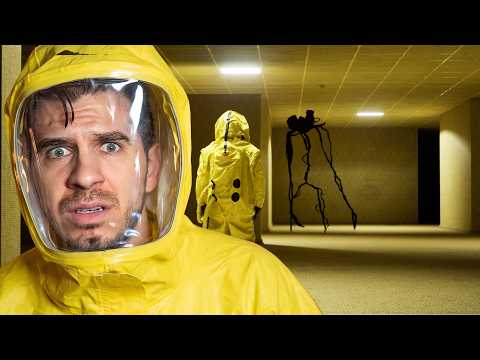
A late-night supermarket shift, a handful of routine chores, a mysterious customer, and a conveniently timed jump scare have become an increasingly familiar formula in independent horror gaming. T9 argues that too many developers are recycling this structure without understanding what made its most successful predecessors entertaining or frightening. Rather than dismissing the entire indie horror scene, he examines how influential games established recognizable trends and why their imitators frequently struggle to recreate the same appeal. The result is an entertaining historical retrospective that combines genuine enthusiasm for the genre with growing frustration over its repetitive offerings.
The discussion begins with the early influence of Frictional Games, particularly Penumbra and Amnesia: The Dark Descent. T9 explains how their emphasis on vulnerability, exploration, puzzles, and limited resources helped establish a style of horror that relied on tension rather than empowering players through combat. His comparison between Amnesia's carefully constructed atmosphere and the jump-scare-heavy custom experiences popularized through online videos is especially useful. It illustrates how a game's public reputation can become disconnected from its original design. The subsequent discussion of Slender, SCP, and Outlast demonstrates how the broader walking-simulator trend evolved, although grouping games with substantially different mechanics under one label occasionally oversimplifies their individual contributions.
Five Nights at Freddy's and P.T. provide the next major turning points, with T9 identifying the distinctive design decisions that encouraged waves of imitation. Five Nights at Freddy's introduced an accessible but demanding combination of resource management, surveillance, and time pressure, while P.T. demonstrated how a repeating environment could create uncertainty through unpredictable changes and psychological tension. The analysis is particularly effective when distinguishing simple mechanics from shallow design. A stationary viewpoint or limited environment does not automatically make a horror game unimaginative when carefully designed systems create meaningful decisions. However, the historical argument sometimes treats influential releases as definitive starting points without sufficiently examining other contributing games or the broader development environment.
Puppet Combo's Power Drill Massacre receives one of the most detailed examinations, particularly its combination of retro PlayStation aesthetics, slasher-film influences, restrictive controls, and an aggressive roaming antagonist. T9 convincingly explains how these elements can make familiar exploration mechanics feel threatening again. An especially welcome moment comes when he corrects an earlier description of the enemy's behavior after examining the game's underlying systems. Rather than insisting the antagonist operates entirely through unrestricted patrols, he acknowledges the probability-based mechanics governing certain encounters. That correction adds credibility to the analysis by demonstrating a willingness to distinguish his experience as a player from how the game actually functions.
The examination of YouTube's influence provides the retrospective with its most important connecting argument. T9 describes how Let's Play creators helped popularize indie horror games while simultaneously encouraging some developers to prioritize easily shareable reactions over satisfying gameplay. His examples distinguish between memorable scares supported by mechanics and games seemingly constructed around brief, loud surprises. Night of the Consumers becomes an effective counterexample because its stressful retail setting also includes specific objectives, customer interruptions, navigation challenges, and time pressure. Fears to Fathom receives similar credit for turning everyday situations into unsettling experiences through relatively straightforward storytelling. The argument is persuasive as an interpretation of industry trends, although the suggestion that developers increasingly design primarily for streamer attention relies more on personal observation than systematic evidence.
The concluding discussion brings the argument into the present through familiar convenience-store environments, repeated residential assets, predictable night-shift scenarios, and increasingly common anomaly-detection games. T9 reasonably distinguishes the use of accessible tools and purchased assets from the failure to create something worthwhile with them. His criticism is not that inexpensive development techniques are inherently inferior, but that recognizable settings and established formulas cannot substitute for engaging mechanics or compelling stories. Nevertheless, the treatment of anomaly horror is comparatively brief, and the wider discussion would benefit from more detailed examples of recent independent games successfully breaking these patterns. The presentation also wanders through lengthy historical detours, repeated jokes, and an extended closing discussion of channel updates and merchandise. Despite those distractions, the central conclusion remains encouraging: independent horror offers substantial creativity and variety, even when repetitive releases make its better work harder to discover.
Pros
- The historical progression from Penumbra and Amnesia through Five Nights at Freddy's, P.T., Puppet Combo, and Fears to Fathom provides an accessible framework for understanding changing indie horror trends.
- Specific explanations of resource management, timed objectives, unpredictable enemies, and environmental uncertainty demonstrate why seemingly simple horror mechanics can produce meaningful tension.
- The discussion of Let's Play culture offers an interesting explanation for how popular creators can simultaneously support independent developers and encourage repetitive, reaction-focused game design.
- The comparisons involving Night of the Consumers and Fears to Fathom effectively distinguish successful gameplay and storytelling from superficial imitation.
- T9's correction of his initial explanation of Power Drill Massacre's enemy behavior demonstrates valuable attention to accuracy.
- Energetic humor, personal gaming experiences, and obvious enthusiasm for the genre make an extensive historical discussion approachable and entertaining.
- The balanced conclusion acknowledges the industry's creative successes instead of portraying repetitive games as evidence that independent horror is fundamentally declining.
Cons
- The historical overview occasionally oversimplifies the relationships between influential games and later trends, presenting some connections more confidently than the supporting examples justify.
- Claims about developers prioritizing streamer reactions and the overall prevalence of repetitive games depend heavily on anecdotal experience rather than broader evidence.
- The expansive discussion of earlier horror eras delays the central examination of contemporary problems and occasionally weakens the argument's momentum.
- Anomaly-detection horror receives relatively little attention despite being identified as an important recent development, while examples of innovative modern alternatives remain underexplored.
- Frequent comedic tangents and the extended promotional closing distract from an otherwise focused critique of independent game development.
T9 delivers an informative and entertaining examination of how independent horror's most influential successes have inspired both creative experimentation and increasingly predictable imitation. His understanding of memorable horror mechanics, willingness to correct a factual mistake, and appreciation for the genre's continued vitality outweigh an occasionally wandering structure and arguments that could benefit from stronger evidence. Although the retrospective spends more time explaining how familiar formulas emerged than investigating the full range of contemporary alternatives, it makes a worthwhile case that originality depends on thoughtful design rather than simply reproducing popular scares.