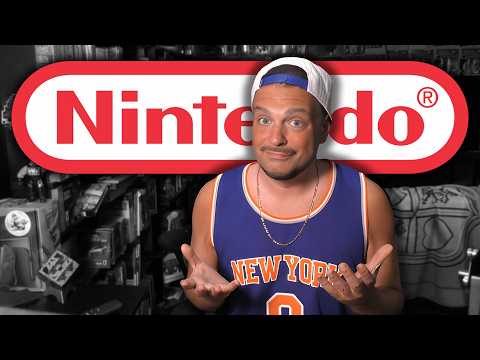
The presentation examines whether Nintendo's long-standing business philosophy appears more convincing in light of recent turbulence affecting other major console manufacturers. Rather than arguing that Nintendo has become flawless, the discussion frames its central idea around changing perceptions as Sony and Microsoft face questions about layoffs, digital distribution, hardware pricing, and platform strategy. This creates a clear throughline, with the commentary consistently returning to the idea that Nintendo's unconventional decisions may look more favorable because of broader industry developments.
A significant portion of the discussion contrasts Nintendo's emphasis on distinctive hardware and first-party software with Sony's and Microsoft's current priorities. Financial observations, including references to Sony's reliance on third-party software and add-on spending, are presented as supporting evidence for the broader argument, while speculation about future console pricing and next-generation strategies is clearly framed as opinion rather than established fact. The video generally separates confirmed business trends from predictions, although some forecasts about future hardware adoption inevitably remain uncertain.
The examination of Nintendo's development philosophy is one of the stronger sections. Miyamoto's published comments are used to illustrate an approach focused on creating games for specific audiences instead of chasing temporary industry trends. The discussion of projects such as Metroid Prime 4 reinforces this theme by presenting Nintendo's willingness to restart development instead of canceling a troubled project. While the conclusion that the game likely lost money is speculative rather than demonstrated with financial evidence, the presentation makes it clear that this is an interpretation rather than a documented fact.
The video also broadens the discussion beyond hardware by exploring Nintendo's approach to remakes, legacy franchises, and preserving older games for new generations. The argument that younger players often encounter classic series through remakes or subscription libraries is presented in a practical way and avoids overstating its significance. These sections effectively connect Nintendo's publishing strategy with its broader efforts to maintain long-term brand recognition across multiple generations of players.
Another recurring theme is Nintendo's tendency to ignore or delay participation in emerging industry trends. The discussion of NFTs, metaverse initiatives, and online services argues that the company's slower adoption occasionally becomes an unexpected advantage when trends fail to gain lasting traction. At the same time, the presenter acknowledges that Nintendo's online infrastructure still has notable shortcomings, including awkward friend systems and limited communication features. This willingness to recognize weaknesses prevents the argument from becoming purely celebratory.
The final portion considers physical media, arguing that Nintendo may soon become the largest remaining supporter of retail game distribution if competitors continue shifting toward digital-only releases. Much of this section necessarily ventures into prediction, particularly regarding future console generations and release strategies, but those ideas are presented as informed speculation rather than certainty. The closing balance is strengthened further by revisiting familiar criticisms—including high software prices, Joy-Con drift, and aggressive legal action against fan projects—before concluding that Nintendo's reputation has improved largely because the broader industry now appears considerably less stable than it did only a year earlier.
Pros
- Builds a coherent argument by connecting current industry challenges with Nintendo's long-term business philosophy.
- Distinguishes reasonably well between documented business developments, published statements, and personal speculation about future hardware and market trends.
- Provides balanced coverage by acknowledging Nintendo's ongoing shortcomings alongside its perceived strengths.
- Uses examples from hardware, software development, physical media, remakes, and online services to support its broader thesis.
- Maintains an engaging conversational style without losing focus on the central topic.
Cons
- Several financial conclusions and predictions about future console strategies extend beyond the evidence presented and remain speculative.
- Comparisons between Nintendo, Sony, and Microsoft occasionally simplify complex business decisions into broad philosophical differences.
- Some topics, including physical media and future hardware pricing, receive more conjecture than supporting analysis.
This is a thoughtful industry commentary that succeeds by examining long-term business strategy rather than focusing only on individual news stories. While some conclusions rely on speculation about future market developments, the presentation remains engaging, generally balanced, and effective at explaining why Nintendo's unconventional approach is being viewed more favorably amid wider uncertainty across the gaming industry.