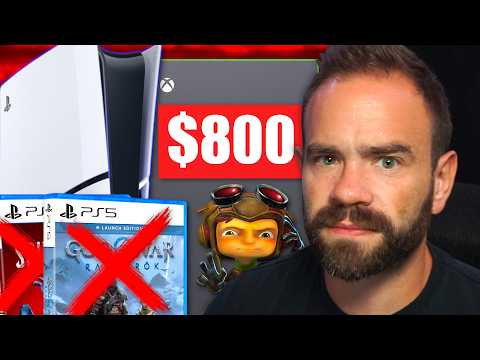
The episode uses Microsoft’s latest financial results as the foundation for a broader examination of Xbox’s current direction. It clearly presents the reported declines in content, services, and hardware revenue before placing them alongside Microsoft’s much stronger company-wide performance. That contrast is important: Xbox is portrayed as a struggling division within a corporation that remains highly profitable, rather than evidence that Microsoft itself is in financial danger. The presenter’s criticism of pricing, multiplatform releases, layoffs, and studio divestitures is openly opinionated, but the underlying financial figures and attributed executive explanations are kept distinct from that commentary.
The discussion of Xbox’s proposed growth strategy adds useful context beyond the headline numbers. The reported multi-stage plan, emphasis on major franchises, expansion of Minecraft as a creator platform, and extremely ambitious player targets help illustrate how leadership hopes to reverse the decline. The presenter reasonably identifies areas that could support a stronger year, including several major releases, while remaining skeptical that corporate messaging alone will resolve the deeper problems. Some conclusions, such as the suggestion that multiplatform publishing directly explains the hardware decline or that Game Pass growth disappointed management, remain interpretations rather than facts established by the information presented.
The episode is strongest when it connects corporate decisions to practical consequences. Double Fine’s layoffs, the labor complaint involving Bethesda employees, the lengthy Xbox outage, and uncertainty surrounding previously announced projects give the financial story a human and operational dimension. The segment on newly supported legacy Xbox games also provides a welcome counterbalance, highlighting preservation efforts rather than treating every development as another failure. The presenter’s enthusiasm for broader PC compatibility is persuasive, although the technical implications of the reported emulation setup are necessarily speculative.
Coverage then expands into PlayStation outages, troubled fighting-game launches, physical-media protests, gambling restrictions, studio earnings, adaptations, trademarks, sequels, and accidental announcements. This breadth makes the episode genuinely useful as a weekly overview, particularly because most stories include enough context to explain why they matter. The analysis of the proposed PlayStation blackout is especially clear about separating support for physical ownership from doubts about the protest’s likely effectiveness. However, the rapid movement between subjects means that several complicated stories receive only a brief interpretation before the episode advances to the next item.
The Halo remake review is the most developed piece of criticism in the latter half. The presenter acknowledges the broadly positive aggregate reception and the enduring strength of the original campaign before explaining his own disappointment with the art direction, cutscenes, enemy behavior, combat changes, bonus missions, and absence of multiplayer. This is a well-supported personal assessment rather than an attempt to present one verdict as universal. His comparison with the original game gives the argument a concrete foundation, although viewers seeking a more systematic breakdown of performance, accessibility, or technical quality may find the discussion weighted heavily toward artistic and design objections.
Presentation throughout is energetic, conversational, and frequently funny, with sharp transitions and recurring commentary that gives the news roundup a recognizable personality. Release previews and smaller discoveries such as the Steam cartridge project provide tonal variety after the heavier financial and labor stories. The principal weakness is scale: the episode contains so many announcements, financial updates, rumors, release dates, reviews, and promotional references that the central Xbox narrative becomes only one part of a very long package. The Rocket Money advertisement, website promotion, subscription messaging, and repeated links also interrupt the editorial flow, even though they are clearly disclosed.
Pros
- Places Xbox’s revenue decline within the crucial context of Microsoft’s broader financial strength.
- Distinguishes reported figures, executive statements, rumors, and the presenter’s own interpretations with reasonable clarity.
- Connects corporate strategy to layoffs, outages, preservation efforts, labor concerns, and upcoming releases.
- Provides a detailed and balanced explanation of the presenter’s disappointment with the Halo remake.
- Covers a wide range of industry developments with energetic delivery and useful contextual background.
Cons
- The enormous number of stories dilutes the focus and limits the depth available for several complicated subjects.
- Some explanations for Xbox’s decline and expectations surrounding Game Pass are plausible interpretations rather than conclusions demonstrated by the cited results.
- Frequent promotional segments and channel announcements disrupt the pacing.
- The heavily opinionated humor occasionally overshadows the more analytical portions of the financial and labor coverage.
This is an informative and personality-driven industry roundup that combines meaningful financial context, strong editorial criticism, and an unusually broad selection of gaming news. Its Xbox and Halo coverage is thoughtful enough to anchor the episode, though the crowded structure and promotional interruptions prevent the strongest topics from receiving consistently deeper analysis.