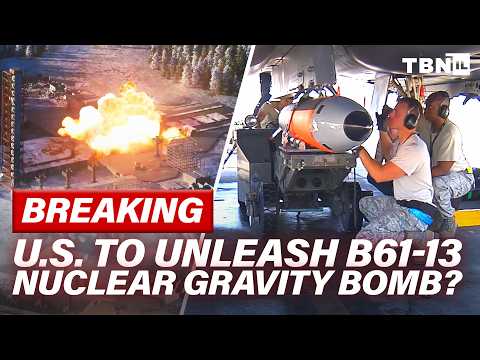
American strikes on Iran’s Larak Island and Iran’s reported retaliation against U.S. facilities in Jordan and Qatar give this breaking-news segment an immediately consequential focus. The presenter says the U.S. targeted Iranian rocket-launch positions and infrastructure associated with attacks on tankers using the southern Oman route, while Iranian reporting cited two deaths and two injuries. He then follows developing claims of ballistic-missile and drone attacks on Al Udeid Air Base and facilities in Jordan, including footage said to show launches and interceptions. Because much of this information is arriving in real time from governments, military organizations and media reports, however, claims about targets, casualties and “heavy damage” remain attributed assertions rather than independently established facts within the presentation.
The strongest portion is the attempt to connect the military escalation with the Strait of Hormuz and energy markets. The presenter notes Brent crude moving above $90 and cites TankerTrackers estimates suggesting only roughly 3.5 to 4 million barrels were moving through the southern Oman route, compared with much higher volumes before the war and during a memorandum-of-understanding period. Those figures help explain why attacks around shipping routes matter beyond the immediate battlefield. His discussion of rising oil, gasoline and diesel prices similarly gives the strikes an economic dimension, although several broad assertions about record prices and market manipulation are delivered without enough supporting material to independently evaluate them here.
A second substantive thread concerns reported disagreements inside the U.S. military over continuing operations against Iran. Drawing on what he describes as Washington Post reporting about a classified Secretary of Defense Order Book, the presenter says senior commanders registered “non-concur” positions and warned that months of deployments had depleted missiles, drones, ships and air defenses while weakening readiness elsewhere. Specific references to naval readiness, destroyer availability and concerns about an undefined end date make this considerably more concrete than a generic claim that military leaders oppose the policy. Even so, the segment moves from those reported readiness concerns to characterizing the conflict as a “never ending war,” which is the presenter’s interpretation rather than something demonstrated merely by the cited objections.
The coverage becomes less disciplined when Donald Trump’s contemporaneous social-media posts enter the discussion. Trump’s comments about the Kennedy Center and vandalism are certainly relevant to the presenter’s argument that the president is publicly focused elsewhere during a serious escalation, but extended ridicule of those posts consumes time that could have been spent verifying developments in Iran, Qatar and Jordan. Calling Trump a “disgusting loser” and repeatedly describing his behavior as that of a “loser” makes the political viewpoint unmistakable, but it adds little analytical value and undercuts the seriousness of what is otherwise potentially significant wartime reporting.
That same problem affects the discussion of Venezuela and U.S. energy policy. The presenter argues that Trump’s claims about Venezuelan reserves are false, describes a proposed arrangement as market manipulation and raises technical objections involving Venezuela’s heavy sour crude and the Strategic Petroleum Reserve. Those are consequential claims requiring careful sourcing and explanation, yet the segment jumps rapidly from military developments to oil chemistry, infrastructure timelines, corruption allegations and supposed motives. Declaring that “everything Trump saying is a lie” substitutes a sweeping judgment for the narrower evidence needed to assess each individual claim.
As live-style breaking coverage, the presentation does convey the speed and uncertainty of an escalating confrontation: reports arrive while the presenter is recording, oil prices are changing, Iranian retaliation is being claimed, and possible interceptions are shown. The useful material is strongest when sources are identified and claims are attributed to the United States, Iran, the IRGC or reported military documents. Its reliability as analysis is weakened when confirmed developments, preliminary reports, partisan commentary and expansive conclusions are delivered in essentially the same urgent register, leaving viewers to do more separation between evidence and interpretation than they should have to.
Pros
- Quickly assembles multiple reported developments surrounding the U.S. strikes, Iranian retaliation and possible missile interceptions.
- Attributes several important claims to identifiable sources rather than presenting every developing report as independently confirmed.
- Connects the military escalation to Strait of Hormuz shipping volumes and rapidly changing oil prices, giving the conflict useful economic context.
- Reported objections from senior military commanders add an important readiness and sustainability dimension to the discussion.
Cons
- Casualty figures, damage assessments and reports of strikes on U.S. facilities are developing claims that cannot be independently established from the material presented.
- Repeated insults directed at Trump replace substantive analysis and weaken the credibility of otherwise serious breaking-news coverage.
- The discussion moves abruptly from immediate military developments into the Kennedy Center, Canada, Venezuela and other political grievances, diluting the central story.
- Sweeping assertions about market manipulation, Venezuelan oil, corruption and Trump’s truthfulness receive substantially less supporting evidence than their certainty warrants.
- Rapidly mixing preliminary battlefield reports, sourced journalism and the presenter’s political conclusions makes the evidentiary status of different claims unnecessarily difficult to distinguish.
The segment is most useful as a fast-moving compilation of reported strikes, retaliation, military-readiness concerns and energy-market consequences, particularly when it clearly identifies who is making each claim. Its value declines when urgent reporting gives way to personal insults and highly confident political or economic conclusions that are not supported with comparable evidence, producing informative breaking coverage wrapped in unnecessarily partisan excess.