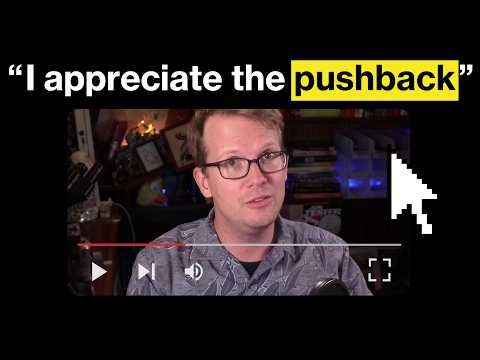
Ray William Johnson has built a remarkably successful second act as an online storyteller, transforming his earlier YouTube fame into a massive audience for true crime and unusual real-life stories. With millions of followers across TikTok, YouTube, and Facebook, his daily uploads demonstrate the continued appeal of short, dramatic narratives. However, this critical examination challenges the creative methods behind that success, arguing that Johnson's extensive reliance on generated imagery has transformed real tragedies into disposable entertainment. Through numerous examples, the creator questions whether convenience, production speed, and monetization have taken priority over artistic quality and sensitivity toward victims.
The investigation becomes particularly effective when it examines the visual inconsistencies appearing throughout Johnson's productions. Distorted hands, extra fingers, nonsensical lettering, duplicated police officers, and unrealistic character movements provide concrete examples of the technology's limitations. Particularly revealing are the depictions of recognizable public figures, including Kim Kardashian and Kenan Thompson, whose appearances become increasingly inaccurate as their respective stories progress. The creator also identifies recurring visual patterns, including an unusual abundance of purple clothing and repeated character designs. These observations make the criticism more substantial than a general rejection of generated artwork, demonstrating how poorly controlled imagery can undermine credibility when representing actual people and events.
Beyond technical shortcomings, the commentary raises legitimate ethical concerns about how true crime stories are presented. Johnson's repeated use of the euphemism "unalive" when describing suicide becomes a central example of language seemingly shaped by platform monetization concerns rather than the seriousness of the subject. The creator also highlights exaggerated sound effects, including repeated gunshot imitations and a possible cartoon-style scream accompanying a fatal plane crash. These examples support the argument that sensational presentation can trivialize genuine suffering. Particularly uncomfortable is an apparent sponsorship transition that originally moved directly from a man's suicide into an enthusiastic advertisement for Leonardo.ai. Although the promotional segment was subsequently removed from the publicly available upload, the surviving discussion illustrates the potential consequences of combining tragedy with aggressively commercialized storytelling.
The examination also explores perceived inconsistencies in Johnson's attitude toward synthetic media. One example involves his criticism of a murder defendant's generated romantic music while using similarly generated artwork throughout his own coverage. Another concerns Johnson objecting to someone cloning his voice while publishing synthetic depictions of recognizable individuals, including Kardashian during a robbery. The latter comparison raises meaningful questions about consent and representation, although voice cloning and visual dramatization are not necessarily equivalent practices. The creator deserves credit for acknowledging that Johnson was justified in opposing unauthorized voice replication. Nevertheless, the broader accusation of hypocrisy would benefit from a more careful distinction between the different ethical concerns involved.
An especially informative section traces Johnson's apparent transition from conventional storytelling toward increasingly automated visual production. Examples from 2022 and July 2023 demonstrate that his earlier work could communicate unusual stories through narration, original footage, and existing clips without depending heavily on generated illustrations. Material from late 2023 suggests an emerging reliance on synthetic images, while more recent uploads show those visuals becoming central to the presentation. This chronological comparison strengthens the argument that Johnson has made a deliberate creative choice rather than simply adopting an unavoidable production necessity. However, the estimate that his output contains more than 48 hours of generated imagery across two years rests on assumed upload frequency, video length, and visual proportions. It effectively illustrates the potential scale of his production, but should not be mistaken for a verified measurement.
The creator also attempts to explain why Johnson's audience rarely challenges the visual approach. Using a staged television courtroom appearance featuring his editor as an analogy, he argues that viewers become invested in the characters, conflicts, and outcomes of compelling stories without questioning their construction. The comparison offers an interesting perspective on audience engagement, particularly when applied to true crime's emphasis on guilt, punishment, and justice. Importantly, he avoids automatically accusing Johnson of manipulating comments or dismissing viewers as unintelligent. Still, the theory remains speculative, since selected comment sections cannot establish why millions of viewers accept, overlook, or potentially appreciate the synthetic presentation. The extended courtroom detour also slows the commentary, while the lengthy SimpliSafe advertisement creates an awkward interruption in an argument that criticizes poorly positioned commercial promotions.
Ultimately, the presentation works best as a passionate critique of the growing normalization of replacing commissioned artwork with inexpensive generated alternatives. The creator's final challenge asks Johnson to return to storytelling methods he previously demonstrated, arguing that technical convenience should not automatically outweigh artistic contribution or respectful representation. His energetic delivery, extensive collection of examples, and willingness to revisit older uploads give the discussion personality and investigative substance. However, repetitive jokes, prolonged visual montages, frequent profanity, and assumptions about Johnson's financial motivations occasionally weaken the argument. Claims that Johnson is simply lazy, deliberately avoiding artists, or incapable of sustaining his current format without generated imagery go beyond what the available examples establish. A more restrained presentation could have preserved the strongest criticisms while giving greater attention to potential production benefits and the distinction between responsible technological assistance and careless creative replacement.
Pros
- Extensive examples of distorted anatomy, inaccurate celebrity likenesses, duplicated characters, and inconsistent generated imagery provide concrete support for the criticism of Johnson's visual production quality.
- Thoughtful discussion of true crime ethics highlights how euphemisms, exaggerated sound effects, and poorly timed sponsorships can diminish the seriousness of real deaths and violent incidents.
- Comparisons between Johnson's earlier storytelling and more recent productions effectively demonstrate his increasing reliance on synthetic visuals.
- The examination of Johnson's objections to voice cloning and his criticism of generated music raises worthwhile questions about consistency, consent, and creative standards.
- The courtroom television comparison offers an interesting explanation for why audiences may focus on compelling narratives rather than questioning how those narratives are constructed.
- Energetic commentary, humor, and a substantial collection of examples make the discussion engaging despite its critical subject matter.
Cons
- Repeated jokes, extended montages, and lengthy tangents occasionally undermine the momentum and seriousness of the central argument.
- The calculation of approximately 48 hours of generated imagery relies on unverified assumptions rather than a comprehensive accounting of Johnson's uploads.
- Assertions about laziness, production costs, and replacing artists speculate about Johnson's motivations without establishing his actual staffing decisions or financial arrangements.
- Comparisons between unauthorized voice cloning and generated visual dramatizations overlook important differences involving consent, identity, and intended use.
- The explanation for audience acceptance remains an interesting theory rather than a conclusion supported by systematic evidence.
- The lengthy security-system sponsorship interrupts the investigation and creates an uncomfortable contrast with the creator's criticism of commercialization in sensitive storytelling.
A detailed and frequently entertaining examination of Ray William Johnson's modern content strategy raises important questions about artistic responsibility, synthetic media, and the treatment of real people in true crime entertainment. The strongest moments combine specific visual evidence with thoughtful ethical criticism, although repetitive humor, speculative accusations, and occasional distractions prevent the discussion from achieving its full analytical potential. Despite these weaknesses, the commentary delivers a persuasive argument for greater creative accountability and more respectful storytelling in an increasingly automated online media landscape.