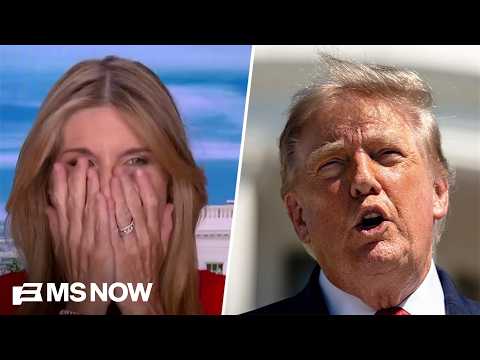
AI-generated soap opera melodrama, fake presidential singing and a relentlessly attached Natalie Harp doll give Steve Harness a broad collection of comic devices for mocking Donald Trump and the political figures surrounding him. The format is essentially a curated satire reel with commentary connecting the clips, and its best moments understand that absurdity can make a political point faster than another conventional monologue. The opening parody, built around terrible polling, fast food, an excessively long letter and a generic-ballot crisis treated like a romantic revelation, establishes the intentionally ridiculous tone immediately.
Harness keeps the pace brisk by moving between different parody formats rather than relying on one joke for the entire segment. A musical appearance by living former presidents leads into a caricature of Trump discussing the economy, followed by jokes about communism, North Korea, MAGA culture and Trump's relationship with his supporters. The material is openly partisan rather than attempting neutral political comedy, and viewers are never left wondering about the host's position. That clarity gives the presentation energy, although some of the insults substitute crude ridicule for sharper political satire.
The biggest change in tone arrives with an extended explanation involving stablecoins, federal debt and Trump's financial interests. Harness presents a chain of claims involving USD1, legal exemptions, banking approval, a strategic Bitcoin reserve, government decision-makers and the possibility of the stablecoin becoming a federal payment processor. He ultimately claims such an arrangement could generate as much as $35 million per day for Trump. These are highly consequential financial and political assertions, yet the segment supplies no visible sourcing, documentation, competing interpretation or detailed explanation showing how the revenue estimate was calculated.
That evidentiary gap matters because the presentation shifts from obvious fiction into material framed as a “reality check.” A viewer can easily recognize fabricated dialogue about diapers or an AI soap opera as satire, but claims about legislation, Treasury decisions, conflicts of interest and federal payment infrastructure require a different standard. Harness does occasionally use qualifying language, such as describing an option as being “on the table,” but the overall argument is delivered with considerably more certainty than the material presented within the piece can independently support.
The Natalie Harp section returns the program to firmer comedic territory by turning her attachment to Trump into a Mattel-style doll advertisement. The parody efficiently exaggerates the recurring theme of personal devotion, with the trunk reference and deliberately unsettling “forever” language providing the joke. Calling Harp “crazy” and “psycho,” even jokingly, is less effective because it turns behavior being mocked into an unsupported characterization of a person's mental state. The fake advertisement itself communicates the criticism without needing that additional label.
As a showcase for topical AI satire, the collection is energetic, varied and easy to follow. Harness clearly enjoys the clips and provides enough connective commentary to make the compilation feel more curated than simply assembled. The limitation is that comedy and factual political commentary are allowed to bleed into each other without enough distinction: invented dialogue is obviously exaggerated, while the serious financial section receives little more evidentiary support despite asking viewers to accept specific and potentially significant claims.
Pros
- The soap-opera parody uses polling, political loyalty and campaign anxiety to create a coherent running joke rather than a collection of unrelated AI gags.
- Multiple formats—including melodrama, music and a mock toy commercial—keep the satire visually and conceptually varied.
- Harness maintains a quick pace and provides effective transitions between the individual clips.
- The Natalie Harp doll concept turns its underlying criticism into a concise and memorable parody.
Cons
- Detailed claims about USD1, stablecoins, federal payment processing and potential Trump revenue are presented without enough supporting evidence or explanation to evaluate them.
- The presentation sometimes moves abruptly between unmistakable fictional satire and serious factual assertions without clearly changing evidentiary standards.
- Crude insults aimed at Trump supporters occasionally replace more substantive political criticism.
- Describing Natalie Harp with mental-health labels adds an unsupported personal characterization that the parody itself does not need.
The strongest material uses exaggerated AI scenarios to turn current political personalities and controversies into compact, inventive jokes. The compilation becomes considerably less persuasive when it shifts into major financial and governmental claims without providing comparable evidence, leaving an uneasy gap between effective satire and asserted political analysis. As comedy it frequently lands; as factual commentary it needs more substantiation.