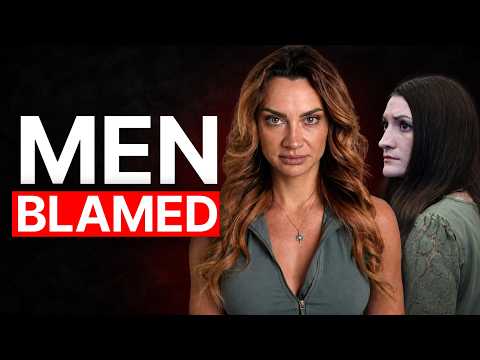
Lindsay Clancy’s admitted killing of her three children becomes the centerpiece of an extended satire about the public supporters who rally around her, particularly women dressed in pink outside the courthouse. Tim Dillon’s underlying target is understandable: he is mocking what he sees as a culture so eager to interpret horrific conduct through identity, mental illness, medical treatment, and social pressure that sympathy can drift into outright celebration. The sharpest moments come when he contrasts the seriousness of the deaths with the almost festive imagery of supporters cheering and bringing their own children. That contradiction gives the comedy an identifiable point rather than making it merely provocative.
The problem is how aggressively Dillon pushes that premise. His professed sympathy almost exclusively for Clancy is clearly delivered as irony, as are fantasies about her becoming a feminist hero, receiving a reality show, starting another family, or being permitted to kill again. Yet the repetition eventually overwhelms the critique. Once the routine reaches explicit jokes encouraging mothers to strangle their children, the satire has ceased developing its argument and is mostly escalating for shock. Given that three children actually died in the case as presented, the material demands unusually precise tonal control, and too much of the segment treats their deaths as props for increasingly extreme punchlines.
There is nevertheless a substantive issue beneath the provocation. The court material distinguishes between the uncontested physical act and the disputed question of Clancy’s mental state, presenting prosecution claims that her actions were deliberate alongside the defense position that postpartum psychosis and medication contributed to them. Dillon is most persuasive when ridiculing social-media users who move far beyond those competing arguments—for example, the post claiming the husband actually murdered the children despite even Clancy’s defense apparently not making that accusation. His mock reverence for someone citing a college psychology project effectively demonstrates how easily online speculation can masquerade as expertise. Unfortunately, his own commentary often becomes so exaggerated that the legitimate distinction between compassion for severe mental illness and conclusions about criminal responsibility receives little serious examination.
The Jessica Bowie section applies a similar formula to an alleged plot against the New York State Capitol, alternating details from a news report with jokes about her weight, clothing, conversion to Islam, and supposed use of a DoorDash bag. Dillon does briefly make a worthwhile distinction between ordinary Muslims and extremists, but the substance is quickly buried beneath prolonged appearance-based mockery. The allegations presented—surveillance of the Capitol, acquisition of materials, alleged ISIS allegiance, and communications with undercover agents—are serious enough to support satirical discussion without repeatedly making Bowie's body the punchline. As presented here, the segment is energetic but considerably less incisive than the Clancy commentary.
A lengthy geopolitical detour is even less disciplined. Dillon moves from a reported CIA visit to Moscow into broad claims about NATO, Western responsibility for prolonging the Ukraine war, Russia’s perception of weakness, the possibility of Putin using a tactical nuclear weapon, an Iran war that America has supposedly lost, and China potentially drawing lessons about Taiwan. These are Dillon’s interpretations and predictions rather than established conclusions within the presentation, and several are stated with sweeping confidence despite his occasional admission that he does not know what will happen. The central argument—that leaders who feel trapped by military failure may become more dangerous—is coherent, but it is surrounded by assertions about motives, responsibility, military outcomes, and strategic calculations that receive little supporting evidence.
The closing political routine returns to firmer comedic territory by playing a clip of “Darlene Graham,” presented as a Senate candidate or senator unable to answer a basic question about Taiwan and the South China Sea. Dillon’s mock version of the answer she could have memorized is funny because it demonstrates just how little technical knowledge would have been required to produce something superficially competent. His broader conclusion—that voters may tolerate visibly unqualified politicians because they assume unelected institutions exercise the real power—is more speculative, but at least grows directly from the exchange he is mocking. Unfortunately, extended invented riffs involving her brother and sexual insinuations pad a joke whose essential point lands much earlier.
Across the show, Dillon remains extremely quick at finding absurd implications in language, imagery, and social behavior, and his willingness to follow an uncomfortable premise far beyond conventional limits is integral to his style. The opening weather rant, mock celebrations, fake political answers, and abrupt advertisements create the intentionally unruly rhythm his audience likely expects. But provocation works best here when attached to a clear observation; when it becomes repetitive cruelty, unsupported geopolitical certainty, or prolonged personal insult, the comedy loses precision. There is a strong episode buried inside this material, particularly in its criticism of social-media certainty and political incompetence, but considerably tighter editing and more restraint around real deaths would make those ideas hit harder.
Pros
- The contrast between the gravity of the Clancy case and the celebratory courthouse support gives the central satire a clear, provocative target.
- Social-media speculation is effectively mocked, especially when minimal academic exposure is treated as authority for an unsupported murder theory.
- The Taiwan exchange provides a concrete foundation for sharp comedy about political preparedness and competence.
- Dillon repeatedly demonstrates an ability to extract absurd implications from ordinary phrasing and public behavior.
Cons
- Jokes about three murdered children are pushed so far and repeated so often that shock increasingly replaces substantive satire.
- The Clancy discussion gives little serious attention to the difficult distinction between mental illness, legal responsibility, and sympathy despite making that conflict central.
- The Bowie segment relies excessively on weight and appearance insults instead of developing its potentially stronger commentary about extremism and law enforcement.
- Claims about Russia, Ukraine, Iran, NATO, nuclear escalation, and China frequently move from interpretation to confident prediction without adequate support.
- Several extended riffs continue well after their central joke or argument has landed, weakening pacing and focus.
Dillon finds genuinely incisive material in the collision between online advocacy, criminal responsibility, and political incompetence, but his strongest observations are repeatedly buried beneath escalation for its own sake. The episode can be very funny and perceptive when the satire has a precise target, yet its treatment of murdered children and its loosely supported geopolitical claims make the overall result far more uneven than it needs to be.