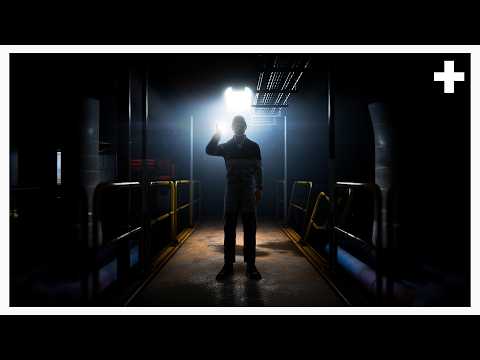
Hyperfocus allowing survivors to complete generators at extraordinary speeds raises an important question about how perk combinations affect competitive balance in Dead by Daylight. Odds approaches the subject with a clear distinction between perks that are simply powerful and those that actively undermine enjoyable gameplay. Rather than demanding that every strong ability receive a nerf, he argues that the real problem occurs when certain combinations eliminate meaningful counterplay, create unpredictable situations, or force developers to balance future additions around existing mechanics. His assessment is refreshingly measured in its overall outlook, acknowledging that previous adjustments have improved the game even as several troublesome interactions remain.
Hyperfocus receives some of the most convincing criticism because its effectiveness depends heavily on interactions with other perks and items. Odds explains how repeated great skill checks, toolboxes, and abilities such as Bardic Inspiration and One Two Three Four can produce exceptionally rapid generator completion. His concern extends beyond raw efficiency to the way these combinations undermine the normal relationship between generators and killer pressure. He also argues that extraordinary completion speeds make legitimate play difficult to distinguish from cheating, although that concern is more about perceived uncertainty than proof of widespread exploitation. The discussion becomes particularly persuasive when he connects Hyperfocus to earlier adjustments involving Stake Out and This Is Not Happening, suggesting that repeatedly weakening surrounding perks may be less effective than addressing the central mechanic.
The examination of Celestial Witness introduces another substantial concern involving obsession mechanics and future perk design. By repeatedly transferring the obsession, the perk can potentially eliminate important drawbacks associated with Save the Best for Last while creating powerful aura-reading combinations with Nemesis. Odds also considers how the mechanic could restrict future balancing decisions involving obsession-dependent abilities. This forward-looking approach gives the commentary more depth than a conventional ranking of overpowered perks. However, some of his strongest predictions remain theoretical, and the distinction between combinations already causing problems and those that might become problematic after future updates is not always sufficiently emphasized.
Healing and recovery mechanics form another convincing part of the discussion. Resurgence receives criticism for enabling exceptionally fast healing immediately after unhooking, potentially discouraging killers from spreading pressure and rewarding more frustrating tactics such as tunneling or slugging. Plot Twist and Conviction introduce a related concern by making downed survivors increasingly unpredictable, particularly when combined with Decisive Strike, Soul Guard, or coordinated rescue attempts. The example of a survivor using Plot Twist beneath a pallet before recovering with Conviction illustrates how multiple abilities can complicate decisions that would otherwise have relatively clear consequences. Odds makes an understandable argument for preserving meaningful recovery windows, although his perspective sometimes places greater emphasis on killer frustration than on the defensive value these abilities provide survivors.
The discussion becomes especially interesting when considering perks that disproportionately punish weaker killers. Valkyrie's Rage is presented as an ability that could create enormous distance after pallet stuns while having relatively little impact against powerful killers capable of avoiding traditional chases. This highlights an important balancing challenge in a game where different characters interact with pallets and movement mechanics in radically different ways. Rancor and the upcoming Killspree combination raise a separate concern about obtaining multiple endgame eliminations without sufficient earlier engagement. Meanwhile, Secret Project potentially rewards repeated generator blocking with extensive Undetectable uptime. These examples reinforce Odds' central argument that strong mechanics become particularly troublesome when they remove opportunities for interaction, although the proposed endgame combinations would benefit from more demonstrated testing before being treated as likely outcomes.
One of the presentation's greatest strengths is its willingness to acknowledge uncertainty and propose specific alternatives. Odds suggests increasing Celestial Witness's activation interval, introducing diminishing returns for Secret Project, and adding greater risk to Plot Twist interactions. He also revisits Save the Best for Last, explaining how earlier nerfs reduced its usefulness without necessarily resolving frustrating endgame camping situations. His proposed solutions are not always fully developed, but they demonstrate an interest in preserving enjoyable abilities rather than simply removing anything effective. The conversational delivery, occasional jokes, and personal examples make complicated perk interactions accessible to experienced players. Nevertheless, the frequent repetition, lengthy hypothetical scenarios, and occasional digressions prevent the commentary from being as focused as its underlying analysis deserves.
The closing examination of Specialist, Deerstalker, Coup de Grâce, and elevation-dependent perks broadens the argument from immediate balance problems to underlying design limitations. Specialist's potential interaction with repeated chest rummaging raises questions about generator progress occurring without conventional generator engagement, while Deerstalker and Coup de Grâce illustrate concerns about aura-reading interactions and insufficient warning before unusually powerful attacks. The discussion of Balanced Landing and All Shaking Thunder also identifies how inconsistent map elevation can make certain perks unreliable regardless of their theoretical strength. These observations are thoughtful, but several rely on imagined future conditions rather than demonstrated current problems. Importantly, Odds finishes by recognizing that the overall perk environment has improved and that relatively few abilities currently deserve serious concern. That balanced conclusion prevents the commentary from becoming an indiscriminate complaint about the game's entire perk system.
Pros
- Odds clearly distinguishes perks that are merely powerful from those that undermine counterplay or create unhealthy gameplay interactions.
- The examination of Hyperfocus and instrument perks provides a detailed explanation of how individual abilities can become problematic through multiplicative combinations.
- The discussion of Celestial Witness effectively illustrates how one mechanic can complicate the balancing of existing and future obsession perks.
- The analysis of Resurgence, Plot Twist, and Conviction raises meaningful questions about healing speed, recovery windows, and incentives for frustrating killer strategies.
- The criticism of Valkyrie's Rage highlights how the same perk can disproportionately affect weaker killers while offering limited value against stronger opponents.
- Specific adjustment proposals demonstrate an interest in preserving useful mechanics while reducing their more disruptive interactions.
- The conversational humor, practical gameplay examples, and acknowledgment of previous improvements make the criticism engaging without becoming uniformly negative.
Cons
- Several predicted balance problems depend on hypothetical future combinations rather than extensive demonstrations of existing gameplay issues.
- The presentation frequently repeats arguments about frustrating interactions and limited counterplay, making some sections unnecessarily lengthy.
- Certain numerical claims about generator completion and recovery speeds are presented without systematic testing or detailed supporting comparisons.
- The analysis sometimes emphasizes killer frustration without equally exploring the survivor perspective or the counterplay available against particular combinations.
- Some suggested reworks remain vague, leaving important questions about their effectiveness and unintended consequences unresolved.
- The later discussion of rarely used perks becomes increasingly speculative, weakening the distinction between urgent problems and mechanics that merely deserve monitoring.
Odds delivers a knowledgeable and frequently persuasive examination of how perk interactions can undermine Dead by Daylight's competitive balance without necessarily being overpowered in isolation. His strongest arguments connect specific gameplay frustrations to broader design principles, while his willingness to recognize improvements gives the criticism credibility. Although repetition and speculative predictions occasionally dilute the analysis, the discussion offers substantial value for experienced players interested in understanding why certain mechanics create problems beyond their individual strength.