A violently rattling basement door provides an effective statement of intent: present something immediately unnerving, acknowledge the ordinary explanation offered by viewers, then question whether that explanation accounts for every detail. That pattern runs through much of the collection, from the sealed attic cubby containing a dollhouse to unexplained noises in a funeral home, a stranger-like figure in a backyard photograph and bare feet seemingly visible beneath a hospital bed. The narration is energetic and atmospheric without completely abandoning skepticism, which gives these familiar internet mysteries more substance than a straightforward compilation of supposedly supernatural clips.
Several segments work because potentially mundane explanations are introduced rather than ignored. A cable could have disturbed the miniature dollhouse door, computational photography could distort a moving person, pareidolia could create a face in an old photograph, and automatic exposure could explain a portrait apparently changing brightness. The realtor footage is particularly well handled because the newly noticed painting detail is paired with a plausible camera-based explanation instead of automatically being treated as paranormal evidence. However, the narration occasionally weakens its own skepticism by dismissing alternatives rhetorically rather than investigating them, such as suggesting that an unusually forceful draft would have to be unusually "organized."
The strongest mysteries are those with enough context to leave a genuine unanswered question without requiring a supernatural conclusion. The decades-old Alabama family photograph has identifiable owners, a specific setting and a reported examination finding no signs of editing, while still leaving the identity of the man in the doorway unresolved. Similarly, the Ring-camera recording involving an elderly man named Paul gains emotional weight from the family circumstances, yet the presence of a television provides an obvious competing explanation. In both cases, uncertainty is more interesting than certainty, and the presentation mostly recognizes that distinction.
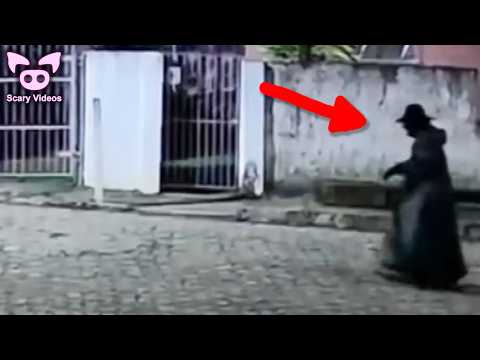
Other entries rely much more heavily on unverifiable personal testimony. Claims about haunted pubs, funeral-home disturbances, psychic impressions and unidentified figures are compelling as stories but offer limited means for viewers to establish what actually happened. The dancing figure in an apartment window is especially thin because even the original uploader is unknown and changing versions of the story have circulated with reposts. Presenting such provenance problems openly is valuable, but their inclusion also demonstrates how easily an eerie image can accumulate a narrative after separating from its original context.
The mid-video news roundup broadens the subject matter considerably, with mixed results. The alleged Donald Trump comment about unidentified objects in the ocean is properly labeled as an unsupported secondhand claim, while reports of workers collapsing at a Bangladeshi factory are presented without treating workers' ghost speculation as the established cause. The giant-cat reports remain anecdotal despite their number, and the narrator appropriately notes that the proposed extinct-American-lion explanation is speculative. The supermarket cardiac-arrest story is an amusing tonal diversion, although it has little connection to the surrounding paranormal material and briefly makes the compilation feel unfocused.
The discussion of unidentified archaic ancestry aims for a more scientific kind of mystery, but its framing requires particular care. The narration distinguishes the researchers' conclusions from internet speculation about extraterrestrials and explicitly says the study does not support an alien explanation, which is an important boundary. Even so, describing genetic ancestry as something scientists "can't identify" and turning extinct ancestral populations into a quasi-ghost story pushes a scientific finding toward sensationalism. The final Xavier Claris account is handled more successfully because the extraordinary abduction and duplicate-person claims are followed by substantial skeptical evidence: questionable photographs, suggestive hypnosis, his ability to fabricate photographic effects and a reported tendency toward confabulation and lying. Ending on a case whose evidentiary weaknesses are explored rather than concealed gives the collection a stronger critical finish.
Pros
- Ordinary explanations such as camera exposure, pareidolia, computational photography and physical interference are repeatedly acknowledged rather than excluded.
- Several stories provide useful provenance, dates, locations and follow-up information instead of presenting isolated clips without context.
- Extraordinary secondhand claims, including the alleged Trump UAP remark and alien interpretations of ancient ancestry, are explicitly identified as unsupported or speculative.
- The Xavier Claris segment gives substantial space to later skeptical investigation and weaknesses in the claimed evidence.
Cons
- Some mundane explanations are rhetorically dismissed without enough evidence to establish that they cannot account for the footage.
- Several viral clips have uncertain origins or depend primarily on personal testimony, sharply limiting what can actually be concluded from them.
- The scientific ancestry segment uses horror-oriented framing that risks making legitimate population-genetics research sound more mysterious than the stated evidence warrants.
- The unrelated news interlude disrupts the otherwise coherent progression of unexplained footage and paranormal stories.
The collection succeeds most when an unsettling clip is treated as a question rather than proof of anything supernatural. Its willingness to mention mundane explanations and expose weaknesses in dramatic claims gives the scares more credibility, even though the narration occasionally pushes uncertainty toward sensationalism. As paranormal entertainment with intermittent skeptical analysis, it is engaging and more careful than its ominous presentation initially suggests.