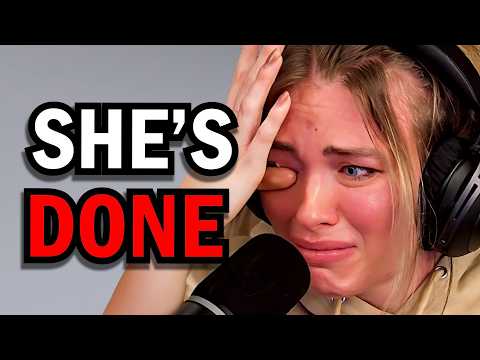
The deaths of Lindsay Clancy’s three children are horrific enough to demand careful, restrained discussion, yet the opening treatment quickly turns the case into a sweeping indictment of “liberal women.” Clips of women expressing solidarity with Clancy, arguing about the case, or incorporating it into dating conversations are presented as evidence of a broader social pathology. Some of the behavior shown is genuinely unsettling or provocative, but the commentary repeatedly generalizes from selected examples to an enormous political and gender-based category without establishing how representative those examples actually are.
The most legitimate point concerns the children themselves. The host asks why expressions of sympathy for Clancy can appear to eclipse acknowledgment of the three young lives that were lost, and that is a meaningful ethical question. Compassion for postpartum mental-health struggles and concern for criminal accountability are not inherently incompatible, yet the presentation frames the surrounding debate largely as a binary contest between caring about Clancy and caring about her children. It also states details about the killings and ongoing proceedings as settled background while offering little legal or clinical context for the issues apparently being contested in court.
A particularly consequential segment features a divorce attorney describing male clients who may try to use their partners’ public support for Clancy in custody litigation. That material at least illustrates a concrete potential consequence of provocative social-media posts, and the warning that online statements can surface in legal disputes is useful. However, the attorney’s description includes derogatory language and assertions about women’s psychological histories, while the host uses those anecdotes to reinforce a broader claim that these women are dangerous. Nothing presented establishes that supporting Clancy automatically indicates parental unfitness, mental illness or a threat to children.
The rhetoric becomes substantially less persuasive when disagreement is repeatedly translated into labels such as “lunatics,” “nut jobs,” “screaming banshees” and “depraved.” The host also speculates that the same women would leave husbands, take their money and blame them for everything, despite providing no evidence connecting those behaviors to support for Clancy. Such statements may energize viewers who already share the host’s political outlook, but they replace analysis with caricature and make a serious discussion about maternal mental health, criminal responsibility and public sympathy much harder to evaluate soberly.
The program then shifts abruptly away from Clancy into an extended political interview with Republican Overseas UK chair Greg Swenson covering Canada, Iran, the U.S. midterms, religion, Democratic politics and immigration. The transition is so sharp that the original subject effectively disappears rather than reaching a developed conclusion. Swenson offers numerous economic, electoral and geopolitical claims about Canadian dependence on U.S. trade, Iranian oil flows, wages, congressional races and party fundraising, but most are accepted without meaningful challenge or supporting evidence within the discussion.
That pattern continues during the treatment of Democrats, Israel, religion and immigration. The interview contains sweeping claims that Democrats “hate” Jews or religion, descriptions of political opponents as Marxists, communists and Islamists, and broad assertions about George Floyd, policing and ICE. These are politically and historically consequential claims, yet the exchange functions primarily as agreement between host and guest rather than an examination of evidence, alternative explanations or important distinctions within a large political coalition. Even where legitimate political questions exist, the presentation frequently substitutes ideological labeling for substantiation.
Pros
- The discussion raises a legitimate concern about whether public sympathy for Lindsay Clancy can overshadow remembrance of the three children who died.
- The custody-law segment provides a concrete example of how provocative social-media activity could potentially have real-world legal consequences.
- The host does briefly acknowledge that struggling mothers deserve compassion and access to support rather than dismissing postpartum difficulties entirely.
Cons
- A handful of provocative social-media examples are repeatedly generalized into claims about “liberal women” as a whole without evidence that they are representative.
- Insults, gender stereotypes and unsupported speculation frequently replace careful examination of the Clancy case and the difficult questions surrounding mental health and criminal responsibility.
- The presentation provides little legal or clinical context for an ongoing case while nevertheless making highly confident moral and political judgments around it.
- The lengthy pivot into unrelated political topics makes the piece structurally unfocused and leaves its central subject underdeveloped.
- Numerous economic, geopolitical, electoral, religious and policing claims from the guest are accepted with little challenge or supporting evidence.
A serious argument could have been made about the risks of turning a horrific family tragedy into social-media activism while neglecting the children at the center of it. Instead, that concern is buried beneath sweeping attacks on women and an unrelated partisan interview filled with similarly broad assertions. The result is forceful political commentary, but neither the Clancy discussion nor the later political claims receive the evidentiary care their subjects require.