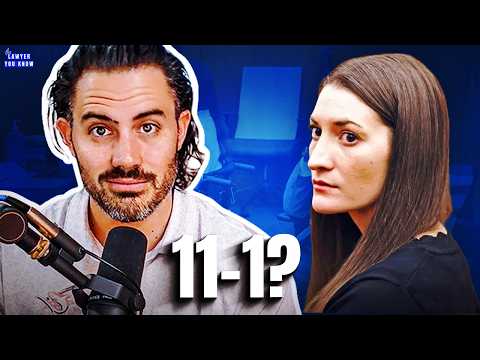
Lindsay Clancy’s case turns on an unusually difficult distinction: the prosecution argues that the deaths of her three children resulted from deliberate, rational actions, while the defense maintains that severe mental illness left her psychotic at the time. That conflict gives this first installment a substantial legal and human question to explore, and the discussion carefully establishes the competing narratives rather than treating the children’s deaths themselves as disputed. The account also appropriately warns against using this individual case to generalize about postpartum depression or psychosis.
The strongest material comes from the close comparison of the two opening statements. The Commonwealth’s theory is laid out concretely through its proposed timeline: Patrick Clancy leaves for medicine and takeout, Lindsay allegedly kills the children with exercise bands, speaks briefly with Patrick by phone, attempts to end her own life, and jumps from a second-story window. The defense’s response is presented with comparable detail, emphasizing Lindsay’s reported mental-health deterioration, searches for treatment information, previous disclosures about self-harm and harming the children, and the argument that she had no rational motive to kill children she loved. Keeping those positions distinct gives viewers a useful foundation for understanding what the jury was being asked to decide.
The discussion is less convincing when it moves from describing the lawyers’ strategies to judging their effectiveness. The prosecutors are characterized as disjointed, underprepared and poor communicators, while defense attorney Kevin Reddington is described much more favorably as charismatic and highly effective in front of a jury. There are specific observations supporting some of that criticism—the sequencing of witnesses is questioned, the prosecution’s descriptions of Clancy as controlling and manipulative are challenged, and Reddington’s deliberate positioning around his client is noted—but much of the assessment remains the hosts’ interpretation of courtroom presentation rather than something the audience can treat as an established explanation for the eventual 11-to-1 split.
The medical material adds important context but occasionally carries more certainty than the format can comfortably support. Clancy’s extensive spinal injuries, paralysis and dangerously low reported body temperature help explain both the aftermath of the incident and why her physical condition became part of the wider discussion. Yet lengthy explanations of spinal fractures, hypothermia thresholds and likely outcomes are delivered alongside the case narrative without much attention to sourcing or medical uncertainty beyond occasional qualifiers. For a case ultimately centered on mental state rather than orthopedic trauma, this section is informative but disproportionately long.
An even larger distraction is the attention devoted to internet discourse. The prosecutor’s hair bows receive an extraordinary amount of analysis, including arguments over whether they honor Kora, manipulate jurors, look unprofessional or simply attract unfair scrutiny. Similar detours cover filler words, attorney nicknames, social-media reactions, loose connections to the Karen Read case and theories that are explicitly being saved for later installments. These details illustrate how aggressively the trial has been dissected online, but they also compete with the far more consequential questions about evidence, criminal responsibility and Clancy’s mental condition.
To its credit, the presentation repeatedly separates public speculation from legally established facts and acknowledges when competing interpretations exist. Patrick Clancy’s statements of forgiveness, for example, are relevant to understanding the unusual family dynamics surrounding the prosecution, while the discussion correctly notes that charging decisions belong to the district attorney rather than the victims’ relatives. The hosts also resist presenting online theories about Patrick, the judge or other figures as settled conclusions, although repeatedly previewing those theories risks giving them significance before their evidentiary basis has been demonstrated.
As the opening chapter of a larger series, this provides a thorough map of an exceptionally complicated case and clearly establishes the prosecution and defense theories that will matter later. Its weakness is editorial discipline: serious legal and psychiatric issues repeatedly share space with courtroom aesthetics, TikTok arguments, attorney personalities, sponsorship material and speculative online rabbit holes. A tighter focus on the evidence behind the competing insanity and intentional-murder theories would make an already detailed account considerably more useful.
Pros
- The competing prosecution and defense theories are explained in enough detail to make the central dispute over Clancy’s mental state understandable.
- The reconstruction of the alleged timeline gives viewers a clear framework for evaluating later evidence.
- The discussion repeatedly distinguishes public speculation and online reactions from legally established facts.
- Important caution is given against treating this case as representative of postpartum depression or postpartum psychosis generally.
- Close attention to both opening statements reveals how differently the two sides framed the same conduct and personal history.
Cons
- Extended discussion of the prosecutor’s hair bows, filler words and social-media reactions distracts from the substantive evidence.
- Judgments about the relative quality of the prosecution and defense presentations sometimes become more confident than the analysis supporting them.
- Medical explanations about spinal trauma and hypothermia are lengthy relative to their importance to the central insanity dispute.
- Repeated previews of internet theories about Patrick Clancy, the judge and other figures risk amplifying speculation before its evidentiary value is established.
- The lengthy sponsorship interruption significantly disrupts an already sprawling case introduction.
The careful reconstruction of the competing legal narratives makes this a useful introduction to a difficult case in which mental illness, intent and criminal responsibility are central questions. Its strongest courtroom analysis is repeatedly diluted by internet drama and speculative side issues, leaving a compelling but unnecessarily sprawling foundation for the installments to follow.