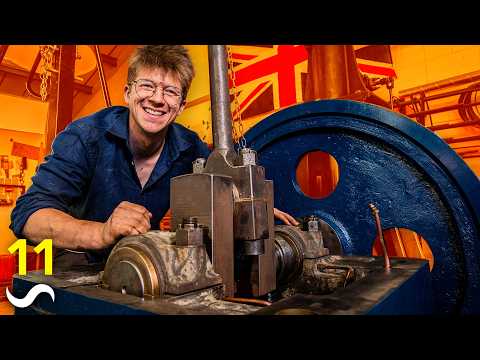
The restored Massey runs so quietly in neutral that both men stop to marvel at it. Then more pressure on the treadle makes the drive shut off. That swing from delight to diagnosis captures the character of this installment, which follows the last stretch of assembly through a first powered run and shows how much work can remain once a machine finally moves.
Will’s arrival gives the workshop scenes an easy rhythm. The two can joke about a pile of copper offcuts and then get straight back to figuring out why a die won’t seat. That exchange is particularly good because the camera has a problem worth following. Marking blue shows where the dovetail is making contact, an upside-down key complicates the diagnosis, and another fitting attempt gives them something concrete to check. The pleasure comes from watching two people revise their judgment as the part goes back in.
The drive belts get a similarly hands-on explanation. The supplier identifies the mismatch between the narrow belts that came with the hammer and its 22-millimeter grooves, then helps install and tension six wider belts. The comparison with a 1976 Massey drawing adds context for why the original ten grooves needn’t dictate the setup. The conversation is less clear about why filling all ten might cause trouble, especially after the supplier has already explained why six should carry the required load.
The refurbished oil filter gives the restoration a sense of history through a part viewers can actually understand. The host points out the retained handle and rods, then explains how turning the handle sweeps the closely spaced plates past the new wiper blades. The lubrication check has a different kind of appeal. A pressure reading and a few drops in the sight glass give the crew something to work with, and they say plainly that hand-pumping has left them unsure how much oil will flow at operating speed.
There’s enough going on around the hammer that the sequence occasionally loses its momentum. Decking, wedges, plumbing and die work compete for attention, and the hosts themselves joke about bouncing between jobs. The detour to weigh a newly acquired anvil has some charm, but a mobile-game sponsorship is a harder interruption to absorb while the plumbing is still unresolved. The workshop checklist helps restore a sense of progress when the various jobs finally converge on startup day.
The first powered tests earn their place even without a sustained forging demonstration. Running the machine with the ram removed brings debris out of the cylinder and gives the crew a reason to strip and clean it again. Later, adjusting the valve to the factory reference leaves the shutdown problem in place, while changes to the variable-frequency drive improve performance without curing the fault. The host ultimately blames the drive’s capacity, but the tests establish when the system trips more clearly than they establish why.
Pros
- Will’s rapport with the host makes the workshop banter feel like part of the work.
- The die-fitting sequence gives viewers a clear way to follow how each adjustment changes where the parts make contact.
- The comparison between the old belts and the wider replacements makes the choice of belt profile easy to follow.
- The filter segment explains how a refurbished component works while showing which original pieces were retained.
- The debris flushed out during the first powered run gives the repeated cleaning a tangible purpose.
Cons
- The belt discussion leaves the claimed drawback of using all ten grooves vague.
- The jumps among finishing jobs make it harder to keep track of what still stands between assembly and startup.
- The mobile-game sponsorship interrupts the plumbing work at a point when it has yet to be resolved.
- The closing diagnosis sounds more certain about the drive’s capacity than the tests justify.
There’s real satisfaction in seeing the Massey respond to the treadle after months of work, even if the crew can only explore part of its range. The installment works best as a record of a first startup, with enough of the setbacks left in to make that milestone feel earned.