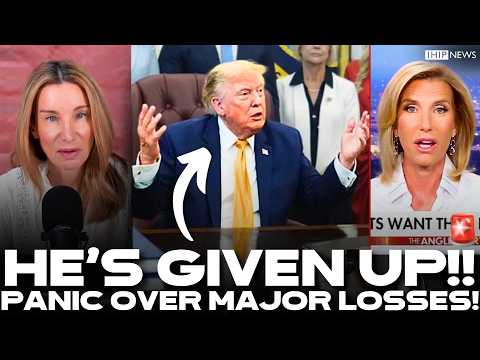
Donald Trump’s public appearances, visible bruising, leg swelling, apparent daytime sleepiness, and sometimes rambling speech form the core of a genuinely consequential question: whether the president’s health is being described transparently enough for the public to evaluate his ability to perform the job. The presentation is strongest when it stays with observable behavior and allows medical professionals to explain possible concerns without pretending those observations establish a diagnosis. Unfortunately, that restraint is applied inconsistently.
A wide range of critics is assembled to reinforce the central argument, including podcaster Jason Calacanis, national security analyst Joseph Cirincione, Alex Jones, Senator Mark Kelly, Representative Yassamin Ansari, George Conway, and cardiologist Dr. Jonathan Reiner. That breadth is rhetorically effective because the host emphasizes that concern is supposedly spreading beyond conventional Democratic opposition. Yet agreement among ideologically varied commentators is not itself medical evidence, and several speakers move far beyond what their clips can establish by describing Trump as incapacitated, deranged, demented, or affected by specific psychiatric conditions.
Dr. Reiner provides the most careful and useful portion of the discussion. He points to repeated apparent episodes of falling asleep and explains that excessive daytime somnolence can have multiple causes, mentioning sleep apnea as one possibility rather than presenting it as confirmed. He also connects untreated sleep problems with potential cardiovascular and cognitive consequences. Even here, viewers should distinguish a physician interpreting publicly visible behavior from an examination based on Trump’s medical records, testing, history, and direct clinical assessment.
That distinction largely collapses elsewhere. Alex Jones confidently proposes “frontal lobe dementia” based partly on his family experience, Ansari says she thinks Trump has dementia, and Conway characterizes him through labels including malignant narcissism and sociopathy. The host repeatedly reinforces the broader deterioration thesis rather than emphasizing how difficult it is to diagnose neurological or psychiatric disorders from edited public appearances. A clip showing a possible arm movement or facial motion is similarly described as evidence of involuntary spasms without establishing what caused the movement.
Trump’s remarks at the NASA event give the segment one of its better opportunities to let viewers judge primary material directly. The host first recounts the unusual comments about Trump’s uncle, genetics, space, and nuclear topics, then plays the actual remarks. That is considerably more persuasive than merely describing Trump as incoherent because the audience can hear the speech and decide how meaningful its digressions are. Still, unusual syntax, repetition, or an awkward anecdote does not by itself prove cognitive disease, making the host’s “deranged” characterization stronger than the evidence presented.
Other material weakens the focus. A Fox News discussion about Jelly Roll, jokes about Trump’s weight, observations that Trump increasingly resembles his mother, and mockery of social-media memes contribute little to the health question. They make the presentation more combative and partisan at precisely the moments when a disciplined examination of medical transparency, observable changes, and presidential fitness would carry greater weight. The repeated references to an “existential” national-security threat also heighten urgency without demonstrating that the specific health conditions being alleged have actually been established.
The underlying issue deserves serious scrutiny because presidential health, alertness, and decision-making capacity have obvious public consequences, particularly when military authority is involved. The segment succeeds in assembling concerning observations, showing relevant primary footage, and including at least one physician who discusses possible explanations with some medical nuance. Its central weakness is evidentiary discipline: observable symptoms, political judgments, psychological characterizations, and remote diagnoses are repeatedly blended together until possibilities are treated much more confidently than the available material warrants.
Pros
- Uses direct footage of Trump’s public remarks and behavior, allowing viewers to evaluate some of the underlying observations themselves.
- Dr. Reiner discusses excessive daytime sleepiness as a symptom with multiple possible causes rather than presenting one explanation as conclusively established.
- Raises a legitimate public-interest question about presidential health disclosure, alertness, and capacity in a position carrying extraordinary responsibilities.
- Includes criticism from figures with different political and media backgrounds rather than relying on a single commentator.
Cons
- Repeatedly treats speculation about dementia, neurological deterioration, narcissism, sociopathy, and incapacitation as more medically established than the presented evidence supports.
- Alex Jones’s specific “frontal lobe dementia” claim relies heavily on personal analogy rather than demonstrated clinical evidence about Trump.
- Possible spasms, sleepiness, unusual speech, and other observations are interpreted aggressively without sufficient acknowledgment of alternative explanations or the limits of remote diagnosis.
- Mockery involving Trump’s weight, resemblance to his mother, Fox News commentary, and social-media posts distracts from the more serious health and fitness questions.
- Highly charged descriptions such as “deranged” and “existential national security threat” make the presentation feel prosecutorial rather than clinically cautious.
There is enough observable material here to justify questions about Trump’s health and the adequacy of public medical disclosure, particularly concerning repeated apparent sleepiness. The case becomes substantially weaker when political commentary and diagnosis from afar are treated as substitutes for clinical evidence, leaving an important subject buried beneath excessive certainty and partisan framing.