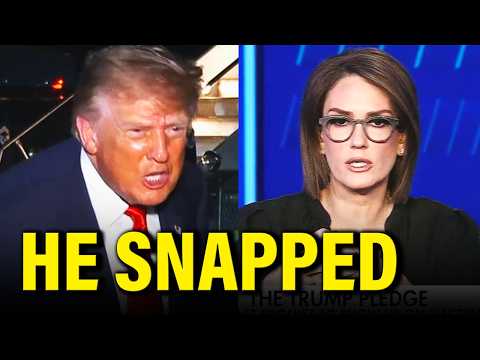
America’s war with Iran, rising fuel costs, fractures inside the Republican Party, and deteriorating relationships with traditional allies are assembled into a single argument: the political order built by the modern conservative movement is beginning to break apart. The scope is enormous, extending from congressional maneuvering and foreign policy to tariffs, immigration, AI investment, Canada, the Kennedy Center, and the approaching midterm elections. That breadth gives the discussion unusual ambition, but it also creates its central weakness—the presentation often moves from documented developments to much broader conclusions faster than the supporting evidence warrants.
The Iran conflict provides the clearest organizing thread. The speaker connects restrictions on oil transportation, higher fuel costs, military strain, congressional war-powers disputes, and growing political dissatisfaction, while repeatedly arguing that the administration bears responsibility for these consequences. Some of the underlying political developments are concrete, including Republican Representative Thomas Massie’s introduction of eight articles of impeachment against Defense Secretary Pete Hegseth and Speaker Mike Johnson’s decision to cut short the House schedule before the midterms. Those events give the broader discussion a substantive foundation, even though predictions that they represent the collapse of MAGA or an entire political era remain interpretation rather than established fact.
Foreign policy receives an especially expansive treatment. Trump’s approach is contrasted with a conception of American power based on alliances, trade, education, cultural influence, and international cooperation rather than raw military or economic strength. The discussion of Canada, NATO, Iran, global energy routes, and the post-World War II international system gives viewers a useful framework for understanding why damaged alliances can matter beyond diplomatic symbolism. At the same time, statements that American global standing has “collapsed” or that the country is witnessing the definitive end of the “American century” are sweeping historical judgments presented with considerably more certainty than the program demonstrates.
The strongest domestic political material comes from specific examples of Republican disagreement. Massie’s challenge to Hegseth, conservative criticism of tariffs, Karl Rove’s decision to support a Democrat in a Texas race, and criticism from Erick Erickson are used as indicators that parts of the conservative establishment are distancing themselves from MAGA politics. These are meaningful data points, and the Rove example is particularly striking, but they do not by themselves establish the much larger thesis that the Republican coalition is collapsing. The speaker does occasionally acknowledge that she is interpreting signals and “reading the tea leaves,” yet those qualifications compete with much more definitive language elsewhere.
A conversational delivery makes an exceptionally dense discussion easier to follow. Historical detours into the 1850s, 1890s, 1970s, Nixon-era war powers, and the development of the modern Republican Party attempt to place current events within longer patterns rather than treating every headline as unprecedented. That historical perspective is valuable, but the presentation becomes meandering as personal anecdotes, rhetorical asides, repeated qualifications, and speculation accumulate. Claims about Trump’s motivations, AI investments, the Kennedy Center, Republican electoral strategy, and why political figures are changing course would benefit from clearer separation between documented information and the speaker’s interpretation.
The closing section moves decisively away from explanation and into political advocacy. The speaker urges rallies, letters, calls to representatives, sustained pressure through multiple election cycles, rejection of the current Republican leadership, and continued efforts toward the 2026 and 2028 elections. That makes the program’s perspective unmistakable, but it also limits its usefulness as a neutral political explainer. Viewers looking for an argument from a clearly defined point of view may find the conclusion energizing; viewers expecting balanced analysis are given little sustained engagement with competing interpretations of the same political developments.
Pros
- The discussion connects congressional politics, foreign policy, energy markets, alliances, and electoral pressures into a coherent overarching argument.
- Specific developments such as the Massie impeachment effort and House recess provide concrete anchors for the broader political analysis.
- Historical context helps place current disputes over presidential power, party coalitions, and international influence within longer American political patterns.
- The conversational presentation makes a large amount of complicated material relatively accessible.
Cons
- Major conclusions about the collapse of MAGA, the Republican political order, and American global dominance extend well beyond what the examples presented can establish.
- Assertions about political motivations and strategic calculations are sometimes delivered with more confidence than the available evidence supports.
- Numerous tangents, repetitions, and personal asides make an already lengthy discussion substantially less focused.
- The final portion becomes explicit political advocacy rather than maintaining the explanatory approach suggested by the format.
- Opposing interpretations receive little sustained consideration, weakening the program as a balanced account of the political developments it covers.
An impressively wide-ranging political commentary draws useful connections between war, economics, congressional power, party fractures, and America's changing international relationships, but its strongest factual examples cannot fully carry its sweeping historical conclusions. The lively historical perspective and specific political developments make it engaging, while speculation, repetition, and an overtly advocacy-driven conclusion keep it from functioning as a consistently rigorous explainer.