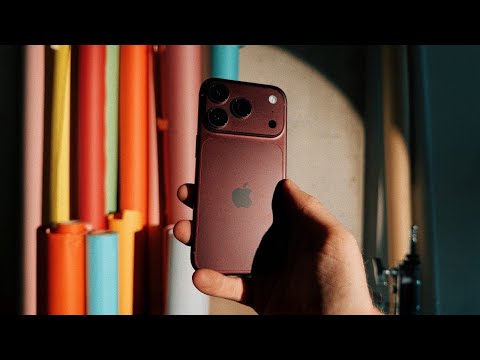
Apple’s smaller Dynamic Island is the most visible new piece of engineering on an otherwise familiar iPhone 18 Pro, and that modest change sets the tone for much of the review. The color-matched back loses some of the contrast the presenter preferred, while glacier and burgundy keep some personality in the Pro lineup. More interesting is the suggestion that hiding additional Face ID hardware beneath the display could eventually lead toward a much smaller cutout, though the review appropriately treats that as speculation about Apple’s direction rather than an announced plan.
The comparison with Google’s Pixel 11 Pro gives the discussion a useful perspective beyond simply cataloging upgrades. Apple earns substantial praise for the reliability and integration of its broader ecosystem, particularly when the presenter contrasts AirPods and Apple Watch pairing with glitches he experienced using Pixel Buds and transferring a Pixel Watch. He also highlights practical features such as the Center Stage camera, Action button and Camera Control, arguing that competing Android manufacturers could learn from Apple’s willingness to embrace physical controls and more flexible front-camera framing. These are personal experiences rather than comprehensive reliability tests, but they make the comparison tangible.
Performance provides one of the clearest demonstrations in the review. The A20 Pro reportedly handles Metal Storm at maximum graphics settings without difficulty, while the Pixel 11 Pro becomes hot enough after roughly half an hour that the presenter stops playing and lets it cool. He carefully avoids turning that result into an indictment of Android generally, specifically noting that Snapdragon-powered Samsung devices are a different proposition. That qualification strengthens what could otherwise have become an overly broad Apple-versus-Android claim, although a single game and relatively informal test cannot establish the full performance or thermal picture.
Siri receives an unusually positive reassessment after years of disappointment. Access to email lets the assistant retrieve information in a way the presenter finds genuinely useful, and he reports instances where it performs better than Gemini. At the same time, Siri remains slower, makes interpretation mistakes and operates with less of his personal communication history because he does not use iMessage. His greater comfort entrusting Apple with personal data is explicitly framed as his own preference, while the practical examples do a better job of supporting the claim that Siri has become more useful than proving broader superiority over competing assistants.
Cameras remain the iPhone’s biggest advantage in his assessment, especially for video. The variable-aperture main camera, spanning f/1.48 to f/4, gives the review an actual hardware development to discuss rather than relying entirely on Apple’s established reputation. The presenter still prefers still photos from several competing phones in some situations, including the Pixel, which keeps the camera discussion from becoming one-sided. Calling the iPhone’s video quality a “quantum leap” over competitors is much more sweeping than the evidence shown here can establish, however, particularly without controlled side-by-side testing.
The most substantial criticism is reserved for iOS itself. Adjustable Liquid Glass opacity helps visibility, but the resulting interface is described as gray and joyless compared with Google’s Material Expressive design, while Android’s back gesture and easier access to notifications are presented as meaningful ergonomic advantages. Those judgments are openly subjective, yet the specific interaction examples make them more useful than a generic complaint about operating-system preference. This tension ultimately gives the review its personality: an Android enthusiast can admire the iPhone’s performance, cameras, battery life, charging, ecosystem and consistency while still finding the everyday interface less enjoyable to use.
Pros
- Uses the Pixel 11 Pro as a consistent reference point, giving the iPhone’s strengths and weaknesses meaningful competitive context.
- Grounds ecosystem praise in specific experiences involving AirPods, Pixel Buds, Apple Watch and Pixel Watch rather than relying only on reputation.
- Provides a concrete gaming example to illustrate the A20 Pro’s performance and thermal advantage in this particular comparison.
- Treats Siri as genuinely improved while still identifying its speed and interpretation problems.
- Balances strong praise for iPhone video with acknowledgment that competing phones can produce preferable still photographs.
- Clearly explains why the presenter continues to prefer aspects of Android despite recommending the iPhone.
Cons
- Several major conclusions, particularly about overall smartphone video superiority, are broader than the limited comparisons presented can establish.
- Performance comparisons rely heavily on one gaming experience rather than repeatable benchmarks or broader sustained testing.
- Discussion of the smaller Dynamic Island quickly moves into speculation about Apple’s possible future display design.
- The sponsored wireless-charging segment is lengthy enough to interrupt the otherwise focused Apple-versus-Google comparison.
- Battery life and charging receive strong praise near the conclusion without the detailed testing given to some other areas.
A relatively restrained hardware update becomes an engaging review because the iPhone is examined through the eyes of someone who still prefers Android in several important ways. Specific ecosystem, performance, camera and interface comparisons create a nuanced case for Apple’s consistency without pretending that polish automatically makes every part of the experience preferable.