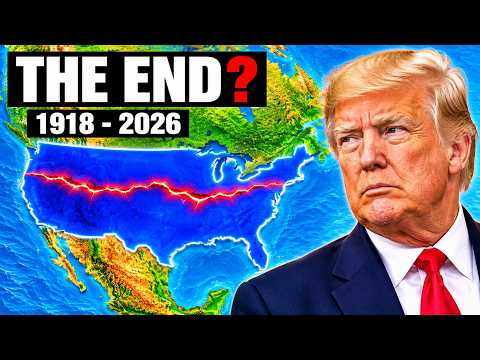
Democrats' sweeping electoral victories dominate this edition of Democracy Now!, with Amy Goodman presenting the 2026 midterm results as a decisive rejection of President Donald Trump and the MAGA movement. The report describes Democrats regaining control of both chambers of Congress, winning governorships in traditionally Republican states, and achieving several historic political firsts. Rather than focusing exclusively on the national balance of power, Goodman examines individual contests, policy disagreements, and ballot initiatives to illustrate the potential significance of the election. The result is an ambitious political news roundup that delivers considerable information, although its strongly progressive perspective shapes how the developments are presented.
The congressional coverage establishes the scale of the reported Democratic gains through specific races and electoral figures. Particularly striking are the accounts of James Talarico defeating Ken Paxton in Texas, Annie Andrews winning a closely contested South Carolina Senate race, and Sherrod Brown returning to the Senate after his 2024 defeat. The report also highlights Democratic victories in Kansas, Iowa, Maine, North Carolina, and Michigan, emphasizing how the election allegedly disrupted longstanding Republican advantages. Vote margins, campaign spending figures, and references to previous election results help convey the importance of these contests. However, the rapid succession of victories provides limited opportunity to examine why individual electorates changed direction, and the sweeping national conclusions are not supported by a detailed analysis of turnout, voter demographics, or broader electoral trends.
One of the broadcast's more substantial achievements is its attention to candidates whose reported victories would represent important milestones in American political representation. Goodman highlights Michigan's Abdul El-Sayed as the first Muslim elected to the Senate, New Mexico's Deb Haaland as the first Native American woman elected governor, and Georgia's Keisha Lance Bottoms as the first Black woman elected governor in the United States. Additional coverage includes historic victories involving Indigenous, Latino, Black, and openly gay candidates. These developments give the election reporting a broader significance beyond party control. The inclusion of victory speeches also allows several candidates to articulate their political priorities directly, although the presentation frequently emphasizes symbolic achievements without examining the practical challenges they would face in office.
The broadcast is particularly effective when connecting election results to concrete policy disputes. Health care affordability, Medicaid reductions, reproductive rights, military spending, and economic inequality repeatedly emerge as defining campaign issues. Coverage of the Missouri abortion ballot initiative and similar measures in Virginia, Nevada, and Idaho demonstrates how voters can influence major social policies independently of congressional elections. The discussion of transgender-related ballot measures and voting identification requirements adds another dimension, showing that the reported results were not uniformly favorable to progressive positions. These sections provide useful breadth, but the abbreviated explanations leave important questions about legal implementation, policy consequences, and the wording of individual measures insufficiently explored.
Goodman's presentation is unmistakably ideological, particularly in the attention given to Democratic Socialists of America-backed candidates and politicians critical of corporate influence, military spending, and U.S. support for Israel. The report features campaign statements condemning billionaires, Republican leadership, and American foreign policy, often without corresponding responses from those being criticized. This editorial perspective is consistent throughout the coverage and gives the broadcast a recognizable identity, but it also limits the distinction between political analysis and advocacy. Accusations involving campaign misconduct, discriminatory attacks, and personal controversies are consequential enough to warrant additional sourcing or opposing perspectives. While the segment attributes several statements to candidates and other named figures, some broader characterizations are presented with greater certainty than the supporting detail establishes.
The transition from domestic election results to international developments broadens the broadcast's scope considerably. Goodman discusses Trump's reported decision to end approximately $4 billion in annual military assistance to Israel while continuing weapons sales, alongside proposed legislation that critics believe would deepen military cooperation between the two countries. The report then turns to a Justice Department investigation involving Democratic figures and an unusual Alaska Senate ballot controversy before examining allegations of expanded U.S. military involvement in Venezuela. References to reporting by The New York Times, statements from Mark Elias, and Trump's own remarks provide identifiable sources for some of these accounts. Nevertheless, the international and legal stories involve complex circumstances that cannot be adequately established through brief summaries alone, especially when the potential consequences include military occupation, criminal prosecution, and cross-border military operations.
The broadcast maintains a brisk, information-heavy pace that suits viewers seeking a broad overview of political developments. Goodman moves efficiently between races, candidate speeches, ballot measures, and international headlines without lengthy commentary or unnecessary digressions. The recorded statements introduce different voices and occasionally provide welcome relief from the continuous delivery of election statistics. However, the sheer number of names, states, offices, and political claims can become overwhelming. More importantly, several extraordinarily consequential developments receive little explanation of their evidentiary foundations, and some projected outcomes are discussed alongside declared victories without enough emphasis on their differing levels of certainty. The overall presentation is engaging and wide-ranging, but its usefulness as a comprehensive news briefing is weakened by limited verification context and insufficient separation between reported developments, attributed allegations, and political interpretation.
Pros
- Amy Goodman delivers an extensive overview of congressional, gubernatorial, and state-level election developments.
- Specific vote margins, campaign spending figures, and historical comparisons help communicate the reported significance of individual races.
- The coverage highlights numerous political representation milestones involving candidates from historically underrepresented communities.
- Recorded candidate speeches allow viewers to hear firsthand how several election winners interpret their victories and political priorities.
- The examination of abortion rights, voting requirements, health care, and transgender-related ballot initiatives broadens the discussion beyond partisan control of Congress.
- The inclusion of international affairs and Justice Department developments provides a wider picture of the political environment surrounding the election.
- The brisk presentation accommodates a substantial number of stories without prolonged repetition or unnecessary commentary.
Cons
- The consistently progressive framing gives comparatively little attention to Republican perspectives or alternative explanations for the election results.
- Several major electoral and historical claims lack sufficient supporting context for viewers to independently assess their accuracy.
- The rapid coverage of individual races leaves limited room to examine voter behavior, campaign dynamics, and the causes of reported political shifts.
- Allegations involving political misconduct, discriminatory attacks, and federal investigations receive insufficient examination of evidence and responses from the accused.
- The distinction between confirmed victories, projected outcomes, and unresolved contests is not always emphasized clearly enough.
- Complex international developments involving Israel and Venezuela are condensed into brief accounts that provide limited legal, diplomatic, and historical context.
Amy Goodman delivers an ambitious and information-rich political roundup that captures the reported magnitude of Democratic electoral gains while connecting those victories to broader debates over representation, economic policy, civil rights, and American foreign relations. The extensive election coverage and firsthand political statements make the broadcast engaging, but its ideological emphasis, limited scrutiny of consequential claims, and compressed treatment of complex developments reduce its analytical depth. It works best as a progressive-oriented overview of major political headlines rather than a fully balanced or independently substantiated examination of the events.