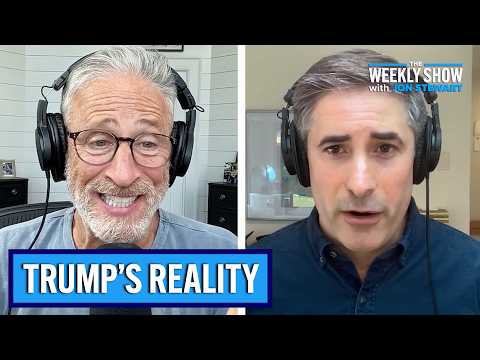
The central concern is serious: federal law-enforcement presence near polling places, changes to voting access in Texas, and reported disputes involving mailed ballots all raise legitimate questions about how the 2026 midterms will be administered. The host is strongest when focusing on the need for advance planning, clear legal safeguards and public communication rather than waiting until Election Day to react. That practical emphasis gives the commentary more substance than a simple partisan warning.
The presentation becomes less convincing when possibilities are repeatedly treated as if they are already confirmed plans. Markwayne Mullin’s statement, as shown here, says ICE would only appear at polling locations in response to specific threats or to serve warrants on people already being sought. The host interprets that as evidence the administration is openly announcing election meddling, but the material presented does not establish that broader conclusion on its own.
A similar problem appears in the discussion of voter intimidation. Democratic politicians and strategists argue that armed federal agents could frighten voters, particularly in communities that have already experienced aggressive immigration enforcement. That concern is understandable, but some of the rhetoric goes much further, including predictions that people who “look Mexican” will be stopped for papers or that National Guard troops could be ordered to seize ballot boxes. Those are presented as warnings or scenarios rather than demonstrated events, yet the surrounding commentary often gives them near-certain weight.
The Tarrant County polling-place reductions provide the most concrete controversy in the piece. Cutting 92 sites, roughly a third of the county’s previous total according to the report shown, creates an obvious basis for questions about access, travel time and whether certain neighborhoods will be disproportionately affected. Republican officials are said to justify the decision on efficiency and cost grounds, while Democrats and voting-rights groups describe it as suppression; the video largely dismisses the official rationale without meaningfully examining the underlying turnout, location or accessibility data that would help viewers judge between those competing explanations.
Polling and electoral strategy are also handled with more certainty than the evidence warrants. The discussion presents Tarrant County as essential to James Talarico’s statewide prospects and cites polling showing unusually large movement toward Democrats. One commentator at least acknowledges that polling can be wrong, but the broader framing repeatedly assumes Republican officials are closing sites specifically because they know where Democratic votes are coming from. That may be the accusation, but proof of motive is not supplied here.
The final section improves by shifting from prediction to accountability. The host asks what Democratic leaders, governors and members of Congress are actually preparing to do if ballots are challenged, federal agencies appear at polling places or election procedures become contested. That is a fair and useful question, and the frustration with politicians merely describing threats instead of explaining contingency plans gives the closing argument a clearer public-interest focus. Claims involving the Postal Service and defiance of court orders, however, are presented almost entirely through partisan testimony without enough detail to independently establish what orders were issued, what conduct allegedly violated them or what evidence the whistleblower provided.
Pros
- Raises legitimate concerns about polling-place access, voter intimidation and the need for clear election-protection plans before Election Day.
- Uses concrete examples, including the proposed Tarrant County polling-site reductions, rather than relying entirely on abstract warnings.
- Distinguishes at a few points between current polling and uncertain election outcomes.
- Presses Democratic leaders for practical contingency planning rather than settling for expressions of concern.
Cons
- Repeatedly converts conditional statements and hypothetical scenarios into claims that election interference is already openly planned.
- Attributes deliberate voter-suppression motives to officials without presenting enough direct evidence to establish intent.
- Gives minimal scrutiny to competing explanations for polling-place consolidation or federal law-enforcement deployment.
- Highly charged language and partisan certainty weaken otherwise legitimate questions about election administration.
- Important claims involving the Postal Service, court orders and possible ballot interference are not developed with enough documentary detail to verify them.
There are meaningful election-integrity questions here, particularly around polling access, federal enforcement near voting sites and whether political leaders have workable contingency plans. The commentary would be far stronger if it separated documented actions, partisan allegations and hypothetical worst-case scenarios instead of frequently blending them together. The result is urgent and engaging, but more accusatory than evidentially secure.