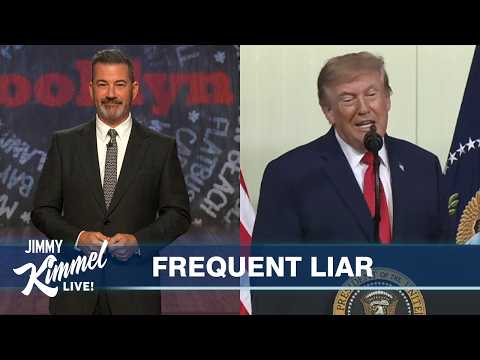
Republican primary defeats and weak approval numbers provide the discussion with its central political argument: Donald Trump’s influence may be eroding as voters become more concerned with affordability, health care, taxes, insurance, and other immediate pressures than with familiar culture-war appeals. Ben Meiselas and Anthony Scaramucci connect losses by Trump-endorsed candidates with Democratic overperformance in special elections and broader dissatisfaction with the administration. The argument is plausible within the evidence they cite, but their confidence that these results mark the “beginning of the end” moves well beyond what a handful of primaries, special elections, and polling figures can conclusively establish.
One of the more useful exchanges concerns why anti-Trump identity alone may not be enough for opposition candidates. The discussion of Alexander Vindman’s defeat becomes a broader argument that voters want candidates who can explain what they will materially deliver rather than simply define themselves against the president. That observation gives the political analysis more substance than the program’s frequent declarations that Trump is collapsing, particularly when the speakers emphasize listening to communities, economic insecurity, and authenticity rather than ideological labels.
The examination of persistent Trump support is similarly more nuanced than some of the surrounding rhetoric. Scaramucci describes economic anxiety, resentment toward elites, and Trump’s role as an avatar for voter anger, while acknowledging that people in his own working-class Long Island circles remain committed supporters. His comparison between Jeb Bush promising difficult fiscal choices and Trump promising an easy budget solution illustrates the political appeal of reassuring promises, although the anecdote cannot by itself establish why millions of voters continue supporting Trump.
Discussion of Republican Senate candidates raises legitimate questions about preparation for national office, particularly when a candidate responds poorly to a question about Taiwan. Yet the segment quickly expands from candidate competence into sweeping geopolitical conclusions about China, Iran, BRICS, South Korea, Canada, and the unraveling of American alliances. The hosts present many consequential claims about military deployments, rare-earth leverage, diplomatic realignment, and the effects of U.S. policy without providing enough sourcing or context to distinguish documented developments from their interpretations of what those developments mean.
The Pentagon section contains the program’s most serious material. Reporting about Jennifer Hegseth’s access, staffing involvement, participation in meetings, and role around press restrictions is used to frame a wider concern about cronyism under Pete Hegseth. The hosts also describe the removal or departure of senior military leaders and argue that losing experienced officers can impose long-term institutional costs. Those are substantial governance questions, but the discussion repeatedly goes further, attributing personnel decisions to racial or gender motives, alleging favoritism in contracting, and presenting disputed explanations for individual firings without establishing the evidence necessary for such definitive conclusions.
Military readiness and the Iran conflict then dominate the final stretch, with claims involving depleted munitions, damaged supply infrastructure, defensive shortages, naval logistics, drone programs, alliance erosion, and civilian deaths. The speakers occasionally identify outside reporting, including work they attribute to The New York Times, but most of these assertions arrive in rapid succession without enough documentation to evaluate their accuracy or strategic significance. Particularly grave allegations about strikes killing children demand a much higher evidentiary standard than the conversational format provides, and the emotional language surrounding them makes the distinction between verified reporting, inference, and moral judgment increasingly difficult to track.
Presentation is energetic and conversational, helped by the obvious familiarity between Scaramucci and Meiselas, but the same chemistry encourages rhetorical escalation. Terms such as “loser,” “cult,” and repeated expressions of humiliation or disgust make the speakers’ political position unmistakable while reducing analytical distance. The program is strongest when it examines voter incentives, candidate quality, institutional experience, and the limits of running purely against Trump; it is considerably less persuasive when polling, election results, military reporting, personal allegations, and large geopolitical theories are combined into a single narrative of imminent political and national collapse.
Pros
- Connects Republican primary results and special-election performance to concrete voter concerns such as affordability, health care, insurance, taxes, and economic insecurity.
- Offers a valuable acknowledgment that opposition candidates need a positive, materially relevant case rather than relying exclusively on anti-Trump identity.
- Scaramucci’s discussion of persistent Trump support introduces economic resentment and distrust of elites rather than simply dismissing remaining supporters.
- Raises legitimate questions about Pentagon staffing, institutional experience, civilian involvement, press access, and the consequences of removing senior military leaders.
- The conversational chemistry keeps a wide-ranging political and national-security discussion moving despite its density.
Cons
- Treats limited electoral results and polling as stronger evidence of Trump’s impending political collapse than they can reliably provide.
- Numerous claims about Taiwan, China, Iran, South Korea, Canada, military readiness, logistics, and alliance realignment are presented with insufficient sourcing or context.
- Allegations concerning the motives behind personnel removals, contracting decisions, and Pentagon conduct frequently move from suspicion or interpretation to confident assertion.
- Serious claims involving civilian casualties and military failures receive emotionally forceful treatment without the evidentiary detail needed to independently evaluate them.
- Persistent insults and overtly partisan framing reduce analytical distance and sometimes substitute rhetorical certainty for careful argument.
- The rapid movement between electoral politics, personal scandals, military management, and global strategy produces an expansive narrative whose conclusions are often broader than the supporting evidence.
The discussion is most persuasive when it focuses on voter dissatisfaction, the declining usefulness of purely anti-Trump campaigning, and the institutional risks created by politicized personnel decisions. Its larger portrait of electoral collapse and American military decline is much less secure because consequential claims and interpretations are delivered with greater certainty than the supporting evidence warrants. Energetic and often insightful commentary is therefore weakened by partisan escalation and insufficient evidentiary discipline.