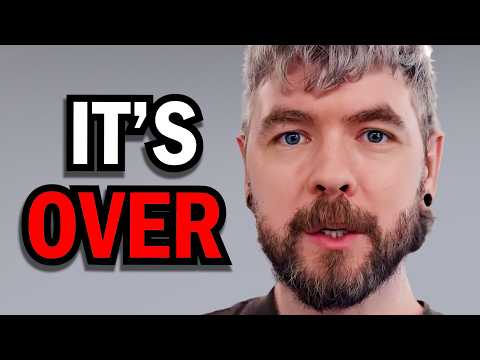
Gayle King’s brief response to learning that the lone holdout juror in the Lindsay Clancy case was a Black man becomes the foundation for an enormous wave of anger here. The central clip is straightforward: King asks about the jury’s racial makeup, confirms that the holdout was a Black man, and says she has to “sit with that for just a second.” The compilation then presents creator after creator interpreting those words as disbelief that a Black man could independently refuse to join the other jurors. That reaction is undeniably ambiguous enough to invite questions, but the montage quickly moves from questioning King’s meaning to confidently assigning motives that her quoted remarks alone do not establish.
The sheer volume of reactions effectively demonstrates that King’s exchange struck a nerve among the people featured. Several commentators make essentially the same argument: the juror’s race should not determine how his decision is interpreted, and his willingness to maintain his position despite the other jurors deserves respect. Those comments give the compilation a clear through-line rather than making it merely a random collection of angry clips. Repetition also becomes a liability, however, because many speakers cycle through virtually identical variations of “why does his race matter?” and “why do you need to sit with that?” without adding new information.
More problematic are the leaps from King’s actual words to sweeping assertions about what she supposedly believes. Commentators repeatedly claim that she was angry, expected the juror to obey liberals, dislikes strong Black men, intended to shame a non-Black juror, or supports Clancy being found not guilty. None of those motives is demonstrated by the excerpt presented. One speaker offers a more useful approach by simply asking King to clarify what her reaction meant, but much of the surrounding commentary treats interpretation as established fact rather than acknowledging the uncertainty created by a short and unexplained remark.
The broader political and racial generalizations weaken the case further. Various speakers expand the incident into assertions about liberals, Democrats, feminists, white women and Black men, sometimes using King’s reaction as supposed proof of much larger ideological claims. Those statements are opinions from the featured commentators, not conclusions established by the material shown. The compilation would be more persuasive if it stayed focused on the specific journalistic question—why King reacted as she did—and separated legitimate criticism of an awkward exchange from speculation about entire demographic or political groups.
Discussion of the Clancy case itself is similarly heated. Speakers describe the holdout as courageous and unquestionably correct while characterizing the other jurors in stark moral terms, and some make categorical statements about Clancy’s motives or mental state without supplying supporting evidence here. The segment does at least communicate useful details attributed to the interview, including a jury described as nine women and three men, the holdout being the only person of color, and the reported 11-to-1 division. Yet those details mostly serve as fuel for reaction rather than as the beginning of a careful examination of why jurors reached different conclusions.
Presentation is built almost entirely around escalation. The clips are energetic, blunt and often darkly humorous, and their rapid succession makes the scale of the backlash easy to understand. At the same time, insults, profanity, personal attacks and even remarks telling King to die or play in traffic push far beyond criticism of her journalism. Including so many extreme reactions without meaningful differentiation between substantive objections and abusive rhetoric makes the compilation feel more interested in amplifying outrage than examining the controversy.
Pros
- King’s exact exchange about the holdout juror gives viewers a concrete moment on which to judge the ensuing criticism.
- The range of reactions clearly illustrates why some viewers found the emphasis on the juror’s race troubling or confusing.
- Several commentators identify a legitimate unanswered question by asking what King meant when she said she needed to “sit with” the information.
- The fast-moving compilation maintains energy despite substantial repetition among the individual reactions.
Cons
- Many commentators present speculative claims about King’s motives, ideology and attitudes toward Black men as though those conclusions were established by her brief remark.
- Repeated generalizations about liberals, feminists, racial groups and political parties turn a specific media criticism into a much broader culture-war argument without supporting evidence.
- The treatment of the Clancy case frequently substitutes moral certainty and inflammatory language for careful discussion of the disagreement among jurors.
- Personal abuse and remarks wishing harm on King overwhelm some of the more defensible criticism of her questioning.
- Numerous clips make essentially the same point, producing diminishing returns well before the montage ends.
The compilation succeeds at showing why Gayle King’s reaction generated intense criticism, particularly because her unexplained wording leaves an obvious question about why the juror’s race prompted such a pause. Its case becomes substantially less convincing when criticism gives way to unsupported mind-reading, political generalizations and personal abuse, leaving a potentially worthwhile media critique buried beneath an excessive amount of outrage.