Grand Theft Auto VI has apparently become a national productivity crisis, with workers calling in sick, couples negotiating gaming schedules, and fans celebrating a release they have anticipated for more than a decade. Jimmy Kimmel opens with an entertaining examination of the game's enormous cultural impact, using exaggerated workplace scenarios and unusual relationship arrangements to highlight the intensity of gaming enthusiasm. A Singaporean couple's agreement allowing the husband ten uninterrupted days of gaming provides particularly effective material, while Kimmel's comparisons between modern video games and the comparatively innocent arcade experiences of his childhood give the segment broader appeal. The humor works because it recognizes the excitement surrounding the release without requiring viewers to share that enthusiasm.
The gaming discussion becomes even more entertaining through Kimmel's exchanges with Guillermo and announcer Lou. Guillermo's complete unfamiliarity with Grand Theft Auto creates an amusing generational contrast, especially when the conversation shifts to Pac-Man and older gaming experiences. Lou's fictional adventures involving convenience store robberies, wildlife, and increasingly ridiculous character customization push the comedy into absurd territory. These interactions demonstrate the show's ability to transform a major entertainment event into accessible late-night humor, although some jokes about gamers and relationships rely on familiar stereotypes rather than particularly original observations.
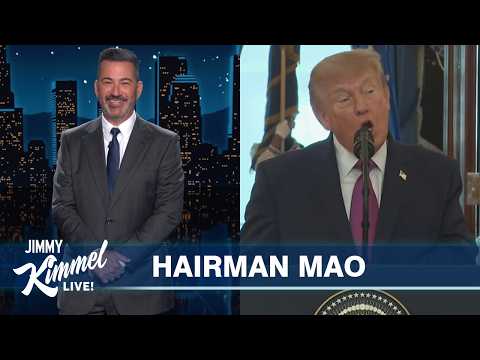
The political portion shifts attention to a trilateral meeting involving Donald Trump, Vladimir Putin, and Xi Jinping in China. Kimmel uses footage of ceremonial appearances, photographs, and public remarks to ridicule Trump's apparent enthusiasm for the gathering. Jokes about the leaders' coordinated clothing, awkward group photographs, and diplomatic pageantry provide an entertaining visual foundation for the commentary. However, the segment becomes more pointed when Trump refers to Putin as his friend. Kimmel contrasts that friendly description with Russia's aggression and Putin's authoritarian reputation, presenting the exchange as evidence of troubling presidential judgment. The criticism is forceful, though the presentation emphasizes moral condemnation and ridicule more than a detailed examination of diplomatic relationships or their consequences.
Trump's apparent drowsiness during Xi Jinping's economic speech provides another memorable sequence. Kimmel repeatedly returns to footage showing the president slumped forward with his eyes apparently closed, contrasting the images with a White House statement insisting that Trump was reviewing documents. The repetition creates an effective comedic rhythm, particularly as Kimmel challenges the administration's explanation through increasingly exaggerated descriptions of Trump's posture. Nevertheless, the footage alone does not conclusively establish whether Trump was asleep, and the host treats his interpretation as certainty rather than acknowledging that limitation. The segment illustrates both the effectiveness and the potential weakness of political satire built around ambiguous visual evidence.
The discussion then broadens into American anxiety about economic instability, unusual incidents, and possible disruptions. Reports of increased panic buying at Costco and growing interest in private bomb shelters provide an unsettling contrast to the administration's reassuring public statements. Kimmel uses these developments to suggest that public confidence is deteriorating, while joking that his own emergency survival strategy would involve moving into Costco. The segment becomes sharper when conservative commentators begin speculating about connections between unexplained events, artificial intelligence, and political figures. By highlighting their willingness to entertain elaborate theories, Kimmel effectively satirizes conspiratorial thinking, although the underlying incidents and economic concerns receive insufficient explanation to establish how seriously viewers should interpret them.
The episode's political perspective is unmistakably critical of Trump and conservative media, with much of the humor depending on the audience sharing that skepticism. Kimmel's delivery is confident, energetic, and frequently inventive, particularly when combining news footage with rapid-fire punchlines and unexpected cultural references. However, the commentary sometimes moves too quickly from observable behavior to sweeping conclusions, while the repeated insults occasionally substitute for deeper analysis. The transition from gaming celebrations to international diplomacy and then domestic anxiety also produces a somewhat fragmented structure, even though Kimmel's consistent comedic personality helps connect the otherwise unrelated material.
The closing installment of "This Week in Unnecessary Censorship" provides a lighter finish, using strategically placed bleeps and blurred images to transform ordinary television remarks into suggestive comedy. Its familiar format offers a welcome break from the heavier political discussion, and the rapid succession of deliberately misleading edits creates several amusing moments. However, the segment relies on a repetitive comedic mechanism that offers relatively little variety beyond the initial joke. Overall, the broadcast succeeds as a lively combination of pop-culture commentary, topical political satire, and recurring late-night comedy, but its entertainment value is stronger than its ability to provide a balanced or thoroughly substantiated examination of current events.
Pros
- Kimmel's opening examination of Grand Theft Auto VI captures the extraordinary enthusiasm surrounding the game's release through relatable workplace and relationship humor.
- The Singaporean couple's gaming agreement provides an amusing real-world example of how major entertainment releases can affect personal relationships.
- Guillermo's unfamiliarity with Grand Theft Auto creates an entertaining generational contrast that makes the gaming discussion accessible to nonplayers.
- Lou's increasingly absurd descriptions of his gaming experiences provide a memorable comedic exchange that effectively expands the opening segment.
- Footage of Trump's interactions with Putin and Xi gives the political satire concrete moments to examine rather than relying entirely on generalized criticism.
- The contrast between public anxiety, panic buying, and speculative conservative commentary creates an effective opportunity to ridicule conspiracy-driven explanations.
- Kimmel maintains an energetic delivery and sharp comedic timing while moving between gaming culture, international politics, and recurring television sketches.
Cons
- Several jokes about gamers, gender roles, and personal relationships depend on familiar stereotypes rather than especially inventive comedy.
- The political commentary frequently relies on insults and exaggerated characterizations that reduce opportunities for more substantive examination of diplomatic developments.
- Kimmel presents Trump's apparent sleep during Xi Jinping's speech as an established fact despite the footage not conclusively proving that interpretation.
- Claims involving workplace absenteeism, gaming revenue, panic buying, and bomb shelter sales receive little supporting context or explanation.
- The rapid movement between unrelated subjects creates an uneven structure that occasionally makes major news developments feel like setups for isolated punchlines.
- The unnecessary censorship segment relies on a repetitive formula that provides amusement without adding much originality to the episode.
Jimmy Kimmel delivers an entertaining late-night monologue that combines the cultural frenzy surrounding Grand Theft Auto VI with pointed political satire and absurd recurring comedy. The strongest material emerges from spontaneous exchanges, amusing public footage, and the contrast between serious international events and ridiculous human behavior. Although the show's partisan framing, occasional unsupported certainty, and fragmented structure limit its analytical value, the energetic presentation and consistent supply of memorable jokes make it an enjoyable installment for viewers who appreciate Kimmel's particular brand of topical humor.