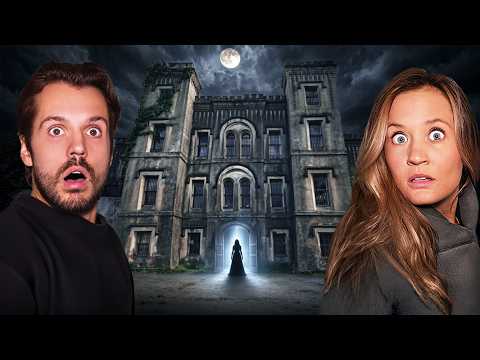
An abandoned medical complex filled with dark hallways, underground tunnels, bats and decades of institutional history already provides enough material for a frightening overnight investigation. Adding mushrooms, THC and alcohol creates a deliberately chaotic experiment: can altered perception make the group more receptive to supposed paranormal activity, or does it simply make ordinary noises, shadows and coincidences feel more significant? That tension gives the night a clear premise, even if the experiment itself is far too uncontrolled to answer the question.
Establishing a sober baseline is one of the smarter choices. The group begins with spirit-box questions and reacts to apparent footsteps before introducing the various impairments, giving them at least something to compare against later. Once intoxication enters the equation, however, virtually every variable changes simultaneously: different substances, different doses, advancing fatigue, changing locations, additional investigators and escalating expectations. The participants eventually acknowledge this problem themselves, with one noting that conventional paranormal investigators would consider intoxication something that devalues supposed evidence rather than strengthens it.
The Indiana State Sanatorium works exceptionally well as a setting because the investigation keeps moving through visually and psychologically distinct spaces. The abandoned nursing home, psychiatric floor, tuberculosis hospital, tunnels and power plant prevent the lengthy runtime from becoming geographically repetitive. Stories about reported shadow figures, a resident named Paul and a murder-suicide provide context for individual locations, but these accounts are presented primarily as local history or paranormal lore rather than independently demonstrated facts. The presentation is most responsible when it leaves uncertainty intact instead of treating every story as established evidence.
Several apparent responses are understandably exciting in the moment. The spirit box seems to produce names including Garrett, Olivia and Paul, while later exchanges appear to echo phrases or respond directly to questions about splitting up. Lights, noises and equipment activity further intensify the group's impression that something is communicating with them. Yet none of this establishes a paranormal cause, particularly when the participants are impaired, primed by stories about specific spirits and interpreting devices whose outputs are themselves uncertain. Their heightened state is arguably more convincing evidence about altered perception than about ghosts.
That distinction becomes especially obvious with the flashing-light and audio "Mind Blocker" glasses introduced by another investigating group. Participants report tunnels, faces, a woman and profound disorientation while being subjected to intense flashing lights and abrasive sound, with one describing losing awareness of the people around him. Those experiences are interesting demonstrations of how dramatically sensory manipulation can affect perception, but the presentation offers no established basis for connecting the resulting imagery to spirits or moments from the building's past. Combining the device with mushrooms makes any paranormal interpretation still harder to assess.
Comedy supplies much of the entertainment, though it also creates some of the night's biggest problems. Wearing abandoned clothing, consuming old Copenhagen, drinking soy sauce, wandering around in Heelys and shopping through discarded garments produce memorable absurdity, but the behavior sometimes overwhelms the investigation and clashes with repeated claims about respecting the location. More concerning is the willingness to climb ladders, navigate deteriorating structures and enter bat-filled tunnels while intoxicated. The episode treats much of this recklessness as part of the joke without seriously examining the obvious real-world hazards.
The isolation experiment finally produces the clearest answer to the premise, just not necessarily the supernatural one the group initially imagined. THC appears to make one participant acutely attentive to darkness, noises and potential movement, alcohol is described as reducing fear, and the mushroom experience is associated with emotional sensitivity, confusion and discomfort. By the end, the participants themselves largely concede that impairment made them more likely to notice, fear and interpret ambiguous stimuli rather than providing demonstrably stronger paranormal evidence. That self-awareness gives an otherwise chaotic investigation a surprisingly useful conclusion.
Pros
- Establishing a sober investigation before introducing impairment gives the central experiment at least a basic comparative structure.
- The enormous sanatorium complex provides varied and naturally atmospheric locations, including wards, tunnels and the power plant.
- Apparent spirit-box responses and environmental noises create several genuinely effective suspense sequences without conclusively proving their paranormal interpretation.
- The participants ultimately recognize that altered perception can make ambiguous sights and sounds seem more meaningful while simultaneously weakening the credibility of paranormal evidence.
- Different reported reactions to THC, alcohol and mushrooms give the premise more substance than simply using intoxication as a running joke.
- The group's chemistry keeps a very long investigation energetic and frequently funny.
Cons
- Multiple substances, changing locations, fatigue, additional investigators and different equipment make the supposed experiment far too uncontrolled to establish whether impairment affects paranormal activity.
- Intoxication makes already ambiguous spirit-box responses, shadows and noises even less reliable as evidence.
- The sensory-deprivation-style glasses can readily produce unusual perceptual experiences, yet their paranormal premise is presented without supporting evidence.
- Climbing, exploring deteriorated areas and entering tunnels containing numerous bats while impaired introduces genuine safety concerns that receive insufficient attention.
- Wearing abandoned clothing, consuming old tobacco and other deliberately reckless jokes sometimes undermine the group's stated intention to treat the location respectfully.
- The extended chaotic comedy occasionally pushes the paranormal investigation itself into the background.
The night succeeds far better as chaotic horror-comedy than as a meaningful test of whether intoxication improves paranormal sensitivity. Its most revealing result is that altered states appear to amplify fear, suggestibility and interpretation while making already uncertain ghost-hunting evidence even harder to evaluate, a limitation the participants eventually recognize themselves. Strong atmosphere, amusing chemistry and several creepy sequences make the experience entertaining, but questionable safety decisions and an inherently compromised experiment keep its paranormal conclusions appropriately uncertain.