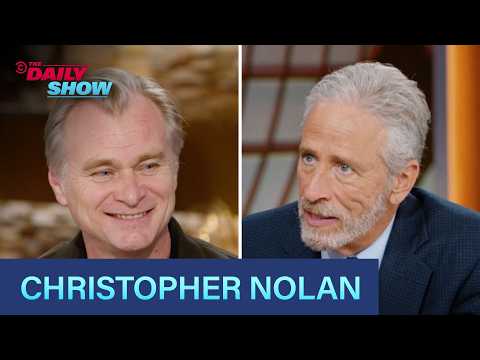
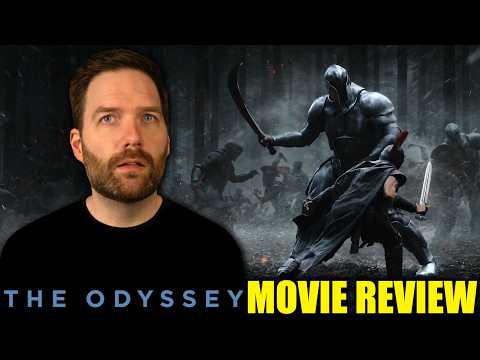
The most revealing moments are not descriptions of monsters or enormous sets, but the explanations of how Christopher Nolan intends to make an ancient epic emotionally accessible. Matt Damon describes accepting the role of Odysseus before Nolan had even told him what the film was, while Nolan explains why Damon became essential to a production built around an exhausting journey home. His praise centers not only on Damon's acting and movie-star charisma but on his willingness to endure difficult locations, rough seas, and physically demanding shoots without losing his enthusiasm. That establishes the film's central promise more effectively than spectacle alone: this version of the story may be enormous, but Nolan wants audiences invested in the man trying to return to his family.
The cast discussions reinforce that human emphasis. Tom Holland talks about the pressure of establishing Telemachus and the household waiting for Odysseus, describing those early scenes as part of the emotional backbone that must make viewers desperate for the father's return. Other cast members similarly describe Damon as unusually generous, focused, and free of the ego that could easily accompany such a central role in such a massive production. The discussion of contemporary language, including Holland calling Damon "Dad" rather than adopting more ceremonious speech, also suggests an effort to prevent the source material from becoming distant or overly formal. These comments do not establish how successfully the finished film accomplishes that goal, but they provide a coherent explanation of the creative intention behind the adaptation.
The physical production supplies the most impressive behind-the-scenes material. Nolan recalls finally realizing an image of the Trojan Horse that he had been imagining for roughly two decades, while cast members describe the Siege of Troy with huge groups of background performers, fire, enormous gates, distant miniatures integrated with real landscapes, and sets extending visually into surrounding towns. Elsewhere, actors recall caves, real sheep, a "curtain of bees," boats in rough water, elaborate banquet food, and remote locations reached by hiking. Particularly striking is the claim that the Circe sequence contains no CGI, accompanied by the actors' amusement at how strange its practical filming was compared with the disturbing result on screen. Taken together, the stories convey a production attempting to create physical environments actors can genuinely inhabit rather than merely describing its scale through promotional superlatives.
The IMAX discussion provides the strongest technical explanation of how Nolan's ambitions affected the filmmaking itself. He traces his fascination with the format back to seeing an OMNIMAX documentary as a teenager and describes gradually increasing his use of IMAX beginning with The Dark Knight. The obstacle to shooting an entire dramatic feature this way, he says, was camera noise: action could be photographed with the large-format equipment, but intimate dialogue presented a problem. For this production, IMAX developed a large sound-suppressing enclosure around the camera, allowing quiet dramatic scenes to be captured in the same format. Cast members describe the resulting equipment as enormous and intimidating, with limited film-magazine duration adding pressure to each take, although they also praise the camera department for reloading and repairing it quickly enough that the technology did not dominate their performances.
Nolan's directing style becomes more interesting through specific anecdotes than through the repeated declarations that he is a genius. Damon describes preparing for the Sirens sequence and discovering that Nolan and cinematographer Hoyte van Hoytema had structured the morning so he would have a long boat ride to mentally prepare before being tied to the mast and immediately performing the scene's emotional core. Anne Hathaway recalls Nolan recognizing when prolonged emotionally demanding work had exhausted her and using humor rather than additional pressure to help her recover. Other stories describe him standing behind the camera, moving a prop himself when he wanted exact control, helping reload an IMAX camera on a small boat, and reducing a complicated timing problem to the wonderfully practical direction "faster first." These examples give substance to the cast's admiration by showing a filmmaker who combines precision with direct involvement and awareness of what performers need.
The interview is also refreshingly playful for a promotional piece of this scale. Hathaway's story about interrupting a tense Dark Knight Rises set because she could not remember Rick Moranis's character name in Spaceballs leads to Nolan eventually supplying "Dark Helmet" and immediately returning everyone to work. Damon and others joke about Nolan's seemingly endless black tea, his constant presence on set, and whether anyone has ever seen him use the bathroom. Actors discuss colleagues who might be jealous, visiting set on days off simply to watch other sequences, and the absurd contrast between glamorous filmmaking and crawling through sheep waste. Those digressions humanize a production repeatedly described in almost mythological terms, although the video's admiration for Nolan and the project is so universal that genuine skepticism is largely absent.
That promotional enthusiasm is the presentation's clearest limitation. Cast members describe the film as history in the making, a work of art, and even the best movie one participant has ever been involved with, while Nolan's methods, Damon’s performance, the practical production, and the IMAX technology receive almost uninterrupted praise. Ali Plumb keeps the conversations lively and obtains unusually detailed answers about adaptation, performance, cameras, locations, and working conditions, but this remains an affectionate showcase rather than an independent examination of whether the film succeeds. Even the closing attempt to identify the "secret" of the production ultimately summarizes the same ingredients already celebrated throughout: Homer, Damon, the ensemble, IMAX, Nolan, Emma Thomas, and the director's love of dogs. As a preview of how the film was approached, however, the enthusiasm is supported by enough specific production stories to make the discussion far more substantial than ordinary promotional interviews.
Pros
- Nolan's explanation of adapting Homer emphasizes emotional accessibility and the journey home rather than relying solely on the epic's famous spectacle.
- Damon, Holland, Hathaway, and other cast members provide specific anecdotes that illuminate performance, preparation, and Nolan's directing methods.
- Stories about Troy, the Cyclops cave, real sheep, bees, boats, remote landscapes, and practical production give a vivid sense of the physical scale involved.
- The explanation of the sound-suppressing IMAX enclosure clearly identifies the technical obstacle that previously prevented Nolan from shooting an entire dramatic feature in the format.
- Humor about Spaceballs, black tea, bathroom breaks, sheep waste, and visiting set on days off keeps the extensive praise from becoming completely reverential.
- The interviews connect the production's huge visual ambition with a consistent emotional theme involving Odysseus, Telemachus, family, and the desire to return home.
Cons
- Nearly everyone interviewed is overwhelmingly enthusiastic, leaving little room for critical discussion of creative compromises, adaptation difficulties, or aspects of the production that may not have worked.
- Repeated descriptions of Nolan, the film, and the filmmaking experience as extraordinary sometimes become promotional rather than informative.
- The large ensemble and frequent switching between interview pairs create an energetic presentation but occasionally make the discussion feel more like a collection of admiration and anecdotes than a focused examination of the adaptation.
- The closing explanation of the film's supposed "secret" is less revealing than the detailed production stories that precede it, essentially summarizing the project's already established strengths.
The feature works best as an unusually detailed look at how Nolan and his cast tried to combine Homer's enormous mythic scale with intimate family stakes, practical filmmaking, demanding locations, and a major evolution in IMAX production. Its promotional setting means skepticism is scarce, but the specificity of the stories about Damon, performance, physical sets, and the new camera enclosure makes the enthusiasm informative rather than merely celebratory.